Navigating the Future: Insights from the 30th Annual Long Island Economic Summit

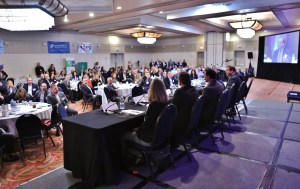
Pictured: A view from the dais at the February 15, 2024 30th Annual HIA-LI Long Island Economic Summit.

The 30th Annual Long Island Economic Summit, held on February 15, 2024, began with a clear message: Long Island “is a good place to do business.”

This year’s summit, drawing on the findings of the 2024 Long Island Economic Survey conducted by Adelphi University and Citrin Cooperman, brought to light the resilience and adaptability of our local business community. Business leaders across both counties – who were surveyed between November 1, 2023, and January 15, 2024 – made it quite evident that despite some hurdles, there’s a strong sense of optimism about doing business here. The event served not only as a platform for analysis and discussion but also as a beacon of positive expectations for the region’s economic landscape.

I’d like to summarize the findings and share some of the analysis from the summit’s distinguished panelists.

Survey Highlights

  • Taxes, retention of young talent, and inflation are a major concern for most businesses.
  • Long Island businesses seem hesitant to explore the benefits of AI compared to the rest of the country.
  • Supply chain issues, though not as extreme as years past, continue to linger.
  • Compensation, human resource issues, and workforce development remain a high concern.
  • Confidence in government’s role continues to deteriorate, however Long Island continues to be perceived as a good place to do business.

The Role of AI

Panel moderator John Fitzgerald, Managing Partner at Citrin Cooperman, noted the mixed feelings surrounding AI, pointing out that “Long Island businesses seem hesitant to fully explore the benefits of AI compared to the rest of the country.” This underscores a crucial area for potential growth and innovation.

To help meet that need, HIA-LI will be partnering with the LIA in an April 3 Long Island Artificial Intelligence Conference. The goal of the conference is to bring businesses, entrepreneurs, academia, not-for-profit organizations, and government officials together to discuss how our region can play a leading role in the development and implementation of AI technologies.

For more information, go to www.LI-AI.eventbrite.com.

Government Support

Dr. Lawrence Eisenstein, VP and Chief Public and Community Health Officer at Catholic Health, stressed the importance of government support, especially when it comes to healthcare reimbursements. “We need more help in terms of increased Medicaid and Medicare revenue,” he said. “Nobody would go into one of your businesses and say I want services, but I’m only going to pay you 60 percent.”

Food Insecurity

Paule Pachter, President and CEO of Long Island Cares, and an HIA-LI board member, emphasized the critical challenge of food insecurity on Long Island, stating, “A family of four who’s earning $60,000 or $70,000 a year are finding themselves going to food pantries or going to food banks to ask for some assistance. They don’t need everything. But they need some things in order to stretch their budget.”

Economic Outlook

Jeffrey Barber, Executive Vice President of Dime Community Bank, provided an insightful perspective on the economic outlook, highlighting the financial landscape’s strengths and potential growth areas. He noted, “There’s a tremendous amount of liquidity in the market. Many companies sat on those funds during COVID and didn’t know where things were headed.” He added some good news, “They’re now at a point where they’re comfortable spending and creating jobs.”

Talent Retention

Rich Humann, President and CEO of H2M architects + engineers, and an HIA-LI board member, discussed the ongoing challenge of retaining young professionals, underscoring the importance of creating connections, opportunities, and a compelling work environment to encourage talent to stay on Long Island. “Our responsibility as business owners is to provide the kind of environment and opportunity that would keep people with companies like ours.”

Higher Education

MaryAnne Hyland, Dean of the School of Business at Adelphi University, added to the discussion on talent retention by emphasizing the need for higher education institutions to adapt and innovate in preparing the workforce. “We need to make sure that we are providing students with programs that provide cutting-edge knowledge and skills that focus on the demands of the workforce of today and tomorrow,” she stated, highlighting the critical role of education in workforce development.

Moving Forward: A Collaborative Vision for Growth

The 2024 Economic Survey, coupled with the insights from the Economic Summit, paints a picture of a region at the threshold of significant growth, buoyed by optimism, yet mindful of the hurdles that lie ahead. The collective wisdom of the panelists, alongside the statistical data, underscores the need for collaborative efforts in innovation, government support, and talent retention strategies.

As we look to the future, the path for Long Island is clear: leveraging the insights and optimism shared at the summit to foster an environment where businesses and communities can thrive. With a commitment to addressing the highlighted challenges head-on, Long Island is poised to navigate its economic journey with resilience and vision.

You can read the full 2024 Long Island Economic Survey here.

Innovating the Talent Pipeline: A New Dawn for Long Island’s Workforce Development

Rich Humann, President & CEO at H2M architects + engineers, and an HIA-LI board member, moderated the panel.

The much-anticipated report, “Innovating the Talent Pipeline: Strategies for Workforce Development in the Long Island Innovation Park at Hauppauge,” was unveiled at HIA-LI’s “Workforce Development Conference and Scholarship Awards” event on October 13, 2023, at Farmingdale State College. This report is a testament to our commitment, as outlined in my June 5, 2023 blog post, to address the skills gap on Long Island.

The Long Island Innovation Park at Hauppauge (LI-IPH), the Northeast’s largest industrial park, is a beacon of regional economic strength, with over 1,300 companies and employing more than 55,000 workers. However, the challenge of a skilled workforce shortage looms large. This report, a collaborative effort between HIA-LI, the Suffolk County Industrial Development Agency (IDA), and the Workforce Development Institute (WDI), provides a roadmap to ensure the long-term resilience and competitiveness of the Long Island business sector.

James Lima Planning + Development, a renowned a New York City-based planning, real estate, and economic advisory firm, undertook the strategic analysis. Their comprehensive study, based on surveys from 34 Long Island employers, sheds light on the skills and talent needs of businesses, with a special focus on the LI-IPH.

The report’s findings are both insightful and actionable. It emphasizes the importance of:

  1. Access and Awareness: An island-wide campaign to promote resources such as adult English classes, career support, and job fairs.
  2. Strengthening Industry-Academia Partnerships: Encouraging project-based learning, AI tools, and best practices in the manufacturing sector.
  3. Promoting Intra- and Cross-Sector Collaborations: Highlighting best practices, foreign language support, and software training.
  4. Fostering a Learning and Advancement Culture: Championing mentorship initiatives and branded learning programs.
  5. Building Affordable and Attractive Communities: Advocating for workforce housing and transit-oriented development.

I’d like to extend my gratitude to the panelists and contributors who made this event and report possible. Their insights and expertise have been invaluable.

And of course, a special thanks to our partners in this effort: Kelly Murphy, Acting Executive Director of the Suffolk County IDA, and Robyn Fellrath, Long Island Regional Director at the Workforce Development Institute. We couldn’t have done this without their steadfast support.

Another highlight of the morning was the Scholarship Awards ceremony. This initiative is more than just financial assistance; it’s a commitment to the future of Long Island. By providing scholarships to high school graduates who choose to pursue their college studies here on Long Island, we’re not only investing in their education but also fostering a sense of community and continuity. It’s a clear message: we believe in the potential of our young minds and the promise they hold for our region’s future.

It’s also a testament to our dedication to keeping local talent local. By incentivizing our youth to study and subsequently work in the Nassau-Suffolk region, we’re ensuring a steady stream of skilled professionals who are familiar with the unique challenges and opportunities here on Long Island. These young individuals, equipped with local knowledge and a world-class education, will be the driving force behind Long Island’s continued economic growth and innovation.

In conclusion, as the President and CEO of HIA-LI, I am proud of this monumental step towards bridging the skills gap on Long Island. The recommendations in this report are not just words on paper; they are a call to action. Together, we can ensure a vibrant, resilient, and future-ready regional economy.

Steering the Future: HIA-LI’s New Workforce Development Task Force

As President and CEO of HIA-LI, one of Long Island’s foremost business advocacy organizations, I’m excited to share that we are launching a new Workforce Development Task Force. This initiative underscores our ongoing commitment to supporting businesses and strengthening the economic framework of the Long Island Innovation Park at Hauppauge (LI-IPH).

The LI-IPH is a significant player in our region’s economy, serving as the largest business park in the Northeast. With around 1,400 companies that employ approximately 55,000 workers, it forms a critical part of Long Island’s economic pulse. However, like many regions across the country, Long Island faces a significant challenge: a shortage of skilled workers. This issue is not just immediate; it also has implications for our region’s future growth and resilience.

To address this challenge, we’ve assembled a task force with two specific goals: align resources to meet business needs and spearhead efforts to recruit and develop talent for in-demand careers. Our task force is led by two respected individuals, Rich Humann, President and CEO of H2M Architects & Engineers, and Dr. Edward Bonahue, President of Suffolk County Community College. They will leverage their expertise to foster meaningful collaborations between businesses, educational institutions, and workforce development organizations.

We draw inspiration from successful ventures like Suffolk County Community College’s Solar Installer Certificate Program, a perfect example of mutually beneficial academia-business partnerships. By facilitating similar collaborations, we aim to ensure students are equipped with hands-on experience and businesses have access to a well-trained talent pool.

In the evolving post-Covid landscape, it’s crucial to forecast the skills businesses will need. To this end, the task force will commission an extensive “LI-IPH In-Demand Skills Assessment” in partnership with the Suffolk County Industrial Development Agency (Suffolk IDA) and executed by James Lima Planning, a renowned New York City-based consulting firm. This project is made possible by a grant from the Workforce Development Institute, with additional funding from HIA-LI and the Suffolk IDA. The results will guide academia in reshaping curricula to align better with the future needs of the region’s economy.

Our task force’s initiative resonates with a larger statewide initiative – a $350-million initiative announced last year by Governor Kathy Hochul – to improve workers’ skills to meet job demands. This wider program forms a crucial element of a strategic approach to workforce development in the region.

Given the rapid pace of technological advancements, anticipating the shape of future work is a priority. The task force is committed to helping local businesses understand and prepare for these changes. By creating synergies between businesses, academia, and governmental organizations, we aim to foster a more resilient economy, attuned to both immediate and future needs of Long Island’s workforce.

Smaller businesses often find predicting future skill requirements a daunting task. Thus, we’re tailoring our efforts to help these firms, providing assistance to navigate and prepare for future demands. We are aiming to equip these businesses with customized programs that meet their ever-evolving workforce needs.

In conclusion, the Workforce Development Task Force reflects our dedication to continually fostering the growth and development of Long Island’s workforce. We view this initiative as a strategic response to current challenges, ensuring a more vibrant, resilient, and future-ready regional economy.

Stay tuned for information about our fall Workforce Development Conference where the results of the “LI-IPH In-Demand Skills Assessment” will be presented and discussed.