News 12 Lead Anchor Erin Colton will be the keynote speaker at the November 20 HIA-LI Women’s Leadership Conference.
When we hear the word “legacy,” we often think about what we’ll be remembered for someday. But I believe a legacy is built long before the final chapter of a career. It takes shape in the people we mentor, the doors we open, the values we stand by, and the confidence we help others discover.
Passion matters just as much. It’s what keeps us curious, gives purpose to our work, and reminds us that success should be about more than a title or a résumé.
Those ideas are at the heart of HIA-LI’s 16th Annual Women’s Leadership Conference, “Lead with Legacy, Live with Passion,” on Friday, November 20, at the Hilton Long Island in Melville. I hope you’ll join us for a morning of candid conversation, practical insights, and meaningful connections among women at every stage of their professional journeys.
Over the years, this conference has become something more than an opportunity to hear from successful executives. It’s a place where women can share experiences, learn from one another, and consider not only where they want to go, but whom they can help along the way.
Our keynote speaker, Erin Colton, lead anchor at News 12 Long Island, brings an impressive story of professional growth. A Long Island native and Emmy Award-winning journalist, Erin began at News 12 as a production assistant and advanced through roles in writing, producing, sports anchoring, and reporting. Her journey is a reminder that careers are built through persistence, adaptability, and a willingness to take on new challenges.
I’m also looking forward to participating in our featured executive panel alongside three accomplished leaders whose experiences span very different industries. Carol Allen, President and CEO of People’s Alliance Federal Credit Union, has spent decades in financial services. Carol Gomes, CEO and COO of Stony Brook University Hospital, leads in a field where decisions affect patients, professionals, and entire communities. Anne Shybunko-Moore, CEO and Owner of GSE Dynamics, has built a distinguished career in manufacturing while advocating for workforce development and the next generation of talent.
As President and CEO of HIA-LI, I’ll bring my perspective on building relationships and strengthening Long Island’s business community. Guiding our discussion will be moderator Domenique Camacho Moran, a partner at Farrell Fritz P.C. and a dedicated advocate for women’s professional advancement.
Our breakout sessions will bring the conference theme down to a personal, practical level. Consider “The Only Woman in the Room: Turning Visibility into Influence” and “The Career I Never Planned: How I Went from Proving Myself to Leading with Confidence.” Both speak to finding your voice and owning your path. “She’s Next: Women in the Nonprofit CEO Pipeline” addresses the importance of preparing future leaders, while “The Relationship Recession: Why Human Connection Is Your Greatest Competitive Advantage” reminds us that lasting success depends on relationships. And “Forget Balance: Creating Boundaries and a Life That Actually Works” asks us to think about what a fulfilling life truly looks like.
The morning will also offer opportunities for networking and connecting with vendors. My hope is that everyone leaves with at least one new idea, one valuable connection, and renewed energy for what comes next.
Because the most meaningful legacy isn’t simply what we accomplish. It’s what becomes possible for others because we led.
The conference takes place Friday, November 20, 2026, from 8:00 a.m. to 12:30 p.m., with registration beginning at 7:30 a.m. at the Hilton Long Island in Melville.
To purchase tickets, visitwww.hia-li.org. For sponsorship opportunities, contact Anthony Forgione at aforgione@hia-li.org or (631) 708-9005.
Several years ago, I wrote on this blog about a challenge that was already weighing heavily on Long Island’s future: How do we keep our talented young people here to build their careers, start businesses, and raise families?
That question has not gone away. If anything, it has become even more important.
On Thursday, October 15, HIA-LI will put the spotlight on that next generation at our 2026 Rising Leadership Awards, from 8:00 to 11:00 a.m. at Stonebridge Country Club in Smithtown. The morning will celebrate 22 emerging leaders from across Long Island, present ten $1,000 scholarships to children of HIA-LI members continuing their post-high school education right here on Long Island, and bring together young professionals to talk candidly about careers, leadership, and building a future in our region.
That future comes with real challenges.
Housing remains one of the biggest. More than half of Long Island renters are considered housing-cost burdened, and recent median single-family home prices have reached approximately $760,000 in Suffolk County and $911,000 in Nassau County. For someone beginning a career, starting a family, or launching a business, those numbers matter.
But keeping young talent on Long Island is about more than the price of a house. We also need the kinds of communities younger generations increasingly want: places where people can live, work, connect, dine, shop, and enjoy their community without having to get into a car for everything.
We are seeing that evolution in places such as Patchogue, Farmingdale, Bay Shore, and Station Yards in Ronkonkoma. Transit-oriented and mixed-use development is creating more housing choices while strengthening downtowns and connecting residents with transportation, restaurants, retail, entertainment, and employment. Station Yards alone is being developed around the Ronkonkoma Long Island Rail Road station as a 53-acre mixed-use community that will ultimately include 1,450 residences along with office and retail space.
That same idea of connection is at the heart of HYPE, HIA-LI’s Young Professionals and Entrepreneurs Committee. HYPE gives Long Island’s future leaders a voice and, just as importantly, opportunities to learn from one another, build relationships, and grow professionally.
A special thank-you goes to HYPE committee co-chairs Ben Kitzen, Vice President of Employee Benefits at USI Insurance Services, and Jonathan Amatulli, Manager, Ticket Sales & Service at the Long Island Nets, whose leadership helps keep that mission moving forward.
We will hear directly from young professionals at the October 15 event during a panel moderated by Rich Humann, President and CEO of H2M architects + engineers. The panelists are Thalia Olaya, Governor Hochul’s Suffolk County Regional Representative; Scott Janke, Director, Government & Community Affairs – Long Island at NYU Langone Health; and, Kevin Cassidy, Owner of KC Pizza & Wings, with three Suffolk County locations. Different careers, different experiences, but all part of the story of what it means to build a professional life on Long Island.
And then we will recognize the Rising Leadership Award honorees themselves: 22 outstanding young people who are already demonstrating that Long Island’s next generation is not simply waiting for its turn.
They are leading now.
Our responsibility as a business community is to make sure they have every reason, and every opportunity, to keep doing it right here on Long Island.
To register for the event, go to www.hia-li.org or call (631) 543-5355.
One of the things I enjoy most about HIA-LI is seeing a good idea move from conversation to action.
That was very much the feeling in the room on Thursday, July 9, when we had a packed house at HIA-LI for a joint meeting of our Manufacturing, Human Resources, and Education/Workforce committees. We welcomed Vanessa Baird-Streeter, President and CEO of the Health & Welfare Council of Long Island (HWCLI), for a dynamic presentation on LongIslandJobs.org, a workforce platform built specifically for Long Island employers and job seekers.
What struck me immediately was how closely the platform aligned with the workforce conversations already taking place at HIA-LI.
Connecting the Dots on Workforce Development
Our Workforce Development Working Group brought together business leaders, educators, school administrators, BOCES representatives, and work-based learning professionals to identify 10 of the most important workforce priorities facing our region. From that work came four subcommittees focused on better communication between students and industry, greater awareness of Career and Technical Education opportunities, stronger connections between businesses and students, and closer partnerships among higher education, school districts, and BOCES.
One of the clearest needs we identified was for a centralized place where people could find jobs, training, educational opportunities, and other workforce resources.
Then along came LongIslandJobs.org.
A Resource Built for Long Island
HWCLI deserves tremendous credit for seeing that need and doing something about it. Working with Central Islip-based NAKA Technologies, HWCLI created a regional platform that brings together employment opportunities, job fairs, workforce training, career-development resources, volunteer opportunities, and information from local career centers. It was initially launched with nonprofit, healthcare, and human-service employers and is now expanding its reach to Long Island’s private-sector business community through this collaboration with HIA-LI.
As Vanessa explained:
“LongIslandJobs.org was created in response to a real and immediate need, but it was always intended to make it easier for people to access jobs, training, volunteer opportunities, and workforce resources in one place. By partnering with HIA-LI, we can bring the nonprofit, private, and education sectors together so the platform can serve more Long Island job seekers, employers, and communities.”
That cross-sector approach is especially important. Businesses cannot solve our workforce challenges alone. Neither can educators, nonprofits, or government. But when those sectors connect, we can create much stronger pathways between people looking for opportunities and employers looking for talent.
Our board, under the leadership of Anthony Manetta, Chair of HIA-LI’s Board of Directors, has strongly supported our workforce-development efforts. Rich Humann, P.E., President and CEO of H2M architects + engineers, and Dr. Edward T. Bonahue, President of Suffolk County Community College, have also provided important leadership as co-chairs of HIA-LI’s Workforce Development Task Force. Their perspectives, representing both employers and higher education, are critical as we continue working to strengthen Long Island’s talent pipeline.
Why Geography Matters
LongIslandJobs.org also addresses something deceptively simple: geography matters. National job sites can return results from New York City, Westchester, Connecticut, and beyond when someone is really looking for an opportunity on Long Island. A platform built specifically for our region makes it easier for Long Islanders to find Long Island jobs and for our employers to make their openings visible to local candidates.
And the platform will continue to grow. Planned additions include greater access to internships and apprenticeship opportunities, creating another important connection between students, emerging workers, and Long Island employers.
The Next Step Is Participation
As employer participation is currently free, I encourage HIA-LI members and businesses throughout Long Island to visit LongIslandJobs.org, register, and post your available positions.
The value of this resource will grow with participation. More employers posting opportunities will attract more job seekers. More job seekers using the site will make it more valuable to employers. More participation will lead to more opportunities, more connections, and a stronger regional workforce.
That is how we turn a good idea into a resource that can make a real difference for Long Island.
Visit LongIslandJobs.org and help build a stronger, more connected Long Island workforce.
Suffolk County Executive Ed Romaine gave stirring opening remarks about the need to improve our region’s infrastructure. Behind him are Joe Campolo, Managing Partner of Campolo, Middleton & McCormick LLP, Founder of STRATA Alliance, and HIA-LI Board Member, and Cara Longworth, Regional Director of Empire State Development.
One of my favorite stories about the power of the HIA-LI Trade Show goes back many years.
Before joining HIA-LI, I was exhibiting at this very trade show on behalf of my former employer when I struck up a conversation with a senior executive from Computer Associates. It was a chance encounter. One of the countless conversations that take place on a trade show floor each year. But that single conversation eventually led to one of the largest contracts in that company’s history.
It’s a reminder that you never know where your next opportunity, partnership, client, or breakthrough idea will come from.
That story was very much on my mind as more than 4,000 business professionals gathered at Suffolk Credit Union Arena at Suffolk County Community College for HIA-LI’s 38th Annual Business Trade Show & Conference.
Featuring more than 375 exhibitors, this year’s event embraced the theme, “The Next Business Breakthrough.” Judging by the energy on the trade show floor, the packed networking events, and the meaningful conversations taking place throughout the day, there were plenty of breakthroughs happening.
The event also received strong reviews from participants, with more than 70 percent of survey respondents rating their experience an eight or higher on a 10-point scale.
Denise Labosco of Suite AI Solutions, a first-time exhibitor, described the event as “extremely organized” and praised the quality of the attendees, noting that she walked away with “real conversations and real leads.”
Returning exhibitor Alice Thomson of Southampton Inn said she was glad her organization returned for a second year, citing the meaningful connections she expects will lead to future business opportunities.
Those comments reflect what has made the HIA-LI Trade Show such a valued annual tradition for nearly four decades. While the exhibitors, industries, and business challenges may evolve over time, the power of bringing people together remains unchanged.
While the trade show floor was buzzing throughout the day, one of the highlights was the Executive Luncheon, “Economic Development: Reshaping Long Island’s Landscape.”
Although each panelist brought a different perspective, a common theme emerged throughout the discussion: Long Island’s future depends on our ability to create places where people can live, work, innovate, and build businesses.
The conversation touched on some of the most important issues facing our region, including workforce development, housing, innovation, infrastructure investment, downtown revitalization, and economic competitiveness.
Panelists discussed major projects already transforming Long Island, from transit-oriented development and downtown redevelopment initiatives to emerging innovation corridors designed to help turn research and new technologies into businesses and jobs. They emphasized that economic development is no longer about a single project or a single community. Success depends on collaboration among government, business, developers, educational institutions, and community leaders working toward a shared vision for the region.
One particularly important theme was the connection between housing and workforce development. Businesses cannot attract and retain talent if workers cannot afford to live where they work. Likewise, innovation cannot thrive if promising startups and skilled professionals leave the region in search of opportunities elsewhere.
The discussion also highlighted the importance of investing in quality-of-life initiatives that make Long Island an attractive place to live, raise a family, launch a business, and pursue a career.
What made the luncheon especially valuable was that it moved beyond identifying challenges. The panelists offered real-world examples of projects, partnerships, and strategies already producing results and creating momentum for the future.
That spirit of collaboration carried throughout the entire trade show.
Every year, the HIA-LI Trade Show brings together business leaders, entrepreneurs, nonprofits, government officials, educators, and innovators from across Long Island. It creates opportunities to share ideas, build relationships, and discover solutions to common challenges.
Most importantly, it reminds us that Long Island’s greatest asset is not a building, a development project, or even a business sector. It is the people willing to come together, exchange ideas, and work toward a stronger future.
And that is where the next business breakthrough often begins.
Long Island has long been known for its beaches, wineries, parks, downtowns, restaurants, cultural destinations, and waterfront communities. But if we still think of tourism and travel as seasonal activity, we are missing the larger economic picture.
Tourism is no longer simply about summer visitors. It is a year-round economic engine that supports jobs, strengthens small businesses, drives investment, and helps position Long Island as a place to visit, live, work and do business.
A Timely Regional Conversation
That message came through clearly at HIA-LI’s recent Economic Development Task Force program, The Economic Engine of Tourism and Travel on Long Island, held in partnership with Strata Alliance on April 29 at Campolo, Middleton & McCormick, LLP in Ronkonkoma. Moderated by HIA-LI Board Member Joe Campolo — founder of the Strata Alliance and Managing Partner at Campolo, Middleton & McCormick, LLP — the discussion brought together Town of Islip Supervisor Angie Carpenter, Long Island MacArthur Airport Commissioner Robert Schneider, Discover Long Island Chief Operating Officer Sharon Wyman, and members of the regional business community for a timely conversation about one of Long Island’s most important economic opportunities.
The enthusiasm in the room was unmistakable. Business leaders, public officials and tourism professionals recognize that travel and tourism are not separate from economic development. They are central to it.
The Numbers Tell the Story
According to Discover Long Island, Long Island reached $7.9 billion in tourism spending in 2024, supporting nearly 80,000 jobs and generating more than $945 million in state and local tax revenue. Projections for 2025 are expected to exceed $8 billion. Those figures represent hotel stays, restaurant visits, downtown shopping, transportation, cultural attractions, meetings, events, and the many local businesses that benefit when people choose Long Island.
Sharon Wyman and the team at Discover Long Island continue to play an essential role in telling that story. Their work as the region’s destination marketing organization helps promote not only our beaches and traditional tourism assets, but also our downtowns, cultural heritage, small businesses, parks, events, and year-round experiences.
MacArthur Airport as Economic Infrastructure
At the same time, Long Island MacArthur Airport has become an increasingly important part of the region’s growth strategy. Under the leadership of the Town of Islip and Commissioner Robert Schneider, ISP — MacArthur’s three-letter airport code — has grown from two carriers serving six nonstop destinations to six carriers serving 16 nonstop destinations. The airport now generates approximately $600 million in annual economic impact, supports approximately 6,000 direct and indirect jobs, and served more than 1.6 million passengers in 2025, its highest total in more than 15 years.
That growth matters far beyond aviation. Airports are gateways. For many visitors, Long Island MacArthur Airport is their first impression of our region. As Commissioner Schneider has noted, transportation is the front door to the visitor experience. A strong airport supports tourism, business travel, workforce access, hospitality and broader regional competitiveness.
Supervisor Carpenter also highlighted the importance of the proposed North Terminal, which would move the airport’s main passenger terminal to the north side of the property, adjacent to the Ronkonkoma Long Island Rail Road station. Governor Kathy Hochul has committed $150 million for infrastructure around the North Terminal, helping move forward a project that could reshape regional mobility. With the airport, Suffolk County bus connections, and the Ronkonkoma LIRR station — including many trains that provide a one-seat ride into New York City — all in close proximity, Ronkonkoma has the potential to become one of Long Island’s most important transportation hubs.
A Moment to Invest
As Joe Campolo observed during the discussion, Long Island has a rare alignment of assets right now: a rapidly growing airport, town and county support for additional hospitality infrastructure, and extraordinary marketing by Discover Long Island. That synergy creates an opportunity we should not miss.
At HIA-LI, we believe economic development depends on collaboration. Tourism, transportation, hospitality, downtown revitalization, infrastructure, and business growth all work together. The more strategically we connect those pieces, the stronger Long Island’s economy becomes. The opportunity before us is to invest in that momentum, market the region aggressively, and make sure the benefits are felt across Long Island.
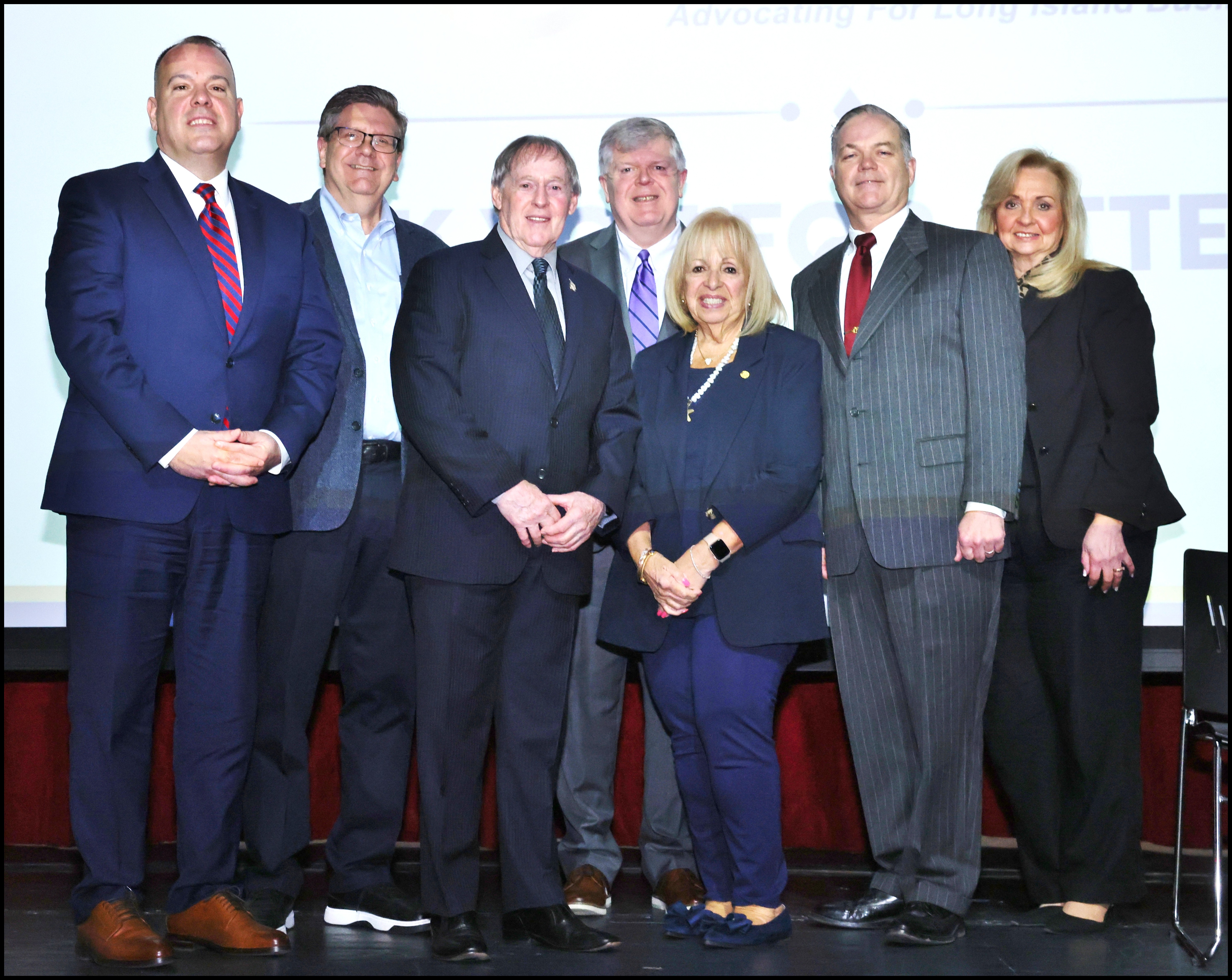
Pictured from left: Brookhaven Town Supervisor Dan Panico; Joe Campolo, Managing Partner, Campolo, Middleton & McCormick LLP and HIA-LI Board Member; Smithtown Town Supervisor Ed Wehrheim; Babylon Town Supervisor Rich Schaffer; Islip Town Supervisor Angie Carpenter; Huntington Town Supervisor Ed Smyth; and Terri Alessi-Miceli, President and CEO, HIA-LI. (Photo credit: Bob Giglione)
There’s a tendency to talk about economic development in broad, regional terms: state investments, county initiatives, big-picture strategy. But what became clear at HIA-LI’s recent Economic Development Advancements: Towns Shaping Long Island’s Future program is this: the most consequential decisions shaping Long Island’s future are happening at the town level.
That’s where zoning is determined. That’s where redevelopment is approved or denied. And increasingly, that’s where the vision for what Long Island becomes over the next decade is being defined.
A Shared Direction: From Sprawl to Smart Growth
Across the panel, one theme emerged consistently: Long Island is moving away from traditional suburban sprawl and toward more intentional, mixed-use, walkable communities.
In the Town of Huntington, Supervisor Ed Smyth described a community that is already largely built out, leaving redevelopment, not expansion, as the path forward. The proposed Melville Town Center reflects a shift toward creating walkable downtown environments, blending residential, commercial, and lifestyle elements in ways that better reflect how people want to live today.
That same philosophy is taking shape across the region.
In the Town of Islip, Supervisor Angie Carpenter pointed to major redevelopment efforts in Bay Shore and Central Islip, where transit-oriented development and mixed-use projects are transforming underutilized sites into vibrant, economically productive communities. These projects are not just about housing. They are about creating places where people can live, work, and contribute to the local economy.
And in the Town of Babylon, Supervisor Rich Schaffer highlighted how sustained public investment in infrastructure, including roads, drainage, sewer systems, and public safety, has helped unlock significant private-sector development, from Wyandanch to Deer Park and beyond.
Infrastructure Still Comes First
If there was one point of universal agreement, it was this: none of this happens without infrastructure.
Supervisor Ed Wehrheim of the Town of Smithtown underscored how investments in sewer systems, streetscapes, and transportation access are directly tied to revitalization success. Once that foundation is in place, private investment follows, bringing new housing, new businesses, and renewed energy to long-standing business districts.
That same message was echoed throughout the discussion. Whether it’s sewer expansion in Huntington Station, infrastructure upgrades in Smithtown, or large-scale capital investments in Babylon, the path to economic growth begins below ground before it ever rises above it. Setting the Tone: Leadership and Accountability
Moderating the discussion, Joe Campolo, Managing Partner of Campolo, Middleton & McCormick LLP; Founder of Strata Alliance; Chair of HIA-LI’s Long Island Economic Development Task Force; and HIA-LI Board Member. Joe emphasized a point that resonated throughout the program: economic development requires not just vision, but action, and it often takes political courage.
He noted that town supervisors are uniquely positioned to move projects forward or stop them, making their leadership central to Long Island’s future. At the same time, he stressed that public-private partnerships cannot exist in name only. The business community must actively support responsible development by engaging in the process, showing up at hearings, and advocating for projects that strengthen the regional economy.
That dynamic, government leadership paired with private-sector engagement, was a consistent thread throughout the conversation and a critical factor in whether projects ultimately succeed.
Balancing Growth, Affordability, and Community
Another key theme was balance.
There is a clear need for new housing on Long Island, but what that housing looks like matters. Several supervisors emphasized that developments cannot be exclusively rental-based. Communities are looking for a mix that includes opportunities for homeownership, allowing residents to build equity and remain rooted on Long Island long-term.
At the same time, affordability pressures continue to mount. While housing costs are often the focus, Brookhaven Town Supervisor Dan Panico pointed to another looming issue that receives far less attention: waste management. The long-term sustainability and cost of managing Long Island’s solid waste system could have significant implications for taxpayers, businesses, and local governments alike.
These are not abstract challenges. They are real, immediate pressures that require coordination across all levels of government.
Partnership Matters at Every Level
The discussion also reinforced the importance of collaboration, particularly with New York State.
Cara Longworth, Long Island Regional Director for Empire State Development, highlighted the impact of the state’s Downtown Revitalization Initiative, which has brought critical funding into communities across Long Island. These investments are helping towns reimagine their downtowns and accelerate projects that might otherwise take years longer to realize.
At the local level, success also depends on partnerships with developers, school districts, and the business community. In Huntington, for example, support from the Half Hollow Hills School District has helped advance the conversation around the Melville Town Center project, particularly as enrollment trends shift and communities adapt to changing demographics.
The Role of Place and Partnership
Hosting this conversation at the Suffolk Y Jewish Community Center was a reminder of how important community institutions are in bringing people together around these issues. We are grateful to Rick Lewis and his team for opening their doors and providing a space for this important dialogue.
Because ultimately, these conversations matter.
They matter not just for the elected officials making decisions, but for the business community, residents, and future generations who will live with the outcomes.
Looking Ahead
If there is one takeaway from this program, it is that Long Island is not standing still.
Across every town represented, there is movement, projects advancing, infrastructure being built, policies being debated, and visions taking shape. The details may differ from one community to another, but the direction is clear: smarter growth, stronger downtowns, and a renewed focus on making Long Island a place where people can build careers, raise families, and stay for the long term.
The challenge, and the opportunity, will be ensuring that these efforts continue to move forward in a way that is thoughtful, balanced, and sustainable.
Because the future of Long Island isn’t being decided in the abstract.
It’s being built, project by project, downtown by downtown, and town by town.
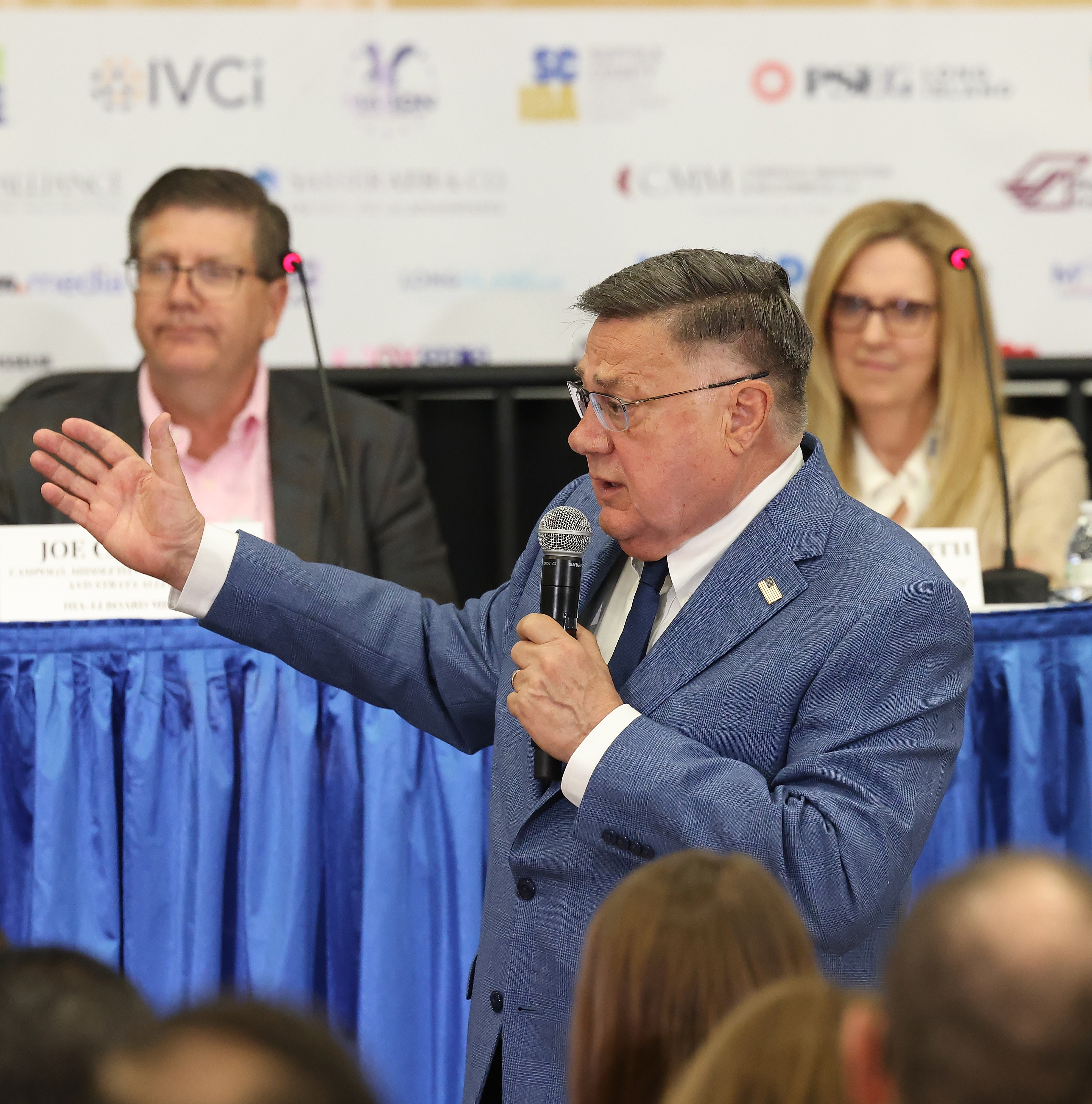
Pictured: HIA-LI Board Member Joe Campolo, Chair of HIA-LI’s Economic Development Task Force and Managing Partner ofCampolo, Middleton & McCormick is also the founder of Strata Alliance, the co-host of the March 12, 2026 event.
Long Island’s economic future will not be determined by any single project or policy. It will be shaped by the ability of leaders across the region — in business, government, and community organizations — to work together to advance bold ideas that strengthen our economy and expand opportunity. That spirit of collaboration was on full display last week when HIA-LI hosted its Economic Development Task Force dinner at Mama Lombardi’s in Holbrook.
Co-hosted by Strata Alliance — founded by HIA-LI Board Member Joe Campolo, Chair of HIA-LI’s Economic Development Task Force and Managing Partner of the Ronkonkoma-based law firm Campolo, Middleton & McCormick — the event brought together about 50 regional leaders, including roughly a dozen elected officials. The evening began with networking before transitioning to a dinner and discussion focused on Long Island’s economic opportunities and the work still ahead to fully realize the region’s potential.
One topic that consistently underscores Long Island’s economic strength is the Long Island Innovation Park at Hauppauge.
The park — the second largest industrial park in the United States after Silicon Valley — is something of a hidden gem in the regional economy. It represents one of Long Island’s most important employment centers and a powerful driver of economic activity, supporting tens of thousands of jobs and billions of dollars in economic output.
But the park’s true significance lies in the collaborative effort that continues to shape its future. Government leaders, economic development organizations, businesses, and community partners have worked together to position the park for continued growth and revitalization.
Town of Smithtown Supervisor Ed Wehrheim spoke about the town’s leadership in advancing the overlay district that allows for thoughtful redevelopment within the Innovation Park. The initiative is designed to support a more modern economic environment that could eventually include mixed-use development and a live-work-play atmosphere in appropriate areas. Wehrheim also noted that there are currently no hotels in the Town of Smithtown — a gap that has implications for tourism and business activity as Long Island continues to grow. He also discussed redevelopment efforts underway in Kings Park and the importance of strategic planning to help communities evolve and thrive.
Infrastructure investment emerged as another key theme of the evening.
Robert Calarco, Assistant Secretary for Intergovernmental Affairs in the office of Governor Kathy Hochul, emphasized the governor’s strong commitment to Long Island and the team she has assembled to support the region’s economic development priorities. A major focus of that effort is investment in infrastructure, particularly sewer systems, which are often essential to unlocking new housing and economic development opportunities.
Without that infrastructure, growth can be constrained. With it, communities gain the ability to revitalize underutilized properties, attract new businesses, and support sustainable development.
The Suffolk County Industrial Development Agency also plays a key role in helping make those opportunities possible. Kelly Murphy, the agency’s Executive Director and CEO, spoke about the IDA’s ongoing work to support business growth and job creation throughout Suffolk County. Through financial assistance programs and strategic partnerships, the agency has helped facilitate hundreds of millions of dollars in private investment while supporting thousands of jobs for Long Island residents.
Regional tourism and economic opportunity were also part of the discussion.
Mitch Pally, Interim President and CEO of Discover Long Island, made a compelling case for the development of a convention center on Long Island. Despite having a population far larger than many cities across the country, the region lacks a facility capable of hosting major conventions and large-scale events.
Pally pointed out that New York State cities with smaller populations than Long Island — including Rochester, Syracuse, and Buffalo — all have convention centers capable of hosting conferences and large gatherings that generate significant economic activity. Without a similar facility, Long Island is missing opportunities to attract major events and the economic benefits that come with them.
He suggested that Ronkonkoma could be an ideal location for such a facility. The community has rapidly emerged as a transportation hub, anchored by Long Island MacArthur Airport, the Ronkonkoma Long Island Rail Road station, and major transit-oriented redevelopment. Projects such as Station Yards demonstrate how thoughtful planning and investment can transform communities.
That spirit of bold thinking is not new to Long Island.
Longtime Village of Patchogue Mayor Paul Pontieri, who was present at Thursday night’s dinner, is widely credited with leading one of Long Island’s most successful downtown revitalization efforts. When Patchogue faced empty storefronts and declining activity years ago, Pontieri and his team took bold steps to reimagine the village’s future. Through transit-oriented development, new housing, and a focus on creating a vibrant, walkable downtown near the Patchogue Long Island Rail Road station, the community was transformed into one of the region’s most dynamic destinations. Today, Patchogue is often cited as a model for other Long Island communities seeking to revitalize their downtowns and attract new investment.
At HIA-LI, fostering those partnerships has long been central to our mission. Through the Economic Development Task Force and our many initiatives across the region, we continue to bring together leaders who are committed to strengthening Long Island’s economy. The ideas discussed last week reinforce an important truth: Long Island’s future will be shaped not only by bold vision, but by continued collaboration among business, government, and community leaders. HIA-LI will remain a convener for those conversations and a catalyst for the partnerships that move our region forward.
Pictured: Rob Calarco, Governor Hochul’s Long Island Assistant Secretary for Intergovernmental Affairs, provided a State of the State summary at HIA-LI’s February 12, 2026 Economic Summit.
If this year’s HIA-LI Economic Summit made one thing clear, it is this: Long Island’s business community is not waiting for permission to grow.
Before some 250 business leaders gathered to “Survey the Pulse of Long Island,” the energy in the room was unmistakable. There was discipline. There was realism. And above all, there was readiness.
The data from our 2026 Business Climate Survey, conducted in partnership with Citrin Cooperman and Adelphi University, tells that story clearly. Fifty-eight percent of respondents plan to expand in 2026. More than two-thirds anticipate growth over the next five years. Nearly half are planning capital improvements this year alone.
Those are not defensive numbers. They are forward-looking numbers.
They reflect confidence in Long Island’s economic foundation and belief in what comes next. When challenged, this region does not retreat. It recalibrates and moves forward.
I remain deeply grateful to our survey partners. Citrin Cooperman’s analytical leadership and Adelphi University’s academic collaboration ensure that our conversations are grounded in measurable reality. We are not speculating about the pulse of Long Island. We are measuring it.
CAUTIOUS DOES NOT MEAN WEAK
While 45 percent of respondents forecast revenue growth in 2026, the tone of the morning was less about exuberance and more about intentional positioning. Under the thoughtful moderation of John Fitzgerald, Partner at Citrin Cooperman, the discussion underscored a critical distinction: prudence is not pessimism.
What I heard was strategy.
Balance sheets are strong. Liquidity remains healthy. Investment in artificial intelligence is accelerating. Companies are strengthening operations and planning for sustainable expansion. That is not hesitation. That is resilience with purpose.
PUBLIC INVESTMENT MUST UNLOCK PRIVATE MOMENTUM
Governor Kathy Hochul’s Long Island Assistant Secretary for Intergovernmental Affairs, Rob Calarco, outlined the governor’s priorities, including middle-class tax relief, child care expansion, insurance reform and significant economic development commitments.
Most notable for our region was the emphasis on sustained investment in water infrastructure, including sewer and clean water projects designed to unlock housing development.
Infrastructure policy does not always capture headlines, but it determines whether growth is possible. Without sewer capacity and clean water systems, housing approvals stall. Without housing, workforce retention suffers. Without workforce stability, business expansion slows.
Water infrastructure is not abstract policy. It is the lever that enables economic mobility and regional competitiveness.
The encouraging signal is this: public investment is aligning around affordability and growth. The responsibility now is execution.
HOUSING IS THE MULTIPLIER
If one issue connected nearly every industry represented on the panel, it was housing.
The message was consistent across sectors. Without attainable housing, attracting young professionals becomes more difficult. Retaining families becomes harder. Scaling employers becomes constrained.
James Coughlan, Executive Vice President and Partner of TRITEC Real Estate, reinforced this point clearly. Housing production is not simply a development conversation. It is a competitiveness strategy.
Our survey confirms that business leaders understand this reality. Forty percent identified housing affordability as the most important area for government investment to facilitate growth.
Housing is not a siloed policy conversation. It is an economic multiplier. When supply expands and approvals move predictably, the ripple effects touch healthcare staffing, education, small business growth and long-term investment.
WORKFORCE STRATEGY MUST BE INTENTIONAL
Housing alone will not solve our workforce challenges. Talent pipelines must be built deliberately and sustained over time.
Throughout the discussion, the need for earlier engagement between industry and education surfaced repeatedly. Rich Humann, President and CEO of H2M Architects + Engineers and HIA-LI Board Member, emphasized that waiting until college to expose students to career pathways is too late. If we want engineers, designers, project managers and skilled trades professionals to remain on Long Island, those pathways must begin in K–12 classrooms.
That philosophy aligns directly with the work of HIA-LI’s Workforce Development Task Force, co-chaired by Humann and Suffolk County Community College President Dr. Edward Bonahue. Identifying labor shortages is not enough. Structured, visible and accessible pipelines must follow.
In healthcare, the urgency is even more pronounced. Christopher Nelson, President of St. Catherine of Siena Hospital, described rising demand for services colliding with workforce shortages and reimbursement pressures. We are training talented clinicians here. Policy and affordability must make it possible for them to build their careers here as well.
Higher education is navigating its own structural shifts. Dr. Christopher Storm, Interim President of Adelphi University, pointed to demographic headwinds and federal aid changes reshaping enrollment patterns. At the same time, institutions like Adelphi remain foundational to Long Island’s economic vitality. They produce first-generation graduates, train nurses and teachers, and prepare students for a workforce increasingly shaped by artificial intelligence.
From the financial perspective, the fundamentals remain strong. Kevin Santacroce, Chief Banking Officer of ConnectOne Bank and HIA-LI Board Member, reinforced that Long Island businesses are disciplined, well-capitalized and positioned for expansion. Entrepreneurial energy is intact. What business leaders need is predictability in the policy environment.
And any workforce strategy must remain grounded in household realities. Rick Lewis, Chief Executive Officer of the Suffolk Y JCC, reminded us that rising food pantry usage and cautious donor behavior reflect ongoing financial pressure on families. Economic expansion must translate into community stability.
Workforce strategy, in other words, is the connective tissue between housing, education, healthcare and business growth.
INNOVATION WITH RESPONSIBILITY
Nearly 60 percent of survey respondents believe artificial intelligence will positively impact their operations this year, and more than half have already invested in AI tools.
The discussion reflected maturity rather than hype. Leaders are embracing efficiency gains while recognizing that cybersecurity vigilance and governance must accompany innovation. Technology can amplify productivity, but it cannot replace thoughtful leadership or sound policy frameworks.
WHAT THIS MOMENT REQUIRES
After listening carefully to every perspective in the room, my conclusion is clear.
Long Island is aligned.
Businesses are prepared to expand. Infrastructure investment is underway. Educational institutions are adapting. Financial institutions are stable. The entrepreneurial spirit remains intact.
We know the pressure points. Housing approvals must move faster. Workforce pipelines must strengthen. Regulatory frameworks must facilitate development rather than delay it. Infrastructure investment must translate into tangible progress.
Long Island has always thrived when public and private leadership move in the same direction. That alignment was palpable at this year’s Summit.
The pulse of Long Island is strong. The foundation is in place. With focused policy action and continued collaboration, we have the opportunity to convert readiness into sustained, confident growth.
Because strong policy begins with strong data, I encourage you to explore the full findings in our 2026 Business Climate Survey.
To read the full Business Climate Survey, click here.
Pictured: Congressman Nick LaLota provided opening remarks at HIA-LI’s 48th Annual Meetingon January 16, 2026.
Each year, HIA-LI’s Annual Meeting and Legislative Forum offers an important opportunity to step back from the day-to-day pressures facing employers and policymakers alike and take a clear-eyed look at where Long Island is headed. This year’s event, which attracted nearly 400 attendees, reinforced something many of us already know: the challenges confronting our region are complex, interconnected, and impossible to solve in isolation, but progress is absolutely achievable when we work together.
What stood out most this year was not simply the range of issues discussed — affordability, housing, infrastructure, transportation, energy, workforce development, and solid waste — but the strong sense of alignment across levels of government and across party lines. Again and again, speakers returned to a shared conclusion: Long Island’s future depends on collaboration, pragmatism, and a willingness to row in the same direction.
A SHARED VIEW FROM WASHINGTON AND ALBANY
Congressman Nick LaLota opened the program by grounding the conversation in the real-world pressures facing Long Island families and employers. He emphasized the importance of ensuring that federal policy recognizes the high cost of living in our region and delivers tangible relief for both households and small businesses. Just as important, he underscored that economic vitality begins locally — with the business owners and employers who create jobs, support families, and keep Long Island competitive.
Although she was unable to join us in person, Governor Kathy Hochul shared a video message with our members, continuing a dialogue she has maintained with HIA-LI over the years. In her remarks, the Governor reinforced Long Island’s role as a critical driver of New York State’s economy and highlighted the state’s continued commitment to investing in infrastructure, transportation, water and sewer systems, manufacturing, and innovation. Her message emphasized that strategic public investment, aligned with private-sector growth, is essential to keeping Long Island competitive and economically strong.
From the state legislative perspective, New York State Senator Monica Martinez framed affordability not as a single policy challenge, but as a balance of education, workforce readiness, infrastructure, and attainable housing. Drawing on her background in education, she spoke about the importance of creating strong pipelines between schools, training programs, and Long Island employers, recognizing that a thriving regional economy depends on preparing people for careers that allow them to live and work here long term. She also reinforced the need for state investment to reflect the contributions Long Island makes to New York’s overall economy.
COUNTY AND LOCAL LEADERSHIP: PRACTICAL SOLUTIONS, REAL CONSEQUENCES
At the county level, Suffolk County Executive Ed Romaine offered a candid assessment of the structural challenges Long Island must confront head-on. Transportation, energy capacity, sewer infrastructure, and solid waste management are not abstract policy discussions. They are foundational to economic growth, housing production, and quality of life. His message was clear: without coordinated regional planning and sustained investment, these issues will limit Long Island’s future. With collaboration and forward-looking leadership, they can instead become opportunities.
Presiding Officer Anthony Piccirillo echoed the importance of fiscal responsibility and long-term planning, particularly as Suffolk County works to maintain public safety while addressing affordability pressures. He emphasized the value of bipartisan cooperation within county government and the need to focus on practical solutions that improve daily life for residents and businesses alike. Stability, transparency, and shared responsibility were central themes in his remarks.
From the municipal perspective, Smithtown Supervisor Ed Wehrheim highlighted how thoughtful local planning can support both economic development and housing balance. By investing in business districts, infrastructure, and a mix of housing options — including opportunities for homeownership — municipalities can strengthen communities while supporting workforce retention. His comments reinforced that local success stories are strongest when they align with broader county and state priorities.
THE COMMON THREAD: REGIONAL COLLABORATION OVER POLITICS
Across all of these perspectives, a clear common thread emerged. No single level of government can solve these challenges alone. Housing requires infrastructure. Infrastructure requires funding and coordination. Workforce development depends on education, transportation, and employer engagement. Affordability is shaped by all of it.
As HIA-LI Board Member Joe Campolo, Managing Partner at Campolo, Middleton & McCormick, LLP, guided the discussion, it became clear that the most productive moments were those centered on outcomes rather than ideology. That spirit of cooperation reflects the path forward for Long Island: collaborative, pragmatic, and focused on results.
LOOKING AHEAD: NEW LEADERS, SHARED PURPOSE
As we begin a new year, this spirit of partnership also extends to HIA-LI’s leadership. We are proud to welcome five new members to our Board of Directors, whose experience reflects the depth and diversity of Long Island’s economy:
Each brings valuable insight from higher education, technology, finance, nonprofit leadership, and strategic business development. Their perspectives will help guide HIA-LI’s advocacy and programming as we continue addressing the evolving needs of employers and communities across the region.
MOVING FORWARD: TOGETHER
HIA-LI remains focused on convening leaders, elevating business’ voice, and advancing solutions that strengthen Long Island’s economic foundation. The conversations at this year’s Annual Meeting reinforced something I believe deeply: when business, government, and community stakeholders work together with a shared commitment to problem-solving, Long Island is well positioned to move forward . . . together.
Pictured: Clare Cusack, President and CEO of the New York Bankers Association, keynoted the conference.
This year marked the fifteenth anniversary of HIA-LI’s Women’s Leadership Conference, a tradition that began after a roundtable convened by U.S. Senator Kirsten Gillibrand at Anne Shybunko-Moore’s company, GSE Dynamics. At that first meeting, we talked candidly about pay equity, childcare, work–life blending, and the headwinds women often face.
Senator Gillibrand encouraged us to keep the conversation going — and for fifteen years we have done exactly that, thanks to the leadership of our Women’s Collaborative, chaired by Carol A. Allen, President and CEO of People’s Alliance Federal Credit Union and HIA-LI Board Member, who has helped guide this event’s evolution.
This year, before introducing our keynote, I shared a moment early in my own career. When my boss at Dale Carnegie Training announced his retirement and asked me to step into the managing director role, I immediately began listing the reasons I wasn’t ready. He cut me off. He wanted to talk about why I was ready. I went home, barely slept, and finally allowed myself to imagine what could happen if I said yes. I did — and that decision changed the trajectory of my career.
As I told the audience, we gathered not just to talk about being fearless, but about what it means to do things afraid. Because, truly, “we were built to never stay in the shallow end.”
A Keynote on Authenticity and Possibility
Our keynote speaker, Clare Cusack, President and CEO of the New York Bankers Association, reminded us what becomes possible when leaders show up as their full, honest selves. A lifelong Long Islander and the first woman to hold her position in the association’s 131-year history, Clare spoke about her unconventional path and the power of embracing it.
One of the most moving moments came when she shared the story of a dancer who lost her leg in the Boston Marathon bombing and later trained to run the marathon on a prosthetic limb. On the night before the race, the dancer found a quote that carried her forward:
“No one is cheering louder for me than the woman I used to be. If that girl could see me now, never forget how wildly capable you are.”
Clare added, “Never forget how wildly capable you can be. Cheer for the future woman, too.”
Fear, Focus, and the Courage to Lead
Our panel, moderated by attorney Domenique Camacho Moran, a partner at Farrell Fritz, turned that message into practice. Each leader shared a moment when fear met purpose — and purpose won.
Teresa Ferraro, President and CEO of East/West Industries, reflected on leading a company whose mission is ensuring the safety of military aircrew. She spoke about listening as a core leadership skill, noting, “Two ears and one mouth — make sure you listen. It helps you stay focused and aware.”
Davi Tserpelis, Senior Vice President and Regional Business Banking Manager at City National Bank, described her defining quality in one word: tenacity. She shared how a difficult comment from a colleague once brought her to tears, until she later realized it was actually a recognition of her persistence. Then came a far greater trial: a breast cancer diagnosis shortly after starting a new role. She continued working throughout treatment, telling her children every day she would be okay. “I became — and stayed — very positive,” she said. “Now I get to inspire other women to be strong.”
Skye Ostreicher, founder of In the Room Media, talked about her unexpected shift from chemistry major to studying what she calls “human chemistry” — the reactions between leaders, organizations, and communities. She described losing a job during the pandemic, only to later build a platform that uplifts stories and voices that might otherwise go unheard.
Katherine Fritz, President and CEO of Long Island Cares, grounded the conversation in purpose shaped by experience. Growing up, her family sometimes relied on subsistence skills to stay fed — a perspective that drives her mission today. She also shared the bravest thing she has ever done: after losing her left foot in an accident, she spent years relearning to walk, then traveled alone to Europe to complete more than 200 miles of the Portuguese Coastal Camino.
Dawn Cagliano, President of IVCi, highlighted the responsibility leaders have to grow the people around them. Skills matter, she said, but emotional intelligence is what creates trust and followership. True leadership is measured not by individual achievements, but by how well others thrive because of you.
Throughout the discussion, Domenique emphasized the power of women speaking honestly — about ambition, uncertainty, and the moments that require courage. When women at different stages of their careers gather for open conversation, she said, clarity and confidence begin to rise.
Breakouts: Turning Insight into Action
This year’s conference also featured six breakout sessions designed to turn inspiration into practical strategy:
The Success Equation: Multiply Your Potential Exponentially
Level Up: Women Leading with Purpose
Lead the Transformation — Navigating AI with Confidence
Own Your Own Story: 20 Real Lessons for the Real World
Built to Connect: The Undeniable Power of Women Who Choose to Collaborate
The Triple Decker Sandwich Generation: Not Your Mother’s Estate Plan — Redefining Wealth, Caregiving, and Legacy for Today’s Woman
These conversations bridged leadership development, technology, storytelling, collaboration, and multigenerational caregiving — showing that women’s leadership is not one-dimensional. It is dynamic, evolving, and deeply interconnected.
The Message: Fearless Begins with Honest
If there was one thread binding the keynote, panel, and breakout rooms, it was this: women become fearless and focused not by eliminating fear, but by telling the truth about it — and choosing to move anyway. Leadership becomes possible when authenticity meets community, when lived experience becomes an asset, and when we cheer not only for the women we are, but the women we are still becoming.
The stories shared this year — about resilience, reinvention, caregiving, healing, entrepreneurship, and bold career choices — are proof that Long Island’s future is in capable hands. Our job now is to keep creating the spaces where women rise, support one another, and continue stepping out of the shallow end.