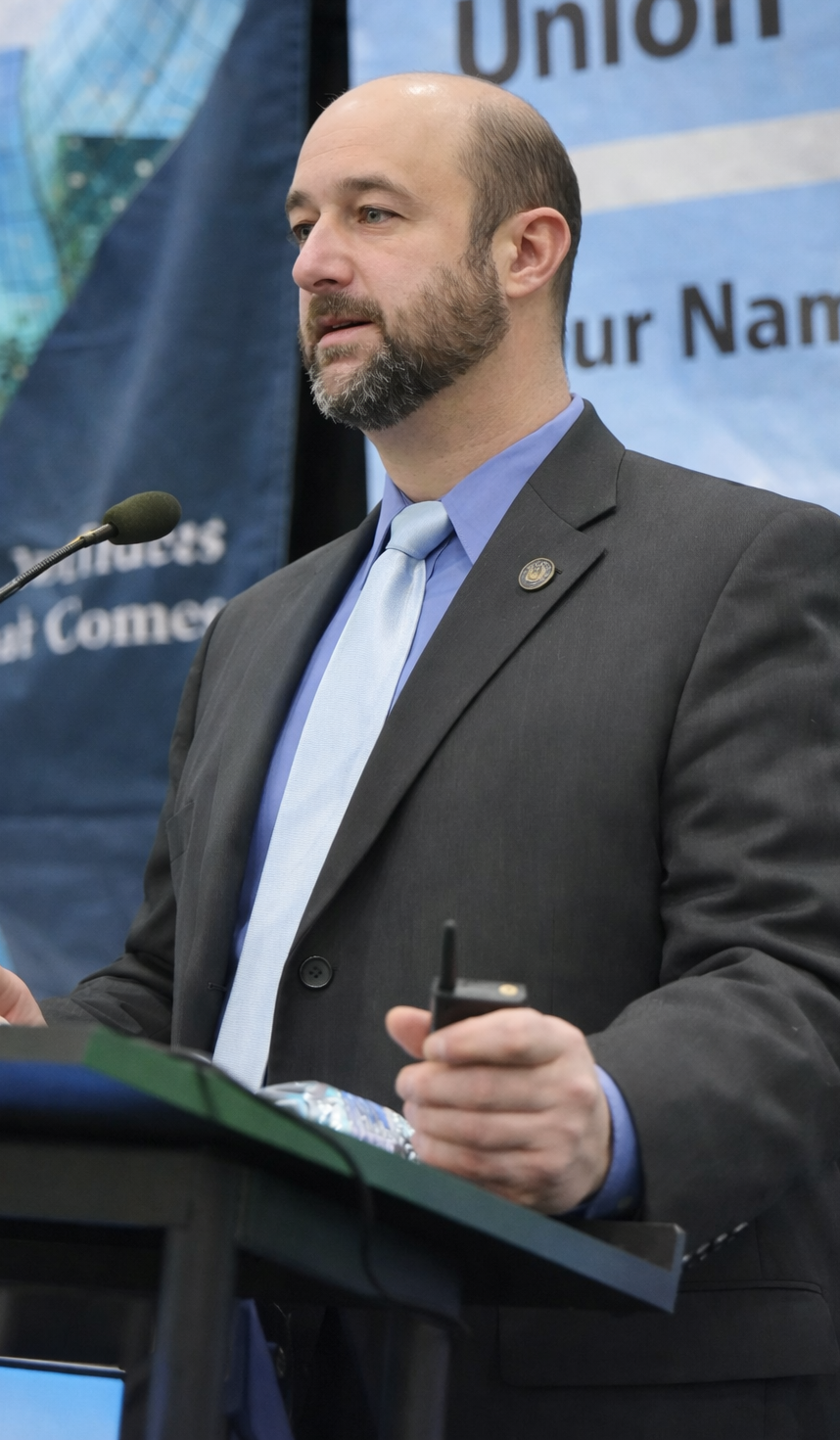
If this year’s HIA-LI Economic Summit made one thing clear, it is this: Long Island’s business community is not waiting for permission to grow.
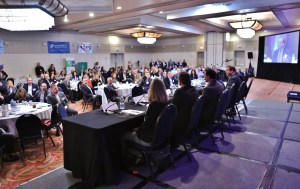
Before some 250 business leaders gathered to “Survey the Pulse of Long Island,” the energy in the room was unmistakable. There was discipline. There was realism. And above all, there was readiness.
The data from our 2026 Business Climate Survey, conducted in partnership with Citrin Cooperman and Adelphi University, tells that story clearly. Fifty-eight percent of respondents plan to expand in 2026. More than two-thirds anticipate growth over the next five years. Nearly half are planning capital improvements this year alone.
Those are not defensive numbers. They are forward-looking numbers.
They reflect confidence in Long Island’s economic foundation and belief in what comes next. When challenged, this region does not retreat. It recalibrates and moves forward.
I remain deeply grateful to our survey partners. Citrin Cooperman’s analytical leadership and Adelphi University’s academic collaboration ensure that our conversations are grounded in measurable reality. We are not speculating about the pulse of Long Island. We are measuring it.
CAUTIOUS DOES NOT MEAN WEAK
While 45 percent of respondents forecast revenue growth in 2026, the tone of the morning was less about exuberance and more about intentional positioning. Under the thoughtful moderation of John Fitzgerald, Partner at Citrin Cooperman, the discussion underscored a critical distinction: prudence is not pessimism.
What I heard was strategy.
Balance sheets are strong. Liquidity remains healthy. Investment in artificial intelligence is accelerating. Companies are strengthening operations and planning for sustainable expansion. That is not hesitation. That is resilience with purpose.
PUBLIC INVESTMENT MUST UNLOCK PRIVATE MOMENTUM
Governor Kathy Hochul’s Long Island Assistant Secretary for Intergovernmental Affairs, Rob Calarco, outlined the governor’s priorities, including middle-class tax relief, child care expansion, insurance reform and significant economic development commitments.
Most notable for our region was the emphasis on sustained investment in water infrastructure, including sewer and clean water projects designed to unlock housing development.
Infrastructure policy does not always capture headlines, but it determines whether growth is possible. Without sewer capacity and clean water systems, housing approvals stall. Without housing, workforce retention suffers. Without workforce stability, business expansion slows.
Water infrastructure is not abstract policy. It is the lever that enables economic mobility and regional competitiveness.
The encouraging signal is this: public investment is aligning around affordability and growth. The responsibility now is execution.
HOUSING IS THE MULTIPLIER
If one issue connected nearly every industry represented on the panel, it was housing.
The message was consistent across sectors. Without attainable housing, attracting young professionals becomes more difficult. Retaining families becomes harder. Scaling employers becomes constrained.
James Coughlan, Executive Vice President and Partner of TRITEC Real Estate, reinforced this point clearly. Housing production is not simply a development conversation. It is a competitiveness strategy.
Our survey confirms that business leaders understand this reality. Forty percent identified housing affordability as the most important area for government investment to facilitate growth.
Housing is not a siloed policy conversation. It is an economic multiplier. When supply expands and approvals move predictably, the ripple effects touch healthcare staffing, education, small business growth and long-term investment.
WORKFORCE STRATEGY MUST BE INTENTIONAL
Housing alone will not solve our workforce challenges. Talent pipelines must be built deliberately and sustained over time.
Throughout the discussion, the need for earlier engagement between industry and education surfaced repeatedly. Rich Humann, President and CEO of H2M Architects + Engineers and HIA-LI Board Member, emphasized that waiting until college to expose students to career pathways is too late. If we want engineers, designers, project managers and skilled trades professionals to remain on Long Island, those pathways must begin in K–12 classrooms.
That philosophy aligns directly with the work of HIA-LI’s Workforce Development Task Force, co-chaired by Humann and Suffolk County Community College President Dr. Edward Bonahue. Identifying labor shortages is not enough. Structured, visible and accessible pipelines must follow.
In healthcare, the urgency is even more pronounced. Christopher Nelson, President of St. Catherine of Siena Hospital, described rising demand for services colliding with workforce shortages and reimbursement pressures. We are training talented clinicians here. Policy and affordability must make it possible for them to build their careers here as well.
Higher education is navigating its own structural shifts. Dr. Christopher Storm, Interim President of Adelphi University, pointed to demographic headwinds and federal aid changes reshaping enrollment patterns. At the same time, institutions like Adelphi remain foundational to Long Island’s economic vitality. They produce first-generation graduates, train nurses and teachers, and prepare students for a workforce increasingly shaped by artificial intelligence.
From the financial perspective, the fundamentals remain strong. Kevin Santacroce, Chief Banking Officer of ConnectOne Bank and HIA-LI Board Member, reinforced that Long Island businesses are disciplined, well-capitalized and positioned for expansion. Entrepreneurial energy is intact. What business leaders need is predictability in the policy environment.
And any workforce strategy must remain grounded in household realities. Rick Lewis, Chief Executive Officer of the Suffolk Y JCC, reminded us that rising food pantry usage and cautious donor behavior reflect ongoing financial pressure on families. Economic expansion must translate into community stability.
Workforce strategy, in other words, is the connective tissue between housing, education, healthcare and business growth.
INNOVATION WITH RESPONSIBILITY
Nearly 60 percent of survey respondents believe artificial intelligence will positively impact their operations this year, and more than half have already invested in AI tools.
The discussion reflected maturity rather than hype. Leaders are embracing efficiency gains while recognizing that cybersecurity vigilance and governance must accompany innovation. Technology can amplify productivity, but it cannot replace thoughtful leadership or sound policy frameworks.
WHAT THIS MOMENT REQUIRES
After listening carefully to every perspective in the room, my conclusion is clear.
Long Island is aligned.
Businesses are prepared to expand. Infrastructure investment is underway. Educational institutions are adapting. Financial institutions are stable. The entrepreneurial spirit remains intact.
We know the pressure points. Housing approvals must move faster. Workforce pipelines must strengthen. Regulatory frameworks must facilitate development rather than delay it. Infrastructure investment must translate into tangible progress.
Long Island has always thrived when public and private leadership move in the same direction. That alignment was palpable at this year’s Summit.
The pulse of Long Island is strong. The foundation is in place. With focused policy action and continued collaboration, we have the opportunity to convert readiness into sustained, confident growth.
Because strong policy begins with strong data, I encourage you to explore the full findings in our 2026 Business Climate Survey.
To read the full Business Climate Survey, click here.

 BUSINESS GROWS HERE