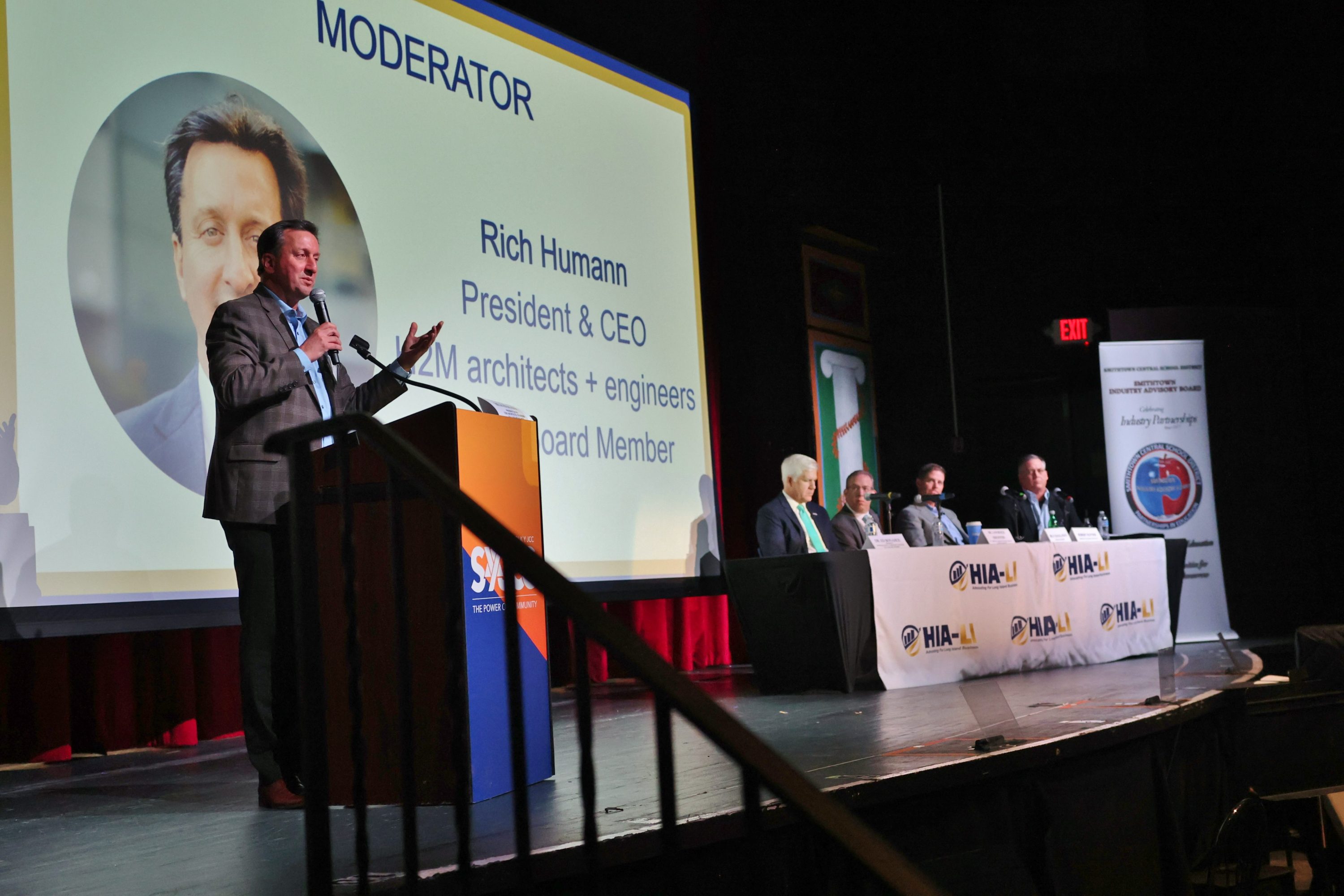
Last week, we took an extraordinary step forward for Long Island’s future.
Our first-ever HIA-LI Workforce Summit — held in partnership with the Smithtown Central School District and the Smithtown Industry Advisory Board — brought together more than 300 educators, guidance counselors, and business leaders at the Suffolk Y Jewish Community Center in Commack. It was a packed house, and more importantly, it was a packed conversation.
From the moment attendees walked through the door, there was an unmistakable sense of optimism and purpose. Teachers stood alongside business executives. College presidents spoke with construction and manufacturing leaders. Guidance counselors shared ideas with healthcare professionals. Everyone came with a shared mission: to bridge the gap between education and employment so our young people can build rewarding careers right here on Long Island.
The Start of a New Dialogue
For years, we’ve talked about the challenges of workforce development — the shortage of skilled workers, the exodus of young talent, and the perception that “success” only comes with a four-year degree. The summit showed that this conversation is changing.
What we heard — and felt — was a powerful message of alignment. Business and education both understand that the world of work has evolved, and our approach to preparing students must evolve with it. A college degree remains one valuable path, but so are two-year programs, certificate credentials, apprenticeships, and technical careers that lead to meaningful, well-paid jobs with growth potential.
Several speakers underscored how important it is to remove the stigma that sometimes surrounds the trades and vocational programs. In reality, those routes can open doors to prosperity — often with less debt and more hands-on experience.
Collaboration in Action
What made this summit so inspiring was seeing collaboration happen in real time.
- State Senator Mario Mattera opened with a passionate call to unite business, labor, and education to build the workforce of tomorrow.
- Rich Humann of H2M architects + engineers and Dr. Ed Bonahue of Suffolk County Community College — both HIA-LI Board Members and Co-Chairs of our Workforce Development Task Force — shared how we can better align education with industry demand.
- Our keynote speakers, Michael Woods and Janine Lalia from the CTE Technical Assistance Center of New York, reminded us that true career readiness begins in our classrooms — where teachers and counselors help students see all the pathways to success.
- Industry leaders like Billy Haugland II, Robert Kufner, and Dr. Lawrence Eisenstein showed that construction, manufacturing, and healthcare all have incredible stories to tell — stories that can inspire young people to build their futures right here at home.
- And Phil Como from the Smithtown Industry Advisory Board brought it all together, emphasizing how partnerships like these directly benefit students — connecting education to opportunity.
The Momentum Ahead
The summit reinforced something I’ve long believed: when we put educators and employers in the same room, great things happen. Conversations turn into partnerships. Ideas turn into programs. And most importantly, young people begin to see new possibilities for their future.
Our HIA-LI Workforce Development Task Force will continue driving this momentum forward. We’ll keep facilitating these dialogues, supporting school-business partnerships, and expanding awareness of the incredible career opportunities that exist across Long Island’s innovation ecosystem.
The feedback from the summit has been overwhelmingly positive — from educators grateful for the insight, to business leaders eager to stay involved. But this is only the beginning.
We now have a foundation, a shared understanding, and a growing network of partners ready to take action. The challenge — and the opportunity — is to keep that conversation going.
Looking Forward
Long Island’s future depends on how well we prepare our next generation to thrive — not just in classrooms, but in careers that matter. The summit proved that we have both the passion and the partnerships to make that happen.
Together, we’re building a stronger, smarter, more connected Long Island — one that keeps our talent here, strengthens our economy, and ensures every student sees a future filled with promise.
Click here to download our workforce development report, Innovating the Talent Pipeline: Strategies for Workforce Development in the Long Island Innovation Park at Hauppauge. This 54-page report, developed by the Workforce Development Institute in collaboration with HIA-LI and the Suffolk County Industrial Development Agency, outlines the critical need for stronger industry-academia partnerships to prepare students for careers that are in-demand.

 BUSINESS GROWS HERE