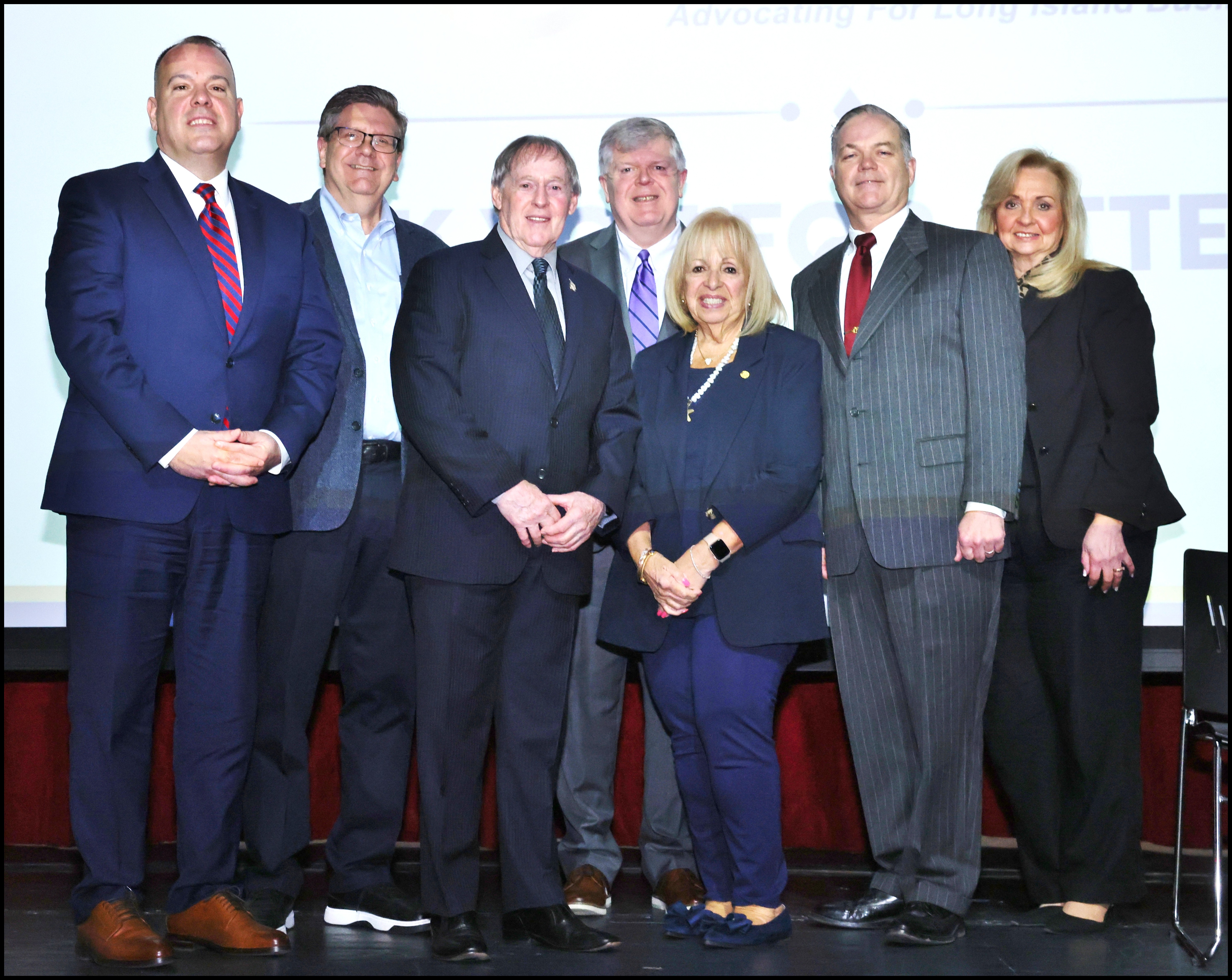
There’s a tendency to talk about economic development in broad, regional terms: state investments, county initiatives, big-picture strategy. But what became clear at HIA-LI’s recent Economic Development Advancements: Towns Shaping Long Island’s Future program is this: the most consequential decisions shaping Long Island’s future are happening at the town level.
That’s where zoning is determined. That’s where redevelopment is approved or denied. And increasingly, that’s where the vision for what Long Island becomes over the next decade is being defined.
A Shared Direction: From Sprawl to Smart Growth
Across the panel, one theme emerged consistently: Long Island is moving away from traditional suburban sprawl and toward more intentional, mixed-use, walkable communities.
In the Town of Huntington, Supervisor Ed Smyth described a community that is already largely built out, leaving redevelopment, not expansion, as the path forward. The proposed Melville Town Center reflects a shift toward creating walkable downtown environments, blending residential, commercial, and lifestyle elements in ways that better reflect how people want to live today.
That same philosophy is taking shape across the region.
In the Town of Islip, Supervisor Angie Carpenter pointed to major redevelopment efforts in Bay Shore and Central Islip, where transit-oriented development and mixed-use projects are transforming underutilized sites into vibrant, economically productive communities. These projects are not just about housing. They are about creating places where people can live, work, and contribute to the local economy.
And in the Town of Babylon, Supervisor Rich Schaffer highlighted how sustained public investment in infrastructure, including roads, drainage, sewer systems, and public safety, has helped unlock significant private-sector development, from Wyandanch to Deer Park and beyond.
Infrastructure Still Comes First
If there was one point of universal agreement, it was this: none of this happens without infrastructure.
Supervisor Ed Wehrheim of the Town of Smithtown underscored how investments in sewer systems, streetscapes, and transportation access are directly tied to revitalization success. Once that foundation is in place, private investment follows, bringing new housing, new businesses, and renewed energy to long-standing business districts.
That same message was echoed throughout the discussion. Whether it’s sewer expansion in Huntington Station, infrastructure upgrades in Smithtown, or large-scale capital investments in Babylon, the path to economic growth begins below ground before it ever rises above it.
Setting the Tone: Leadership and Accountability
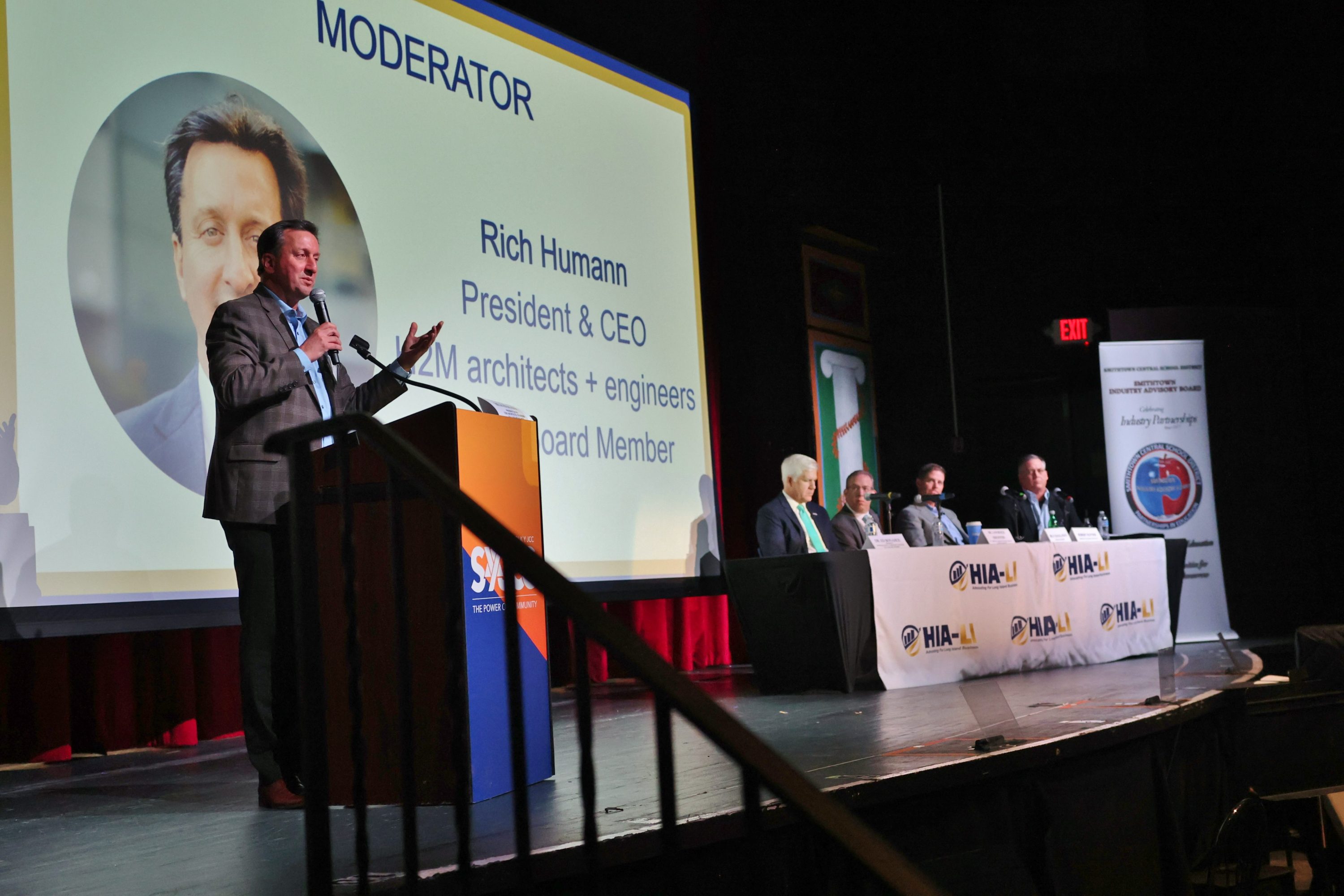
Moderating the discussion, Joe Campolo, Managing Partner of Campolo, Middleton & McCormick LLP; Founder of Strata Alliance; Chair of HIA-LI’s Long Island Economic Development Task Force; and HIA-LI Board Member. Joe emphasized a point that resonated throughout the program: economic development requires not just vision, but action, and it often takes political courage.
He noted that town supervisors are uniquely positioned to move projects forward or stop them, making their leadership central to Long Island’s future. At the same time, he stressed that public-private partnerships cannot exist in name only. The business community must actively support responsible development by engaging in the process, showing up at hearings, and advocating for projects that strengthen the regional economy.
That dynamic, government leadership paired with private-sector engagement, was a consistent thread throughout the conversation and a critical factor in whether projects ultimately succeed.
Balancing Growth, Affordability, and Community
Another key theme was balance.
There is a clear need for new housing on Long Island, but what that housing looks like matters. Several supervisors emphasized that developments cannot be exclusively rental-based. Communities are looking for a mix that includes opportunities for homeownership, allowing residents to build equity and remain rooted on Long Island long-term.
At the same time, affordability pressures continue to mount. While housing costs are often the focus, Brookhaven Town Supervisor Dan Panico pointed to another looming issue that receives far less attention: waste management. The long-term sustainability and cost of managing Long Island’s solid waste system could have significant implications for taxpayers, businesses, and local governments alike.
These are not abstract challenges. They are real, immediate pressures that require coordination across all levels of government.
Partnership Matters at Every Level
The discussion also reinforced the importance of collaboration, particularly with New York State.
Cara Longworth, Long Island Regional Director for Empire State Development, highlighted the impact of the state’s Downtown Revitalization Initiative, which has brought critical funding into communities across Long Island. These investments are helping towns reimagine their downtowns and accelerate projects that might otherwise take years longer to realize.
At the local level, success also depends on partnerships with developers, school districts, and the business community. In Huntington, for example, support from the Half Hollow Hills School District has helped advance the conversation around the Melville Town Center project, particularly as enrollment trends shift and communities adapt to changing demographics.
The Role of Place and Partnership
Hosting this conversation at the Suffolk Y Jewish Community Center was a reminder of how important community institutions are in bringing people together around these issues. We are grateful to Rick Lewis and his team for opening their doors and providing a space for this important dialogue.
Because ultimately, these conversations matter.
They matter not just for the elected officials making decisions, but for the business community, residents, and future generations who will live with the outcomes.
Looking Ahead
If there is one takeaway from this program, it is that Long Island is not standing still.
Across every town represented, there is movement, projects advancing, infrastructure being built, policies being debated, and visions taking shape. The details may differ from one community to another, but the direction is clear: smarter growth, stronger downtowns, and a renewed focus on making Long Island a place where people can build careers, raise families, and stay for the long term.
The challenge, and the opportunity, will be ensuring that these efforts continue to move forward in a way that is thoughtful, balanced, and sustainable.
Because the future of Long Island isn’t being decided in the abstract.
It’s being built, project by project, downtown by downtown, and town by town.
 BUSINESS GROWS HERE