From Infrastructure to Innovation: How Long Island’s Towns Are Building the Future

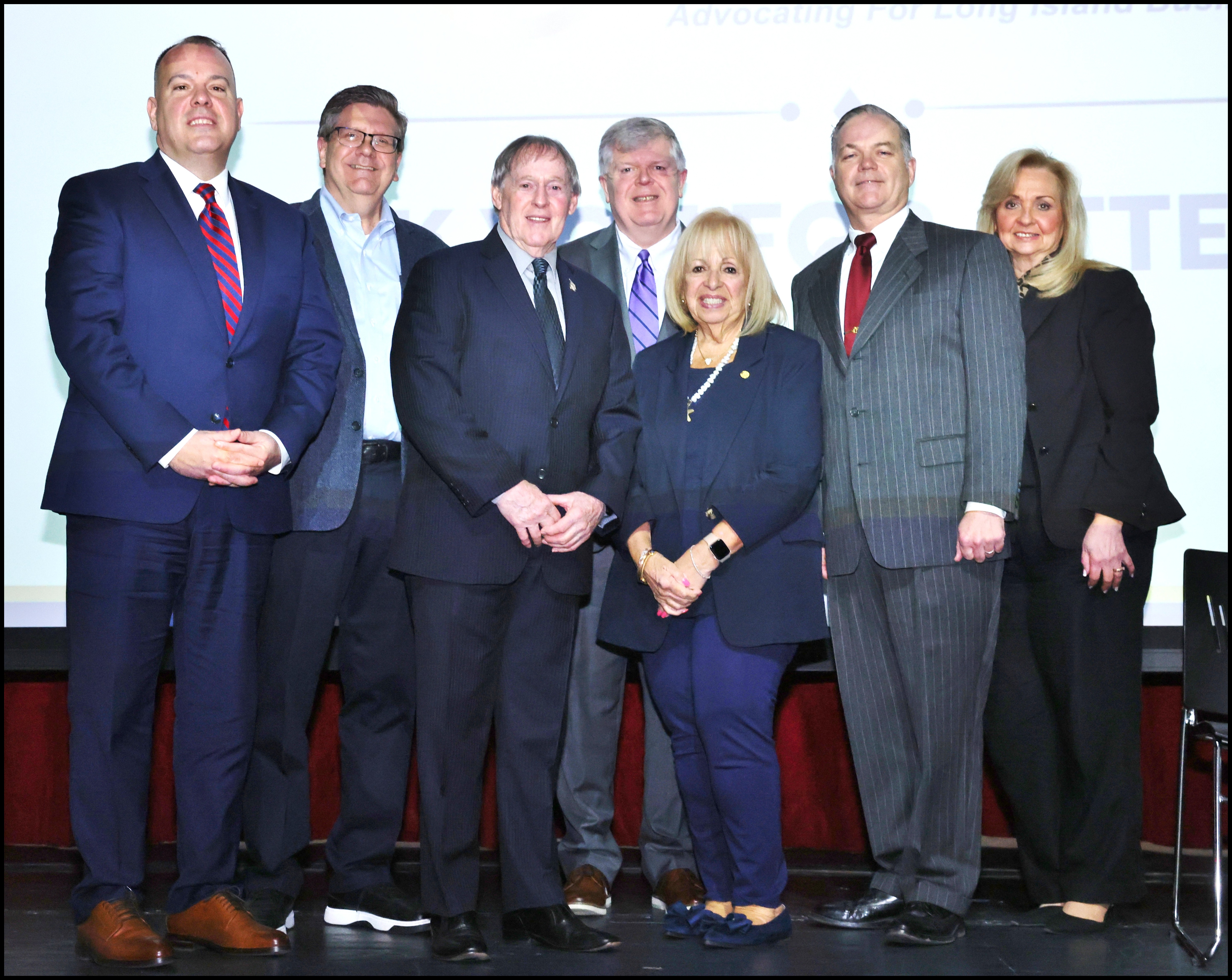
There’s a tendency to talk about economic development in broad, regional terms: state investments, county initiatives, big-picture strategy. But what became clear at HIA-LI’s recent Economic Development Advancements: Towns Shaping Long Island’s Future program is this: the most consequential decisions shaping Long Island’s future are happening at the town level.

That’s where zoning is determined. That’s where redevelopment is approved or denied. And increasingly, that’s where the vision for what Long Island becomes over the next decade is being defined.

A Shared Direction: From Sprawl to Smart Growth

Across the panel, one theme emerged consistently: Long Island is moving away from traditional suburban sprawl and toward more intentional, mixed-use, walkable communities.

In the Town of Huntington, Supervisor Ed Smyth described a community that is already largely built out, leaving redevelopment, not expansion, as the path forward. The proposed Melville Town Center reflects a shift toward creating walkable downtown environments, blending residential, commercial, and lifestyle elements in ways that better reflect how people want to live today.

That same philosophy is taking shape across the region.

In the Town of Islip, Supervisor Angie Carpenter pointed to major redevelopment efforts in Bay Shore and Central Islip, where transit-oriented development and mixed-use projects are transforming underutilized sites into vibrant, economically productive communities. These projects are not just about housing. They are about creating places where people can live, work, and contribute to the local economy.

And in the Town of Babylon, Supervisor Rich Schaffer highlighted how sustained public investment in infrastructure, including roads, drainage, sewer systems, and public safety, has helped unlock significant private-sector development, from Wyandanch to Deer Park and beyond.

Infrastructure Still Comes First

If there was one point of universal agreement, it was this: none of this happens without infrastructure.

Supervisor Ed Wehrheim of the Town of Smithtown underscored how investments in sewer systems, streetscapes, and transportation access are directly tied to revitalization success. Once that foundation is in place, private investment follows, bringing new housing, new businesses, and renewed energy to long-standing business districts.

That same message was echoed throughout the discussion. Whether it’s sewer expansion in Huntington Station, infrastructure upgrades in Smithtown, or large-scale capital investments in Babylon, the path to economic growth begins below ground before it ever rises above it.

Setting the Tone: Leadership and Accountability

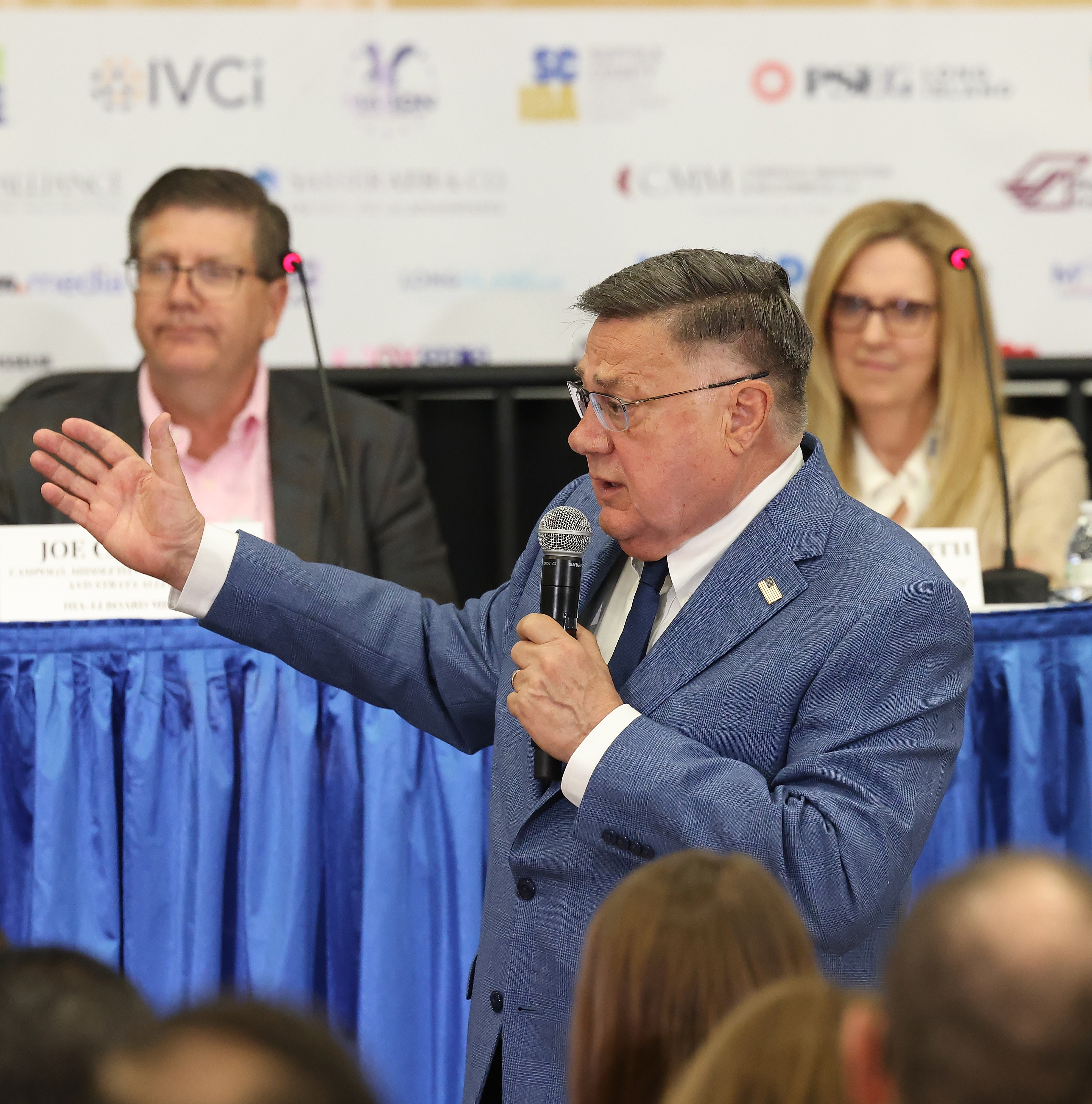
Moderating the discussion, Joe Campolo, Managing Partner of Campolo, Middleton & McCormick LLP; Founder of Strata Alliance; Chair of HIA-LI’s Long Island Economic Development Task Force; and HIA-LI Board Member. Joe emphasized a point that resonated throughout the program: economic development requires not just vision, but action, and it often takes political courage.

He noted that town supervisors are uniquely positioned to move projects forward or stop them, making their leadership central to Long Island’s future. At the same time, he stressed that public-private partnerships cannot exist in name only. The business community must actively support responsible development by engaging in the process, showing up at hearings, and advocating for projects that strengthen the regional economy.

That dynamic, government leadership paired with private-sector engagement, was a consistent thread throughout the conversation and a critical factor in whether projects ultimately succeed.

Balancing Growth, Affordability, and Community

Another key theme was balance.

There is a clear need for new housing on Long Island, but what that housing looks like matters. Several supervisors emphasized that developments cannot be exclusively rental-based. Communities are looking for a mix that includes opportunities for homeownership, allowing residents to build equity and remain rooted on Long Island long-term.

At the same time, affordability pressures continue to mount. While housing costs are often the focus, Brookhaven Town Supervisor Dan Panico pointed to another looming issue that receives far less attention: waste management. The long-term sustainability and cost of managing Long Island’s solid waste system could have significant implications for taxpayers, businesses, and local governments alike.

These are not abstract challenges. They are real, immediate pressures that require coordination across all levels of government.

Partnership Matters at Every Level

The discussion also reinforced the importance of collaboration, particularly with New York State.

Cara Longworth, Long Island Regional Director for Empire State Development, highlighted the impact of the state’s Downtown Revitalization Initiative, which has brought critical funding into communities across Long Island. These investments are helping towns reimagine their downtowns and accelerate projects that might otherwise take years longer to realize.

At the local level, success also depends on partnerships with developers, school districts, and the business community. In Huntington, for example, support from the Half Hollow Hills School District has helped advance the conversation around the Melville Town Center project, particularly as enrollment trends shift and communities adapt to changing demographics.

The Role of Place and Partnership

Hosting this conversation at the Suffolk Y Jewish Community Center was a reminder of how important community institutions are in bringing people together around these issues. We are grateful to Rick Lewis and his team for opening their doors and providing a space for this important dialogue.

Because ultimately, these conversations matter.

They matter not just for the elected officials making decisions, but for the business community, residents, and future generations who will live with the outcomes.

Looking Ahead

If there is one takeaway from this program, it is that Long Island is not standing still.

Across every town represented, there is movement, projects advancing, infrastructure being built, policies being debated, and visions taking shape. The details may differ from one community to another, but the direction is clear: smarter growth, stronger downtowns, and a renewed focus on making Long Island a place where people can build careers, raise families, and stay for the long term.

The challenge, and the opportunity, will be ensuring that these efforts continue to move forward in a way that is thoughtful, balanced, and sustainable.

Because the future of Long Island isn’t being decided in the abstract.

It’s being built, project by project, downtown by downtown, and town by town.

Bi-Partisan Public-Private Cooperation Propels Long Island’s Economic Growth

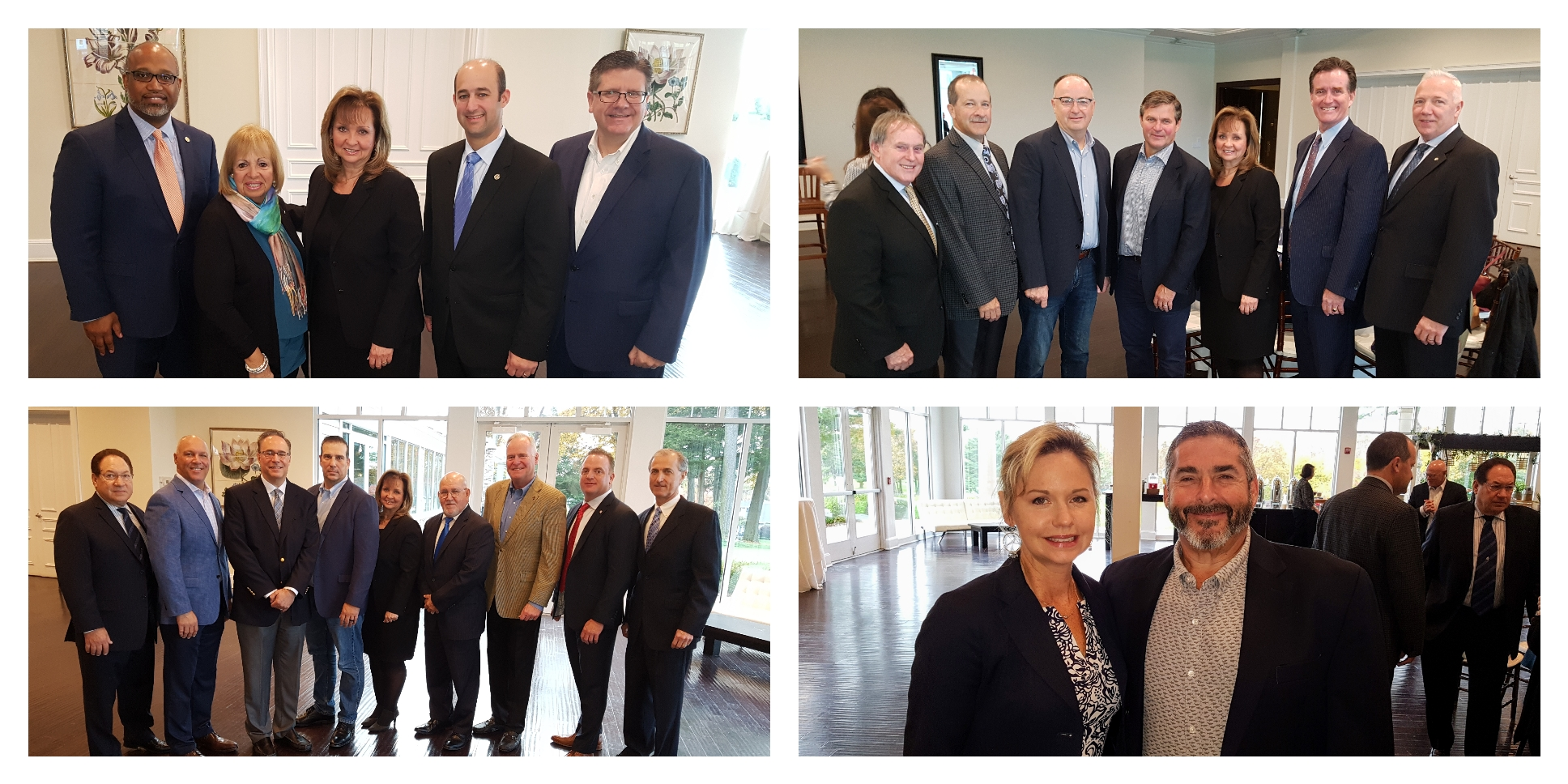
2019 Leg Recep Collage

On October 29th the HIA-LI once again gathered for our Annual Board Legislative Breakfast with the goal of reviewing our current initiatives and asking for continued support from our officials.

“Long Island is not only a national treasure, but we’re also a national model for how business and government should partner.”

When HIA-LI Chair Joe Campolo said this to the gathering his words rang true for me – and I think for just about every business executive and government official in the room.

Yes, there’s always going to be some disagreement between public officials and businesspeople. We won’t always see eye-to-eye.

But in Nassau and Suffolk counties, the relationship has been supported by a spirit of cooperation. Indeed, our own Long Island Innovation Park at Hauppauge (LI-IPH) could never have become America’s second-largest innovation park – trailing only Silicon Valley itself – without the kind of cooperation we are talking about.

We were privileged to be joined by Smithtown Supervisor Ed Wehrheim and Councilman Tom Lohmann; Islip Town Supervisor Angie Carpenter; Suffolk County Presiding Officer DuWayne Gregory; Suffolk County Legislators Robert Calarco, Sarah Anker, Bill Lindsay, Susan Berland and Rob Trotta; State Senator John Flanagan; State Assembly Members Michael Fitzpatrick and Steve Stern; and Patchogue Mayor Paul Pontieri. Their presence helped to reinforce the symbiosis shared by the private and public sectors on Long Island.

All of LI-IPH’s past milestones – the childcare center, extra police protection, the exit off the Northern State Parkway, sewage improvements, and increases in permissible building height – required bi-partisan public sector cooperation.

Joe Campolo – Managing Partner at Campolo, Middleton & McCormick, LLP – praised the Suffolk County IDA for helping scores of our members firms expand – and for underwriting the LI-IPH’s 160-page “Opportunity Analysis” that charts a long-term economic revitalization strategy by fostering the growth of competitive, tradeable industries.

Rita DiStefano, HR Consulting Director with Portnoy Messinger Pearl & Associates – who chairs HIA-LI’s Small Business Task Force – told attendees that she recognizes government’s role in supporting small firms, which constitute four-fifths of our membership. Public sector engagement is critical in such areas as financial assistance for business, and workforce training and development.

And Scott Maskin – the CEO of SUNation and Co-Chair of HIA-LI’s Hauppauge Industrial Power Project with HIA-LI Lifetime Board Member Jack Kulka told attendees about the goal of placing solar installations on park rooftops by the end of 2020, helping to meet the Governor’s NY-SUN target of 100 percent renewables by 2040.

HIA-LI proudly facilitates public-private cooperation at all levels with the help of HIA-LI Board Members carrying out our initiatives. It’s a partnership that’s essential to Long Island’s future.

Young Professionals Impart Wisdom

There was a full-house at the June 18 HIA-LI Young Professionals and Entrepreneurs (H.Y.P.E.) Executive Breakfast and Scholarship Awards ceremony.

We all know the challenge of young people leaving Long Island to live and work in other regions. In fact, it is stated by the year 2025 seventy-five percent of the workforce will be millennials who, if they continue to exit Long Island, will create an even larger challenge. We also know the urgent need to create jobs and connect our educational partners. It is the very reason that several years ago the HIA-LI created a Young Professionals Committee (now H.Y.P.E.) that every year creates a young professionals panel to speak to our scholarship recipients.

There were some great takeaways this year from the June 18th HIA-LI Young Professionals Scholarship Awards and Executive Breakfast held at the WizdomOne Group of Companies in Islandia.  Here are a few that stand out:

  • Follow your passion because passion equals excellence. Now is not the time to “settle” or second-guess your dreams.
  • If you’re not sure of your career direction, use college to explore your options. Take classes that interest you . . . one of them might just ignite a ‘spark.’
  • There is no substitute for hard work. (You’ve heard the expression, “The harder I work, the luckier I get.  Well, it’s true.)
  • Look at failures as learning opportunities. You can’t learn to succeed unless you’ve learned to fail.  And when you do fail, fail hard, fail fast, and then get up and continue moving forward.
  • Be present in whatever you’re doing. Put down the cell phone.  Turn off the TV.  Focus on people.
  • It’s important to have a support system. It may your parents.  It may be friends.  It may be extended family.  Or it may be co-workers.  But no matter, surround yourself with people who are positive and supportive.
  • Find work-life balance that makes you happy. It may not look like your parents, friends, or colleagues, but that’s ok.  So long as it works for you.
  • Make your bed every morning! Yes, starting the day in an organized way sets a positive tone for the rest of your day.

Many thanks to the stellar panel of young professionals who helped to impart these insightful pieces of advice.  They were moderators Jason Hershkowitz, Account Manager and Executive Recruiter, Choice Long Island, and Gregg Pajak, Founder and Managing Partner, WizdomeOne Group of Companies. Panelists included Josiah Cheatham, Senior Business Development Representative, People’s Alliance Federal Credit Union; Adam Holtzer, Director of Business Development, Generations Beyond; Lauren Kanter-Lawrence, Director of Communications, Campolo Middleton & McCormick, LLP; and, David Whelan, Director of Development, Harvest Power.

Congratulations to the 12 scholarship recipients, all children of HIA-LI members who chose to continue their post-high school education right here on Long Island.

Want to find out more about HIA-LI’s Young Professionals & Entrepreneurs (H.Y.P.E.) Committee?  Call Connor Robertson at 631-543-5355 or email crobertson@hia-li.org.