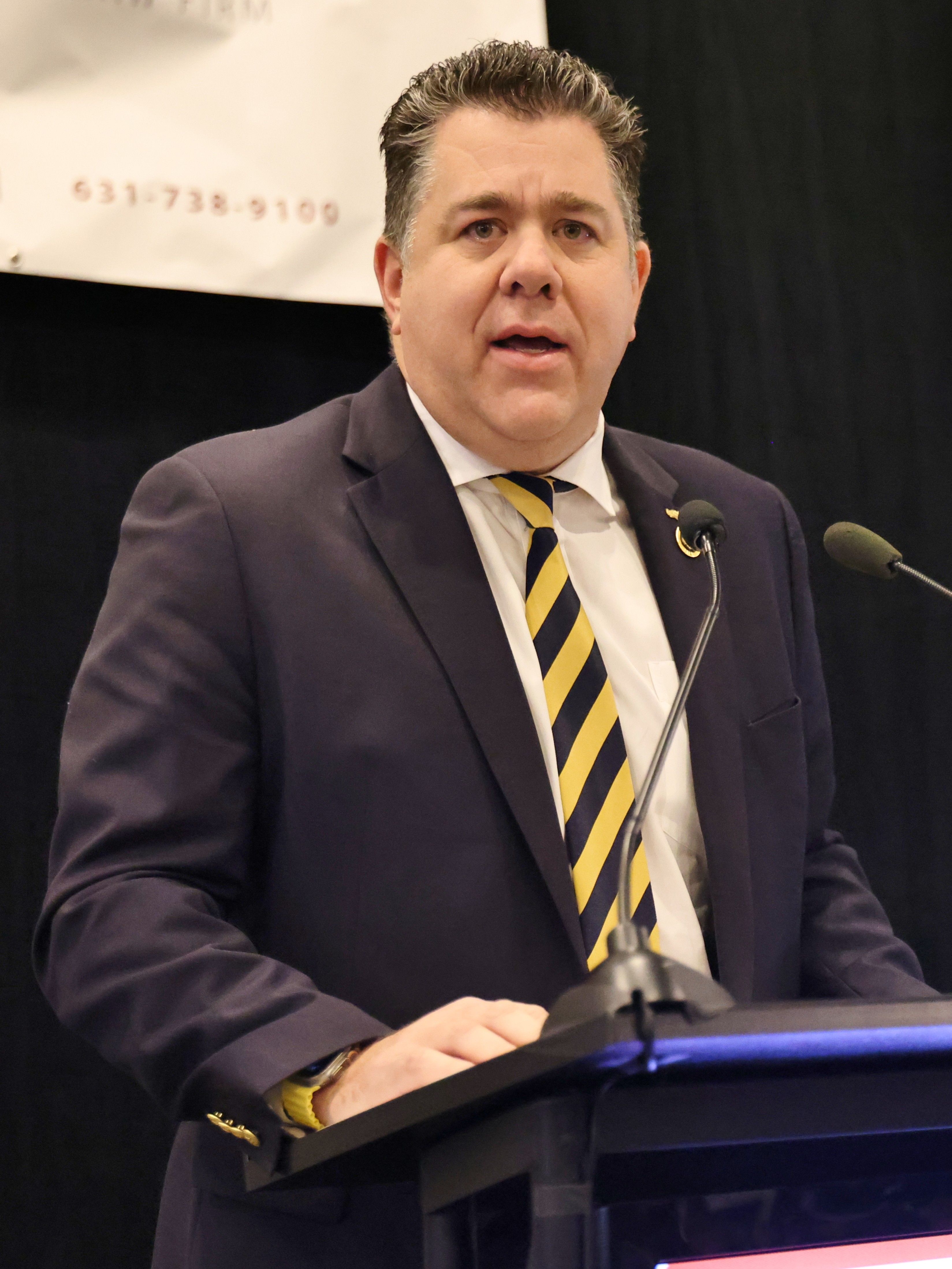
Each year, HIA-LI’s Annual Meeting and Legislative Forum offers an important opportunity to step back from the day-to-day pressures facing employers and policymakers alike and take a clear-eyed look at where Long Island is headed. This year’s event, which attracted nearly 400 attendees, reinforced something many of us already know: the challenges confronting our region are complex, interconnected, and impossible to solve in isolation, but progress is absolutely achievable when we work together.
What stood out most this year was not simply the range of issues discussed — affordability, housing, infrastructure, transportation, energy, workforce development, and solid waste — but the strong sense of alignment across levels of government and across party lines. Again and again, speakers returned to a shared conclusion: Long Island’s future depends on collaboration, pragmatism, and a willingness to row in the same direction.
A SHARED VIEW FROM WASHINGTON AND ALBANY
Congressman Nick LaLota opened the program by grounding the conversation in the real-world pressures facing Long Island families and employers. He emphasized the importance of ensuring that federal policy recognizes the high cost of living in our region and delivers tangible relief for both households and small businesses. Just as important, he underscored that economic vitality begins locally — with the business owners and employers who create jobs, support families, and keep Long Island competitive.
Although she was unable to join us in person, Governor Kathy Hochul shared a video message with our members, continuing a dialogue she has maintained with HIA-LI over the years. In her remarks, the Governor reinforced Long Island’s role as a critical driver of New York State’s economy and highlighted the state’s continued commitment to investing in infrastructure, transportation, water and sewer systems, manufacturing, and innovation. Her message emphasized that strategic public investment, aligned with private-sector growth, is essential to keeping Long Island competitive and economically strong.
From the state legislative perspective, New York State Senator Monica Martinez framed affordability not as a single policy challenge, but as a balance of education, workforce readiness, infrastructure, and attainable housing. Drawing on her background in education, she spoke about the importance of creating strong pipelines between schools, training programs, and Long Island employers, recognizing that a thriving regional economy depends on preparing people for careers that allow them to live and work here long term. She also reinforced the need for state investment to reflect the contributions Long Island makes to New York’s overall economy.
COUNTY AND LOCAL LEADERSHIP: PRACTICAL SOLUTIONS, REAL CONSEQUENCES
At the county level, Suffolk County Executive Ed Romaine offered a candid assessment of the structural challenges Long Island must confront head-on. Transportation, energy capacity, sewer infrastructure, and solid waste management are not abstract policy discussions. They are foundational to economic growth, housing production, and quality of life. His message was clear: without coordinated regional planning and sustained investment, these issues will limit Long Island’s future. With collaboration and forward-looking leadership, they can instead become opportunities.
Presiding Officer Anthony Piccirillo echoed the importance of fiscal responsibility and long-term planning, particularly as Suffolk County works to maintain public safety while addressing affordability pressures. He emphasized the value of bipartisan cooperation within county government and the need to focus on practical solutions that improve daily life for residents and businesses alike. Stability, transparency, and shared responsibility were central themes in his remarks.
From the municipal perspective, Smithtown Supervisor Ed Wehrheim highlighted how thoughtful local planning can support both economic development and housing balance. By investing in business districts, infrastructure, and a mix of housing options — including opportunities for homeownership — municipalities can strengthen communities while supporting workforce retention. His comments reinforced that local success stories are strongest when they align with broader county and state priorities.
THE COMMON THREAD: REGIONAL COLLABORATION OVER POLITICS
Across all of these perspectives, a clear common thread emerged. No single level of government can solve these challenges alone. Housing requires infrastructure. Infrastructure requires funding and coordination. Workforce development depends on education, transportation, and employer engagement. Affordability is shaped by all of it.
As HIA-LI Board Member Joe Campolo, Managing Partner at Campolo, Middleton & McCormick, LLP, guided the discussion, it became clear that the most productive moments were those centered on outcomes rather than ideology. That spirit of cooperation reflects the path forward for Long Island: collaborative, pragmatic, and focused on results.
LOOKING AHEAD: NEW LEADERS, SHARED PURPOSE
As we begin a new year, this spirit of partnership also extends to HIA-LI’s leadership. We are proud to welcome five new members to our Board of Directors, whose experience reflects the depth and diversity of Long Island’s economy:
- Babak D. Beheshti, Ph.D. — Dean and Professor, New York Institute of Technology
- Dawn Cagliano — President, IVCi
- Timothy M. Foley — Long Island Business Banking Market Executive, Bank of America
- Katherine M. Fritz — President and CEO, Long Island Cares
- Robert McBride — Founder and CEO, McBride Consulting and Business Development Group
Each brings valuable insight from higher education, technology, finance, nonprofit leadership, and strategic business development. Their perspectives will help guide HIA-LI’s advocacy and programming as we continue addressing the evolving needs of employers and communities across the region.
MOVING FORWARD: TOGETHER
HIA-LI remains focused on convening leaders, elevating business’ voice, and advancing solutions that strengthen Long Island’s economic foundation. The conversations at this year’s Annual Meeting reinforced something I believe deeply: when business, government, and community stakeholders work together with a shared commitment to problem-solving, Long Island is well positioned to move forward . . . together.



 BUSINESS GROWS HERE