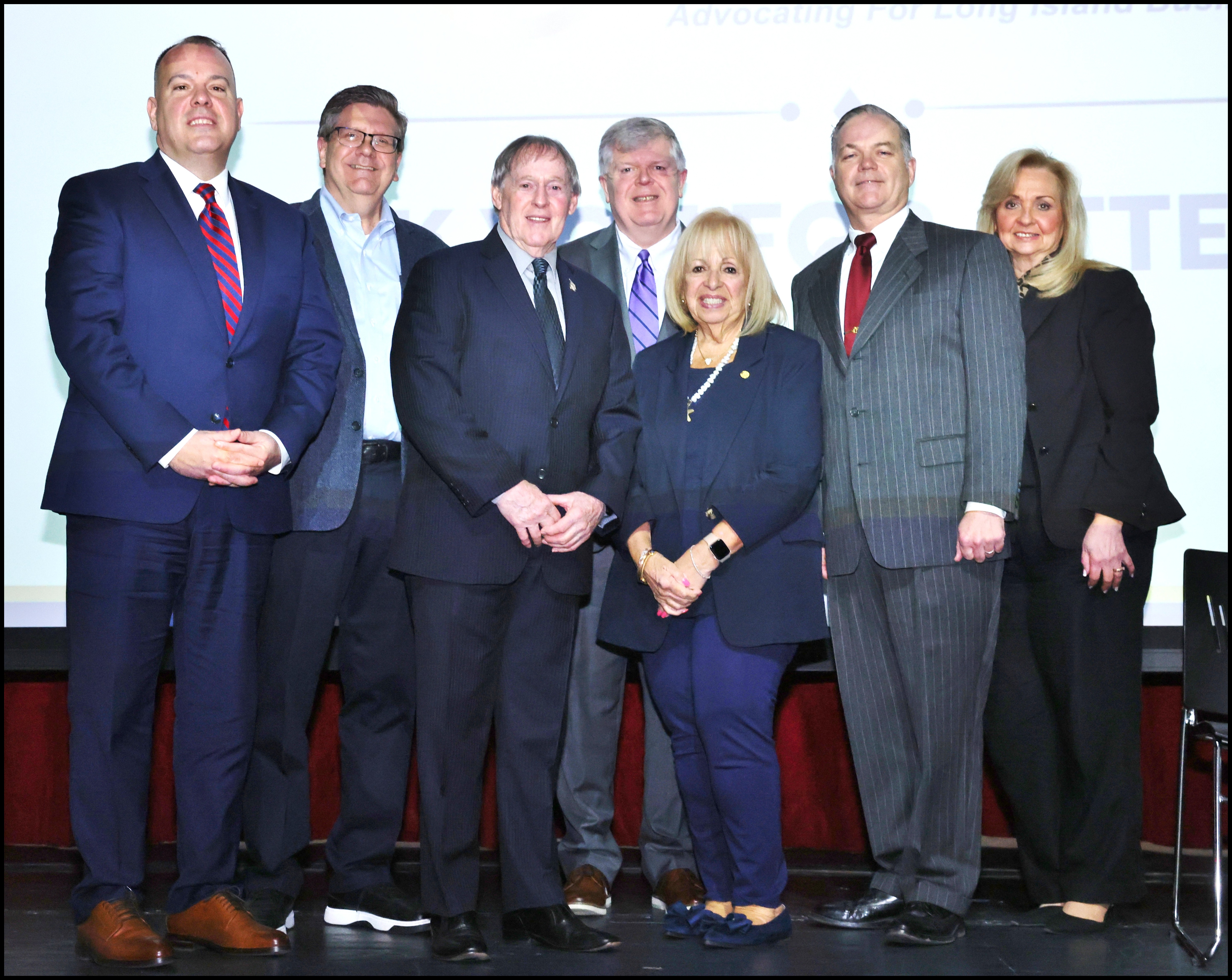
From Infrastructure to Innovation: How Long Island’s Towns Are Building the Future

There’s a tendency to talk about economic development in broad, regional terms: state investments, county initiatives, big-picture strategy. But what became clear at HIA-LI’s recent Economic Development Advancements: Towns Shaping Long Island’s Future program is this: the most consequential decisions shaping Long Island’s future are happening at the town level.

That’s where zoning is determined. That’s where redevelopment is approved or denied. And increasingly, that’s where the vision for what Long Island becomes over the next decade is being defined.

A Shared Direction: From Sprawl to Smart Growth

Across the panel, one theme emerged consistently: Long Island is moving away from traditional suburban sprawl and toward more intentional, mixed-use, walkable communities.

In the Town of Huntington, Supervisor Ed Smyth described a community that is already largely built out, leaving redevelopment, not expansion, as the path forward. The proposed Melville Town Center reflects a shift toward creating walkable downtown environments, blending residential, commercial, and lifestyle elements in ways that better reflect how people want to live today.

That same philosophy is taking shape across the region.

In the Town of Islip, Supervisor Angie Carpenter pointed to major redevelopment efforts in Bay Shore and Central Islip, where transit-oriented development and mixed-use projects are transforming underutilized sites into vibrant, economically productive communities. These projects are not just about housing. They are about creating places where people can live, work, and contribute to the local economy.

And in the Town of Babylon, Supervisor Rich Schaffer highlighted how sustained public investment in infrastructure, including roads, drainage, sewer systems, and public safety, has helped unlock significant private-sector development, from Wyandanch to Deer Park and beyond.

Infrastructure Still Comes First

If there was one point of universal agreement, it was this: none of this happens without infrastructure.

Supervisor Ed Wehrheim of the Town of Smithtown underscored how investments in sewer systems, streetscapes, and transportation access are directly tied to revitalization success. Once that foundation is in place, private investment follows, bringing new housing, new businesses, and renewed energy to long-standing business districts.

That same message was echoed throughout the discussion. Whether it’s sewer expansion in Huntington Station, infrastructure upgrades in Smithtown, or large-scale capital investments in Babylon, the path to economic growth begins below ground before it ever rises above it.

Setting the Tone: Leadership and Accountability

Moderating the discussion, Joe Campolo, Managing Partner of Campolo, Middleton & McCormick LLP; Founder of Strata Alliance; Chair of HIA-LI’s Long Island Economic Development Task Force; and HIA-LI Board Member. Joe emphasized a point that resonated throughout the program: economic development requires not just vision, but action, and it often takes political courage.

He noted that town supervisors are uniquely positioned to move projects forward or stop them, making their leadership central to Long Island’s future. At the same time, he stressed that public-private partnerships cannot exist in name only. The business community must actively support responsible development by engaging in the process, showing up at hearings, and advocating for projects that strengthen the regional economy.

That dynamic, government leadership paired with private-sector engagement, was a consistent thread throughout the conversation and a critical factor in whether projects ultimately succeed.

Balancing Growth, Affordability, and Community

Another key theme was balance.

There is a clear need for new housing on Long Island, but what that housing looks like matters. Several supervisors emphasized that developments cannot be exclusively rental-based. Communities are looking for a mix that includes opportunities for homeownership, allowing residents to build equity and remain rooted on Long Island long-term.

At the same time, affordability pressures continue to mount. While housing costs are often the focus, Brookhaven Town Supervisor Dan Panico pointed to another looming issue that receives far less attention: waste management. The long-term sustainability and cost of managing Long Island’s solid waste system could have significant implications for taxpayers, businesses, and local governments alike.

These are not abstract challenges. They are real, immediate pressures that require coordination across all levels of government.

Partnership Matters at Every Level

The discussion also reinforced the importance of collaboration, particularly with New York State.

Cara Longworth, Long Island Regional Director for Empire State Development, highlighted the impact of the state’s Downtown Revitalization Initiative, which has brought critical funding into communities across Long Island. These investments are helping towns reimagine their downtowns and accelerate projects that might otherwise take years longer to realize.

At the local level, success also depends on partnerships with developers, school districts, and the business community. In Huntington, for example, support from the Half Hollow Hills School District has helped advance the conversation around the Melville Town Center project, particularly as enrollment trends shift and communities adapt to changing demographics.

The Role of Place and Partnership

Hosting this conversation at the Suffolk Y Jewish Community Center was a reminder of how important community institutions are in bringing people together around these issues. We are grateful to Rick Lewis and his team for opening their doors and providing a space for this important dialogue.

Because ultimately, these conversations matter.

They matter not just for the elected officials making decisions, but for the business community, residents, and future generations who will live with the outcomes.

Looking Ahead

If there is one takeaway from this program, it is that Long Island is not standing still.

Across every town represented, there is movement, projects advancing, infrastructure being built, policies being debated, and visions taking shape. The details may differ from one community to another, but the direction is clear: smarter growth, stronger downtowns, and a renewed focus on making Long Island a place where people can build careers, raise families, and stay for the long term.

The challenge, and the opportunity, will be ensuring that these efforts continue to move forward in a way that is thoughtful, balanced, and sustainable.

Because the future of Long Island isn’t being decided in the abstract.

It’s being built, project by project, downtown by downtown, and town by town.

Uniting for Progress: Business Groups Power Community Success

This week, Long Island Business News published an op-ed by Long Island Builders Institute CEO Mike Florio and me titled “When Business Groups Unite, Communities Win.” You can read the full piece here.

In the column, Mike and I reflect on an important lesson from this year’s Republican primaries in Huntington and Smithtown. At stake were two major initiatives: Huntington’s Melville Town Center Overlay District and Smithtown’s Kings Park revitalization. Both projects were designed to address some of our region’s most pressing challenges—creating affordable workforce housing, bringing vitality back to local downtowns, and supporting jobs in the construction trades.

For decades, there has been a perception that business interests and community interests are at odds. Too often, the debate is framed as “profits versus people.” But the reality is that responsible development and strong communities go hand-in-hand. The Melville and Kings Park projects represent the kind of forward-looking planning that benefits working Long Islanders and strengthens our economy.

Recognizing this, Long Island’s leading business organizations—including HIA-LI, the Long Island Builders Institute, the Long Island Association, the Association for a Better Long Island, the Long Island Contractors Association, and the Commercial Industrial Brokers Society of Long Island—came together to speak with one voice. By joining forces, our coalition clarified the stakes for voters and pushed back against misinformation.

The results spoke volumes. Voters supported candidates who stood for progress, workforce housing, and job creation. Huntington Supervisor Ed Smyth called the outcome a “victory of truth over lies.” Smithtown Supervisor Ed Wehrheim expressed pride in continuing to make his town “a wonderful place to raise a family.” These outcomes reinforce a simple but powerful truth: when business organizations unite, communities benefit.

The lesson extends far beyond these two towns. Long Island still faces significant challenges—housing shortages, aging infrastructure, and the need to retain young talent while supporting middle-class families. None of these issues can be addressed in silos. But when business groups align around shared priorities, our message carries further and our communities grow stronger.

At HIA-LI, we believe collaboration is not just a strategy but a responsibility. By working together, we can advocate for policies that create opportunity, foster innovation, and ensure Long Island remains a place where the next generation can build their future.

Read the full op-ed in Long Island Business News here.

Infrastructure, Housing, and Sustainability: The Roadmap from HIA-LI’s Annual Meeting

On January 17, 2025, HIA-LI hosted its 47th Annual Meeting and Legislative Program, bringing together over 400 business leaders, elected officials, and dignitaries to discuss pressing issues and opportunities for Long Island’s economic growth. As I stood before this incredible audience, I couldn’t help but feel a deep sense of pride in how far we’ve come as a community and how determined we are to overcome the challenges ahead.

The event underscored the vital role HIA-LI plays in advocating for our members, connecting stakeholders, and driving meaningful action for the region. With leaders like Congressman Nick LaLota, Suffolk County Executive Ed Romaine, Suffolk County Presiding Officer Kevin McCaffrey, Islip Town Supervisor Angie Carpenter, and Huntington Town Supervisor Ed Smyth contributing to the dialogue, we demonstrated that collaboration between government and business is the foundation for Long Island’s prosperity.

The discussion was expertly guided by Joe Campolo, Managing Partner at Campolo, Middleton & McCormick, LLP, an HIA-LI board member, and Chair of our Long Island Economic Development Task Force. Joe’s skillful moderation ensured that key issues were explored in depth while keeping the conversation engaging and solution-focused.

Building a Business-Friendly Environment

The theme that resonated throughout the meeting was the critical need to create a more business-friendly Long Island. Congressman LaLota addressed the ongoing efforts to increase the State and Local Tax (SALT) deduction cap, emphasizing how this federal tax relief is essential for sustaining businesses and families in one of the most highly taxed regions in the nation.

At the local level, County Executive Romaine highlighted Suffolk County’s focus on infrastructure investments, including sewer expansion—a linchpin for economic development. Supervisors Carpenter and Smyth echoed this sentiment, emphasizing the importance of keeping businesses here and enabling growth through infrastructure support. Presiding Officer McCaffrey added his perspective on the importance of workforce development programs to ensure Long Island remains competitive. The unified message was clear: Long Island must continue to fight for its fair share of federal and state funding to maintain its position as an economic engine.

Infrastructure as the Cornerstone of Progress

One of the key takeaways from the meeting was the critical importance of infrastructure development, especially in areas like sewer systems, transportation, and clean water initiatives. As the second-largest industrial park in the nation, the Long Island Innovation Park at Hauppauge (LI-IPH) is a cornerstone of our regional economy, contributing over $13 billion annually. Yet, the lack of adequate sewer systems throughout the bi-county region remains a significant barrier to attracting new businesses and housing opportunities.

The urgency of addressing this was underscored by multiple leaders. Supervisor Smyth reminded us that “sewers are everything,” illustrating the environmental and economic consequences of outdated systems. Both Romaine and Carpenter stressed the need for careful, long-term planning to ensure that infrastructure projects like sewers, roadways, and renewable energy initiatives align with Long Island’s growth trajectory. These investments are not just critical for businesses but for the overall quality of life for residents.

Housing: A Challenge and an Opportunity

Housing emerged as another pivotal issue—one directly tied to workforce retention and economic vitality. The consensus was clear: Long Island needs more affordable housing to prevent the exodus of young professionals and families. In Islip, projects like TRITECH’s Shoregate in Bay Shore and the proposed housing at Pilgrim State exemplify how transit-oriented development can revitalize communities and create sustainable growth.

However, as Supervisor Carpenter pointed out, housing projects cannot succeed without the infrastructure to support them. Presiding Officer McCaffrey highlighted the need to balance housing development with the preservation of Long Island’s unique suburban character, ensuring that growth is sustainable and community focused. The call to action for state and federal partners was loud and clear—Long Island needs the resources to build not just homes but the roads, sewers, and public transit that make those homes viable.

Sustainability: A Forward-Thinking Priority

Environmental sustainability was another key focus. With Long Island’s unique position as a sole-source aquifer region, preserving water quality and managing waste are non-negotiable priorities. As landfill closures like Brookhaven’s loom, waste management has become a critical issue requiring regional solutions. Romaine, Carpenter, and Smyth emphasized the importance of recycling innovation and leveraging state resources to address these challenges.

HIA-LI is proud to support initiatives like the Suffolk County solar program and workforce development programs that integrate sustainability into our economic goals. These efforts align with our broader mission to ensure that Long Island’s growth is both responsible and forward-looking.

The Path Ahead: Action and Advocacy

As we move into 2025, our focus at HIA-LI is clear: continue building partnerships, amplifying the voice of Long Island businesses, and driving solutions for critical issues like infrastructure, housing, and sustainability. We are not just advocating for change—we are actively working with government and private sector leaders to implement it.

This year, we’ll host programs like the Workforce Development Summit and the Women’s Leadership Conference, fostering opportunities for innovation and collaboration. We’re also committed to expanding our footprint, with a 15 percent membership increase in 2024 already strengthening our collective voice.

To every business owner, elected official, and community leader who attended the meeting: thank you for being part of the conversation. Your engagement is what makes our work possible. Together, we can make 2025 a banner year for Long Island, one that sets the standard for economic resilience and community growth.

Let’s keep the momentum going. If you’re not already involved, I encourage you to join us. Let’s advocate louder, collaborate stronger, and ensure that Long Island’s best days are ahead.