The Next Business Breakthrough Starts with a Conversation

One of my favorite stories about the power of the HIA-LI Trade Show goes back many years.

Before joining HIA-LI, I was exhibiting at this very trade show on behalf of my former employer when I struck up a conversation with a senior executive from Computer Associates. It was a chance encounter. One of the countless conversations that take place on a trade show floor each year. But that single conversation eventually led to one of the largest contracts in that company’s history.

It’s a reminder that you never know where your next opportunity, partnership, client, or breakthrough idea will come from.

That story was very much on my mind as more than 4,000 business professionals gathered at Suffolk Credit Union Arena at Suffolk County Community College for HIA-LI’s 38th Annual Business Trade Show & Conference.

Featuring more than 375 exhibitors, this year’s event embraced the theme, “The Next Business Breakthrough.” Judging by the energy on the trade show floor, the packed networking events, and the meaningful conversations taking place throughout the day, there were plenty of breakthroughs happening.

Connections That Create Opportunity

The event also received strong reviews from participants, with more than 70 percent of survey respondents rating their experience an eight or higher on a 10-point scale.

Denise Labosco of Suite AI Solutions, a first-time exhibitor, described the event as “extremely organized” and praised the quality of the attendees, noting that she walked away with “real conversations and real leads.”

Returning exhibitor Alice Thomson of Southampton Inn said she was glad her organization returned for a second year, citing the meaningful connections she expects will lead to future business opportunities.

Those comments reflect what has made the HIA-LI Trade Show such a valued annual tradition for nearly four decades. While the exhibitors, industries, and business challenges may evolve over time, the power of bringing people together remains unchanged.

More Than Networking: A Conversation About Long Island’s Future

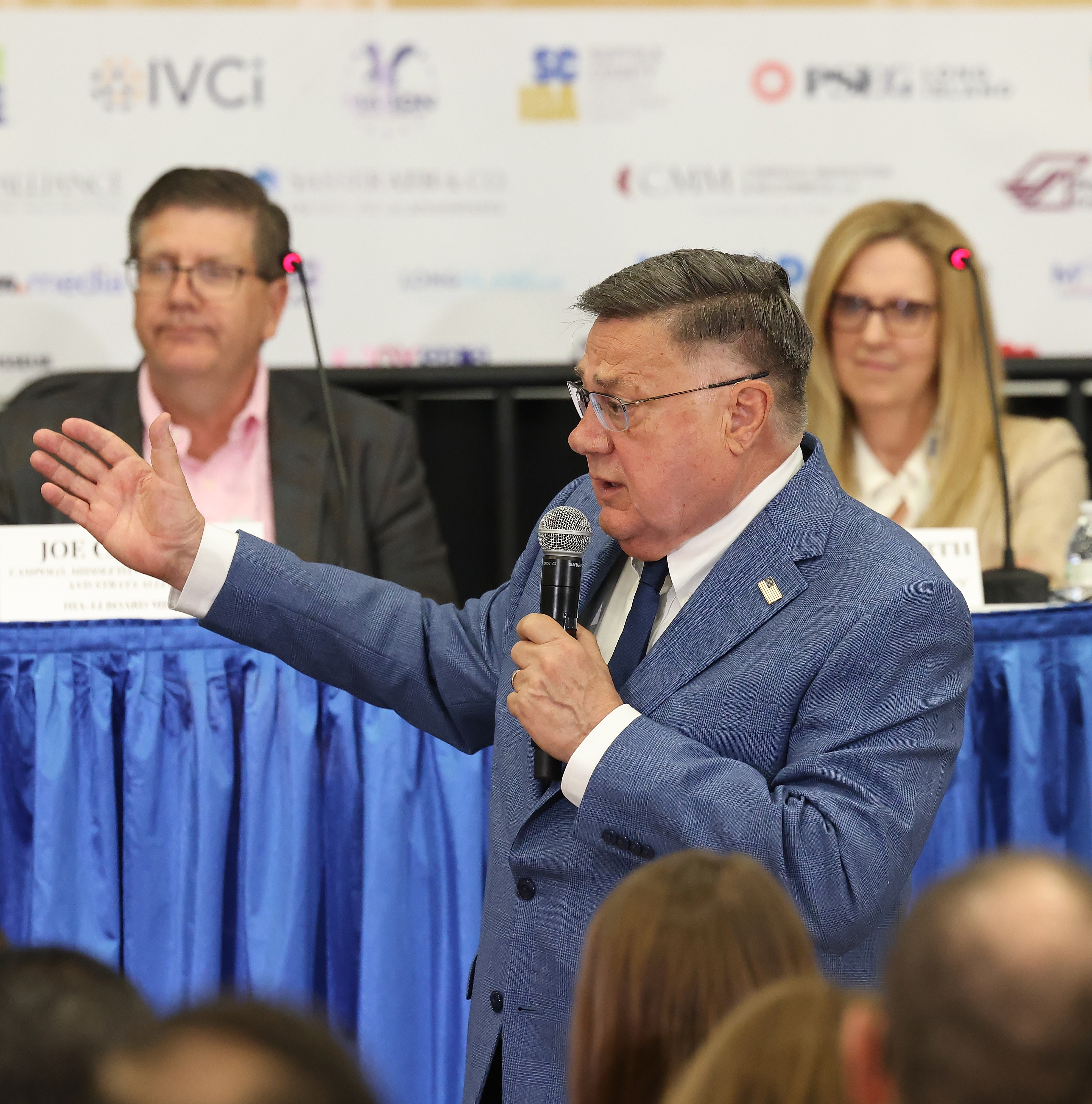
While the trade show floor was buzzing throughout the day, one of the highlights was the Executive Luncheon, “Economic Development: Reshaping Long Island’s Landscape.”

Moderated by Marc Herbst, Executive Director of the Long Island Contractors’ Association, the luncheon featured a special welcome by video from Governor Kathy Hochul and opening remarks by Suffolk County Executive Ed Romaine. The panel included Joe Campolo, Managing Partner of Campolo, Middleton & McCormick LLP, Founder of STRATA Alliance, and HIA-LI Board Member; Jim Coughlan, Co-Founder and Principal of TRITEC Real Estate and HIA-LI Board Member; Cara Longworth, Regional Director of Empire State Development; and Paul Pontieri, Mayor of the Village of Patchogue.

Although each panelist brought a different perspective, a common theme emerged throughout the discussion: Long Island’s future depends on our ability to create places where people can live, work, innovate, and build businesses.

The conversation touched on some of the most important issues facing our region, including workforce development, housing, innovation, infrastructure investment, downtown revitalization, and economic competitiveness.

Panelists discussed major projects already transforming Long Island, from transit-oriented development and downtown redevelopment initiatives to emerging innovation corridors designed to help turn research and new technologies into businesses and jobs. They emphasized that economic development is no longer about a single project or a single community. Success depends on collaboration among government, business, developers, educational institutions, and community leaders working toward a shared vision for the region.

Turning Ideas Into Action

One particularly important theme was the connection between housing and workforce development. Businesses cannot attract and retain talent if workers cannot afford to live where they work. Likewise, innovation cannot thrive if promising startups and skilled professionals leave the region in search of opportunities elsewhere.

The discussion also highlighted the importance of investing in quality-of-life initiatives that make Long Island an attractive place to live, raise a family, launch a business, and pursue a career.

What made the luncheon especially valuable was that it moved beyond identifying challenges. The panelists offered real-world examples of projects, partnerships, and strategies already producing results and creating momentum for the future.

That spirit of collaboration carried throughout the entire trade show.

Every year, the HIA-LI Trade Show brings together business leaders, entrepreneurs, nonprofits, government officials, educators, and innovators from across Long Island. It creates opportunities to share ideas, build relationships, and discover solutions to common challenges.

Most importantly, it reminds us that Long Island’s greatest asset is not a building, a development project, or even a business sector. It is the people willing to come together, exchange ideas, and work toward a stronger future.

And that is where the next business breakthrough often begins.

Tourism and Travel Are Not Seasonal Assets. They Are Economic Engines Fueling Our Economy.

Long Island has long been known for its beaches, wineries, parks, downtowns, restaurants, cultural destinations, and waterfront communities. But if we still think of tourism and travel as seasonal activity, we are missing the larger economic picture.

Tourism is no longer simply about summer visitors. It is a year-round economic engine that supports jobs, strengthens small businesses, drives investment, and helps position Long Island as a place to visit, live, work and do business.

A Timely Regional Conversation

That message came through clearly at HIA-LI’s recent Economic Development Task Force program, The Economic Engine of Tourism and Travel on Long Island, held in partnership with Strata Alliance on April 29 at Campolo, Middleton & McCormick, LLP in Ronkonkoma. Moderated by HIA-LI Board Member Joe Campolo — founder of the Strata Alliance and Managing Partner at Campolo, Middleton & McCormick, LLP — the discussion brought together Town of Islip Supervisor Angie Carpenter, Long Island MacArthur Airport Commissioner Robert Schneider, Discover Long Island Chief Operating Officer Sharon Wyman, and members of the regional business community for a timely conversation about one of Long Island’s most important economic opportunities.

The enthusiasm in the room was unmistakable. Business leaders, public officials and tourism professionals recognize that travel and tourism are not separate from economic development. They are central to it.

The Numbers Tell the Story

According to Discover Long Island, Long Island reached $7.9 billion in tourism spending in 2024, supporting nearly 80,000 jobs and generating more than $945 million in state and local tax revenue. Projections for 2025 are expected to exceed $8 billion. Those figures represent hotel stays, restaurant visits, downtown shopping, transportation, cultural attractions, meetings, events, and the many local businesses that benefit when people choose Long Island.

Sharon Wyman and the team at Discover Long Island continue to play an essential role in telling that story. Their work as the region’s destination marketing organization helps promote not only our beaches and traditional tourism assets, but also our downtowns, cultural heritage, small businesses, parks, events, and year-round experiences.

MacArthur Airport as Economic Infrastructure

At the same time, Long Island MacArthur Airport has become an increasingly important part of the region’s growth strategy. Under the leadership of the Town of Islip and Commissioner Robert Schneider, ISP — MacArthur’s three-letter airport code — has grown from two carriers serving six nonstop destinations to six carriers serving 16 nonstop destinations. The airport now generates approximately $600 million in annual economic impact, supports approximately 6,000 direct and indirect jobs, and served more than 1.6 million passengers in 2025, its highest total in more than 15 years.

That growth matters far beyond aviation. Airports are gateways. For many visitors, Long Island MacArthur Airport is their first impression of our region. As Commissioner Schneider has noted, transportation is the front door to the visitor experience. A strong airport supports tourism, business travel, workforce access, hospitality and broader regional competitiveness.

Supervisor Carpenter also highlighted the importance of the proposed North Terminal, which would move the airport’s main passenger terminal to the north side of the property, adjacent to the Ronkonkoma Long Island Rail Road station. Governor Kathy Hochul has committed $150 million for infrastructure around the North Terminal, helping move forward a project that could reshape regional mobility. With the airport, Suffolk County bus connections, and the Ronkonkoma LIRR station — including many trains that provide a one-seat ride into New York City — all in close proximity, Ronkonkoma has the potential to become one of Long Island’s most important transportation hubs.

A Moment to Invest

As Joe Campolo observed during the discussion, Long Island has a rare alignment of assets right now: a rapidly growing airport, town and county support for additional hospitality infrastructure, and extraordinary marketing by Discover Long Island. That synergy creates an opportunity we should not miss.

At HIA-LI, we believe economic development depends on collaboration. Tourism, transportation, hospitality, downtown revitalization, infrastructure, and business growth all work together. The more strategically we connect those pieces, the stronger Long Island’s economy becomes. The opportunity before us is to invest in that momentum, market the region aggressively, and make sure the benefits are felt across Long Island.

Progress Through Partnership: Key Takeaways from HIA-LI’s Annual Meeting

Each year, HIA-LI’s Annual Meeting and Legislative Forum offers an important opportunity to step back from the day-to-day pressures facing employers and policymakers alike and take a clear-eyed look at where Long Island is headed. This year’s event, which attracted nearly 400 attendees, reinforced something many of us already know: the challenges confronting our region are complex, interconnected, and impossible to solve in isolation, but progress is absolutely achievable when we work together.

What stood out most this year was not simply the range of issues discussed — affordability, housing, infrastructure, transportation, energy, workforce development, and solid waste — but the strong sense of alignment across levels of government and across party lines. Again and again, speakers returned to a shared conclusion: Long Island’s future depends on collaboration, pragmatism, and a willingness to row in the same direction.

A SHARED VIEW FROM WASHINGTON AND ALBANY

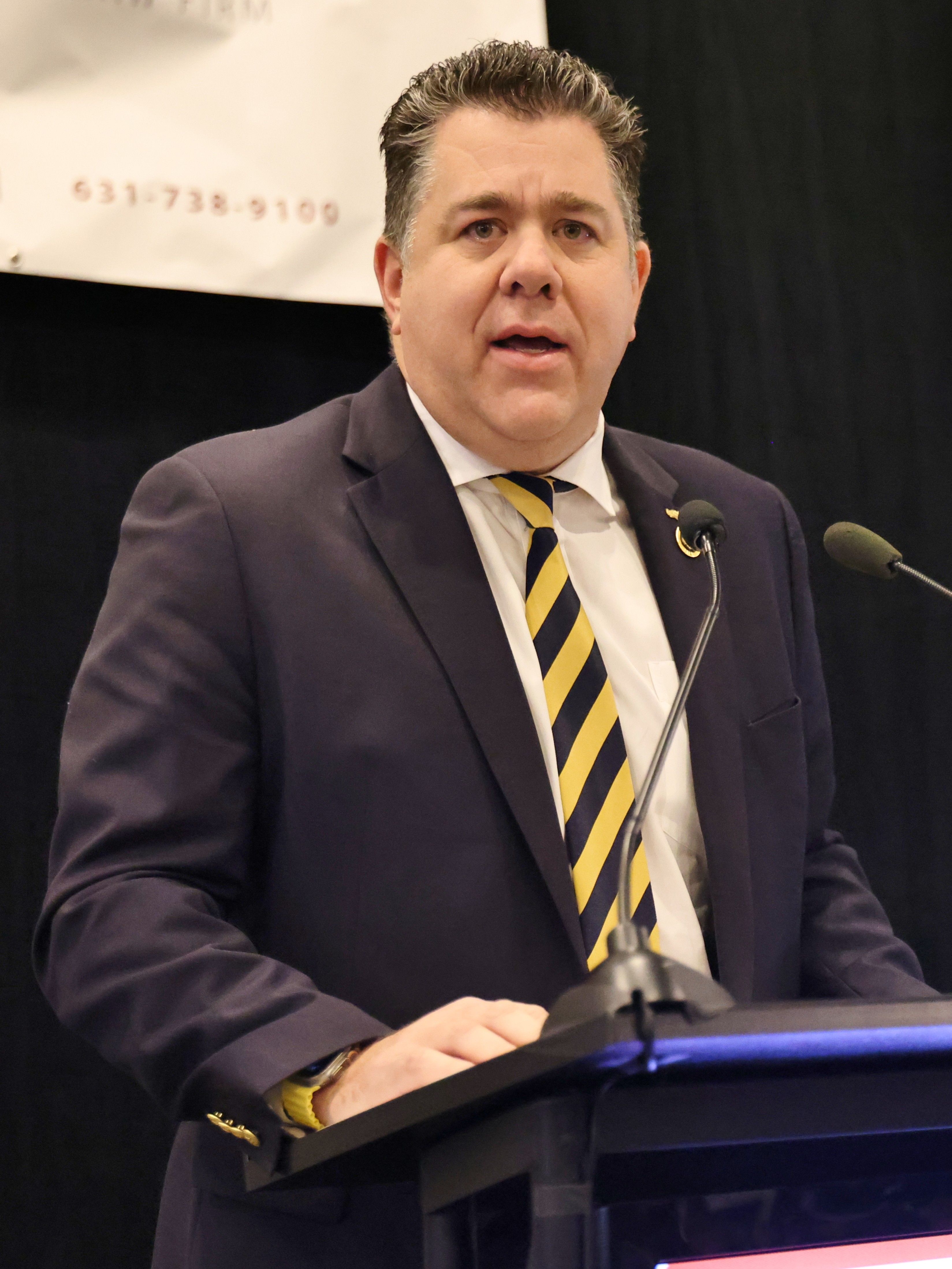
Congressman Nick LaLota opened the program by grounding the conversation in the real-world pressures facing Long Island families and employers. He emphasized the importance of ensuring that federal policy recognizes the high cost of living in our region and delivers tangible relief for both households and small businesses. Just as important, he underscored that economic vitality begins locally — with the business owners and employers who create jobs, support families, and keep Long Island competitive.

Although she was unable to join us in person, Governor Kathy Hochul shared a video message with our members, continuing a dialogue she has maintained with HIA-LI over the years. In her remarks, the Governor reinforced Long Island’s role as a critical driver of New York State’s economy and highlighted the state’s continued commitment to investing in infrastructure, transportation, water and sewer systems, manufacturing, and innovation. Her message emphasized that strategic public investment, aligned with private-sector growth, is essential to keeping Long Island competitive and economically strong.

From the state legislative perspective, New York State Senator Monica Martinez framed affordability not as a single policy challenge, but as a balance of education, workforce readiness, infrastructure, and attainable housing. Drawing on her background in education, she spoke about the importance of creating strong pipelines between schools, training programs, and Long Island employers, recognizing that a thriving regional economy depends on preparing people for careers that allow them to live and work here long term. She also reinforced the need for state investment to reflect the contributions Long Island makes to New York’s overall economy.

COUNTY AND LOCAL LEADERSHIP: PRACTICAL SOLUTIONS, REAL CONSEQUENCES

At the county level, Suffolk County Executive Ed Romaine offered a candid assessment of the structural challenges Long Island must confront head-on. Transportation, energy capacity, sewer infrastructure, and solid waste management are not abstract policy discussions. They are foundational to economic growth, housing production, and quality of life. His message was clear: without coordinated regional planning and sustained investment, these issues will limit Long Island’s future. With collaboration and forward-looking leadership, they can instead become opportunities.

Presiding Officer Anthony Piccirillo echoed the importance of fiscal responsibility and long-term planning, particularly as Suffolk County works to maintain public safety while addressing affordability pressures. He emphasized the value of bipartisan cooperation within county government and the need to focus on practical solutions that improve daily life for residents and businesses alike. Stability, transparency, and shared responsibility were central themes in his remarks.

From the municipal perspective, Smithtown Supervisor Ed Wehrheim highlighted how thoughtful local planning can support both economic development and housing balance. By investing in business districts, infrastructure, and a mix of housing options — including opportunities for homeownership — municipalities can strengthen communities while supporting workforce retention. His comments reinforced that local success stories are strongest when they align with broader county and state priorities.

THE COMMON THREAD: REGIONAL COLLABORATION OVER POLITICS

Across all of these perspectives, a clear common thread emerged. No single level of government can solve these challenges alone. Housing requires infrastructure. Infrastructure requires funding and coordination. Workforce development depends on education, transportation, and employer engagement. Affordability is shaped by all of it.

As HIA-LI Board Member Joe Campolo, Managing Partner at Campolo, Middleton & McCormick, LLP, guided the discussion, it became clear that the most productive moments were those centered on outcomes rather than ideology. That spirit of cooperation reflects the path forward for Long Island: collaborative, pragmatic, and focused on results.

LOOKING AHEAD: NEW LEADERS, SHARED PURPOSE

As we begin a new year, this spirit of partnership also extends to HIA-LI’s leadership. We are proud to welcome five new members to our Board of Directors, whose experience reflects the depth and diversity of Long Island’s economy:

Each brings valuable insight from higher education, technology, finance, nonprofit leadership, and strategic business development. Their perspectives will help guide HIA-LI’s advocacy and programming as we continue addressing the evolving needs of employers and communities across the region.

MOVING FORWARD: TOGETHER

HIA-LI remains focused on convening leaders, elevating business’ voice, and advancing solutions that strengthen Long Island’s economic foundation. The conversations at this year’s Annual Meeting reinforced something I believe deeply: when business, government, and community stakeholders work together with a shared commitment to problem-solving, Long Island is well positioned to move forward . . . together.