The Next Business Breakthrough Starts with a Conversation

One of my favorite stories about the power of the HIA-LI Trade Show goes back many years.

Before joining HIA-LI, I was exhibiting at this very trade show on behalf of my former employer when I struck up a conversation with a senior executive from Computer Associates. It was a chance encounter. One of the countless conversations that take place on a trade show floor each year. But that single conversation eventually led to one of the largest contracts in that company’s history.

It’s a reminder that you never know where your next opportunity, partnership, client, or breakthrough idea will come from.

That story was very much on my mind as more than 4,000 business professionals gathered at Suffolk Credit Union Arena at Suffolk County Community College for HIA-LI’s 38th Annual Business Trade Show & Conference.

Featuring more than 375 exhibitors, this year’s event embraced the theme, “The Next Business Breakthrough.” Judging by the energy on the trade show floor, the packed networking events, and the meaningful conversations taking place throughout the day, there were plenty of breakthroughs happening.

Connections That Create Opportunity

The event also received strong reviews from participants, with more than 70 percent of survey respondents rating their experience an eight or higher on a 10-point scale.

Denise Labosco of Suite AI Solutions, a first-time exhibitor, described the event as “extremely organized” and praised the quality of the attendees, noting that she walked away with “real conversations and real leads.”

Returning exhibitor Alice Thomson of Southampton Inn said she was glad her organization returned for a second year, citing the meaningful connections she expects will lead to future business opportunities.

Those comments reflect what has made the HIA-LI Trade Show such a valued annual tradition for nearly four decades. While the exhibitors, industries, and business challenges may evolve over time, the power of bringing people together remains unchanged.

More Than Networking: A Conversation About Long Island’s Future

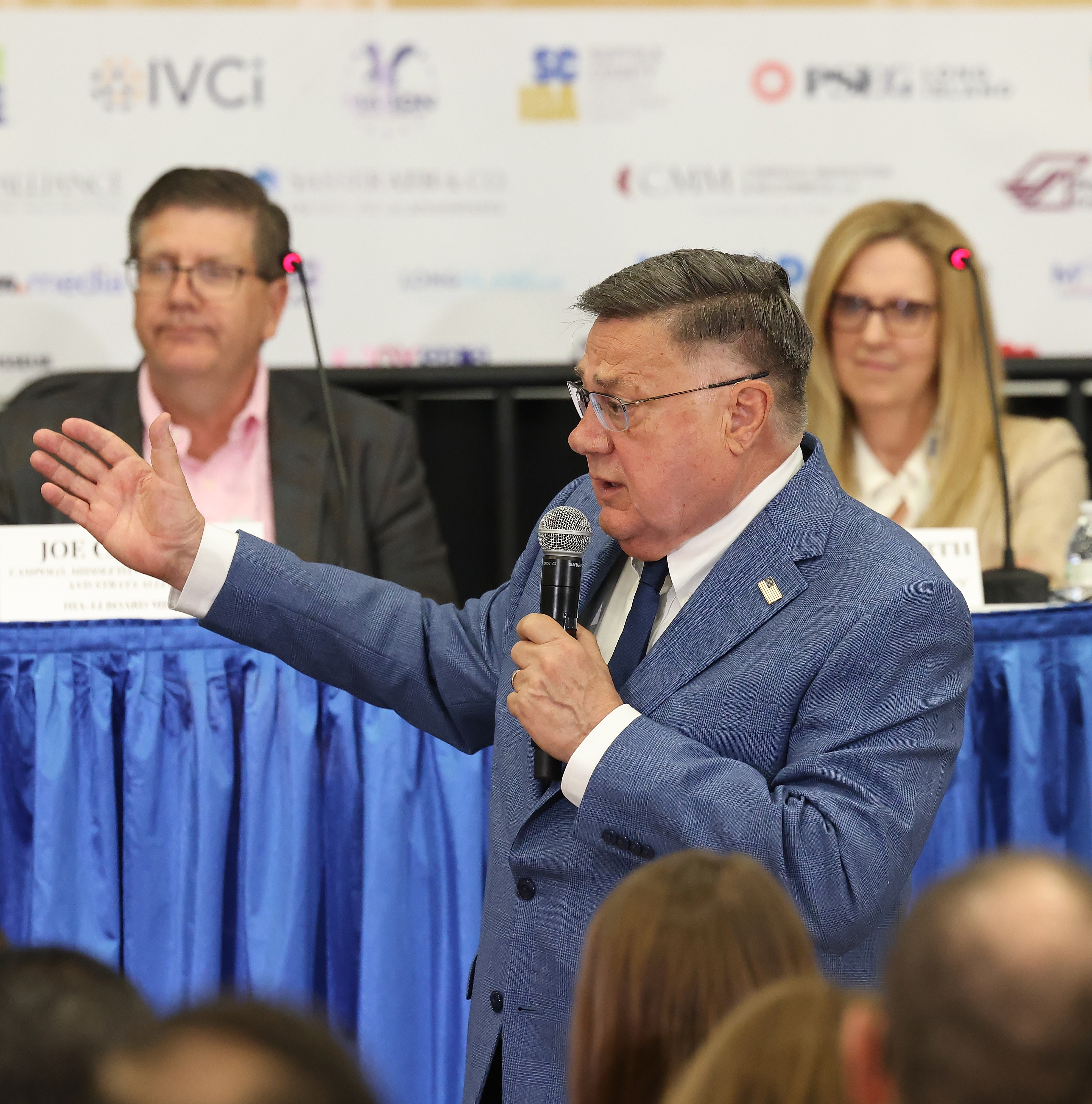
While the trade show floor was buzzing throughout the day, one of the highlights was the Executive Luncheon, “Economic Development: Reshaping Long Island’s Landscape.”

Moderated by Marc Herbst, Executive Director of the Long Island Contractors’ Association, the luncheon featured a special welcome by video from Governor Kathy Hochul and opening remarks by Suffolk County Executive Ed Romaine. The panel included Joe Campolo, Managing Partner of Campolo, Middleton & McCormick LLP, Founder of STRATA Alliance, and HIA-LI Board Member; Jim Coughlan, Co-Founder and Principal of TRITEC Real Estate and HIA-LI Board Member; Cara Longworth, Regional Director of Empire State Development; and Paul Pontieri, Mayor of the Village of Patchogue.

Although each panelist brought a different perspective, a common theme emerged throughout the discussion: Long Island’s future depends on our ability to create places where people can live, work, innovate, and build businesses.

The conversation touched on some of the most important issues facing our region, including workforce development, housing, innovation, infrastructure investment, downtown revitalization, and economic competitiveness.

Panelists discussed major projects already transforming Long Island, from transit-oriented development and downtown redevelopment initiatives to emerging innovation corridors designed to help turn research and new technologies into businesses and jobs. They emphasized that economic development is no longer about a single project or a single community. Success depends on collaboration among government, business, developers, educational institutions, and community leaders working toward a shared vision for the region.

Turning Ideas Into Action

One particularly important theme was the connection between housing and workforce development. Businesses cannot attract and retain talent if workers cannot afford to live where they work. Likewise, innovation cannot thrive if promising startups and skilled professionals leave the region in search of opportunities elsewhere.

The discussion also highlighted the importance of investing in quality-of-life initiatives that make Long Island an attractive place to live, raise a family, launch a business, and pursue a career.

What made the luncheon especially valuable was that it moved beyond identifying challenges. The panelists offered real-world examples of projects, partnerships, and strategies already producing results and creating momentum for the future.

That spirit of collaboration carried throughout the entire trade show.

Every year, the HIA-LI Trade Show brings together business leaders, entrepreneurs, nonprofits, government officials, educators, and innovators from across Long Island. It creates opportunities to share ideas, build relationships, and discover solutions to common challenges.

Most importantly, it reminds us that Long Island’s greatest asset is not a building, a development project, or even a business sector. It is the people willing to come together, exchange ideas, and work toward a stronger future.

And that is where the next business breakthrough often begins.
From Infrastructure to Innovation: How Long Island’s Towns Are Building the Future

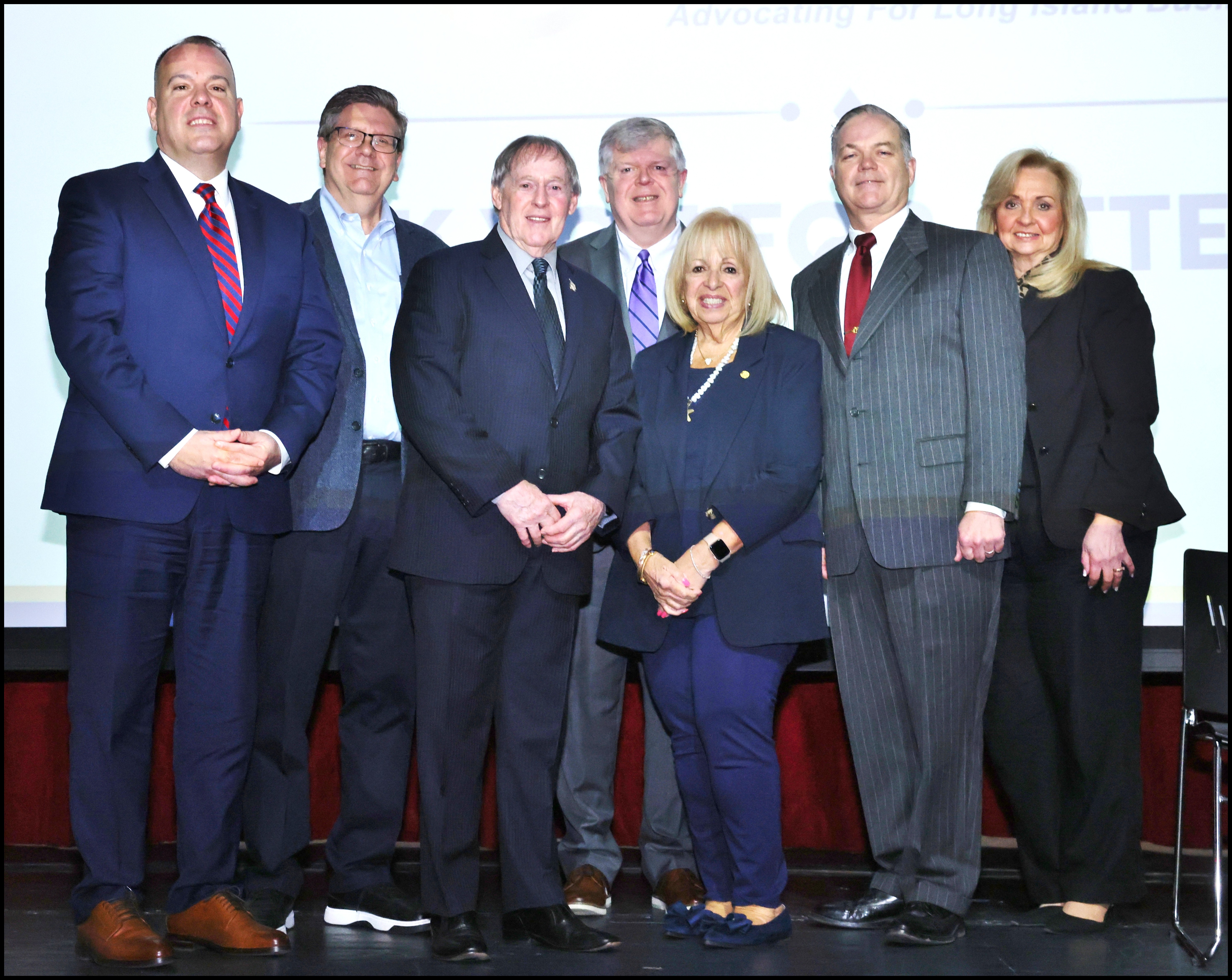
There’s a tendency to talk about economic development in broad, regional terms: state investments, county initiatives, big-picture strategy. But what became clear at HIA-LI’s recent Economic Development Advancements: Towns Shaping Long Island’s Future program is this: the most consequential decisions shaping Long Island’s future are happening at the town level.

That’s where zoning is determined. That’s where redevelopment is approved or denied. And increasingly, that’s where the vision for what Long Island becomes over the next decade is being defined.

A Shared Direction: From Sprawl to Smart Growth

Across the panel, one theme emerged consistently: Long Island is moving away from traditional suburban sprawl and toward more intentional, mixed-use, walkable communities.

In the Town of Huntington, Supervisor Ed Smyth described a community that is already largely built out, leaving redevelopment, not expansion, as the path forward. The proposed Melville Town Center reflects a shift toward creating walkable downtown environments, blending residential, commercial, and lifestyle elements in ways that better reflect how people want to live today.

That same philosophy is taking shape across the region.

In the Town of Islip, Supervisor Angie Carpenter pointed to major redevelopment efforts in Bay Shore and Central Islip, where transit-oriented development and mixed-use projects are transforming underutilized sites into vibrant, economically productive communities. These projects are not just about housing. They are about creating places where people can live, work, and contribute to the local economy.

And in the Town of Babylon, Supervisor Rich Schaffer highlighted how sustained public investment in infrastructure, including roads, drainage, sewer systems, and public safety, has helped unlock significant private-sector development, from Wyandanch to Deer Park and beyond.

Infrastructure Still Comes First

If there was one point of universal agreement, it was this: none of this happens without infrastructure.

Supervisor Ed Wehrheim of the Town of Smithtown underscored how investments in sewer systems, streetscapes, and transportation access are directly tied to revitalization success. Once that foundation is in place, private investment follows, bringing new housing, new businesses, and renewed energy to long-standing business districts.

That same message was echoed throughout the discussion. Whether it’s sewer expansion in Huntington Station, infrastructure upgrades in Smithtown, or large-scale capital investments in Babylon, the path to economic growth begins below ground before it ever rises above it.

Setting the Tone: Leadership and Accountability

Moderating the discussion, Joe Campolo, Managing Partner of Campolo, Middleton & McCormick LLP; Founder of Strata Alliance; Chair of HIA-LI’s Long Island Economic Development Task Force; and HIA-LI Board Member. Joe emphasized a point that resonated throughout the program: economic development requires not just vision, but action, and it often takes political courage.

He noted that town supervisors are uniquely positioned to move projects forward or stop them, making their leadership central to Long Island’s future. At the same time, he stressed that public-private partnerships cannot exist in name only. The business community must actively support responsible development by engaging in the process, showing up at hearings, and advocating for projects that strengthen the regional economy.

That dynamic, government leadership paired with private-sector engagement, was a consistent thread throughout the conversation and a critical factor in whether projects ultimately succeed.

Balancing Growth, Affordability, and Community

Another key theme was balance.

There is a clear need for new housing on Long Island, but what that housing looks like matters. Several supervisors emphasized that developments cannot be exclusively rental-based. Communities are looking for a mix that includes opportunities for homeownership, allowing residents to build equity and remain rooted on Long Island long-term.

At the same time, affordability pressures continue to mount. While housing costs are often the focus, Brookhaven Town Supervisor Dan Panico pointed to another looming issue that receives far less attention: waste management. The long-term sustainability and cost of managing Long Island’s solid waste system could have significant implications for taxpayers, businesses, and local governments alike.

These are not abstract challenges. They are real, immediate pressures that require coordination across all levels of government.

Partnership Matters at Every Level

The discussion also reinforced the importance of collaboration, particularly with New York State.

Cara Longworth, Long Island Regional Director for Empire State Development, highlighted the impact of the state’s Downtown Revitalization Initiative, which has brought critical funding into communities across Long Island. These investments are helping towns reimagine their downtowns and accelerate projects that might otherwise take years longer to realize.

At the local level, success also depends on partnerships with developers, school districts, and the business community. In Huntington, for example, support from the Half Hollow Hills School District has helped advance the conversation around the Melville Town Center project, particularly as enrollment trends shift and communities adapt to changing demographics.

The Role of Place and Partnership

Hosting this conversation at the Suffolk Y Jewish Community Center was a reminder of how important community institutions are in bringing people together around these issues. We are grateful to Rick Lewis and his team for opening their doors and providing a space for this important dialogue.

Because ultimately, these conversations matter.

They matter not just for the elected officials making decisions, but for the business community, residents, and future generations who will live with the outcomes.

Looking Ahead

If there is one takeaway from this program, it is that Long Island is not standing still.

Across every town represented, there is movement, projects advancing, infrastructure being built, policies being debated, and visions taking shape. The details may differ from one community to another, but the direction is clear: smarter growth, stronger downtowns, and a renewed focus on making Long Island a place where people can build careers, raise families, and stay for the long term.

The challenge, and the opportunity, will be ensuring that these efforts continue to move forward in a way that is thoughtful, balanced, and sustainable.

Because the future of Long Island isn’t being decided in the abstract.

It’s being built, project by project, downtown by downtown, and town by town.