Fueling Long Island’s Future: A Blueprint for Smart, Sustainable Growth

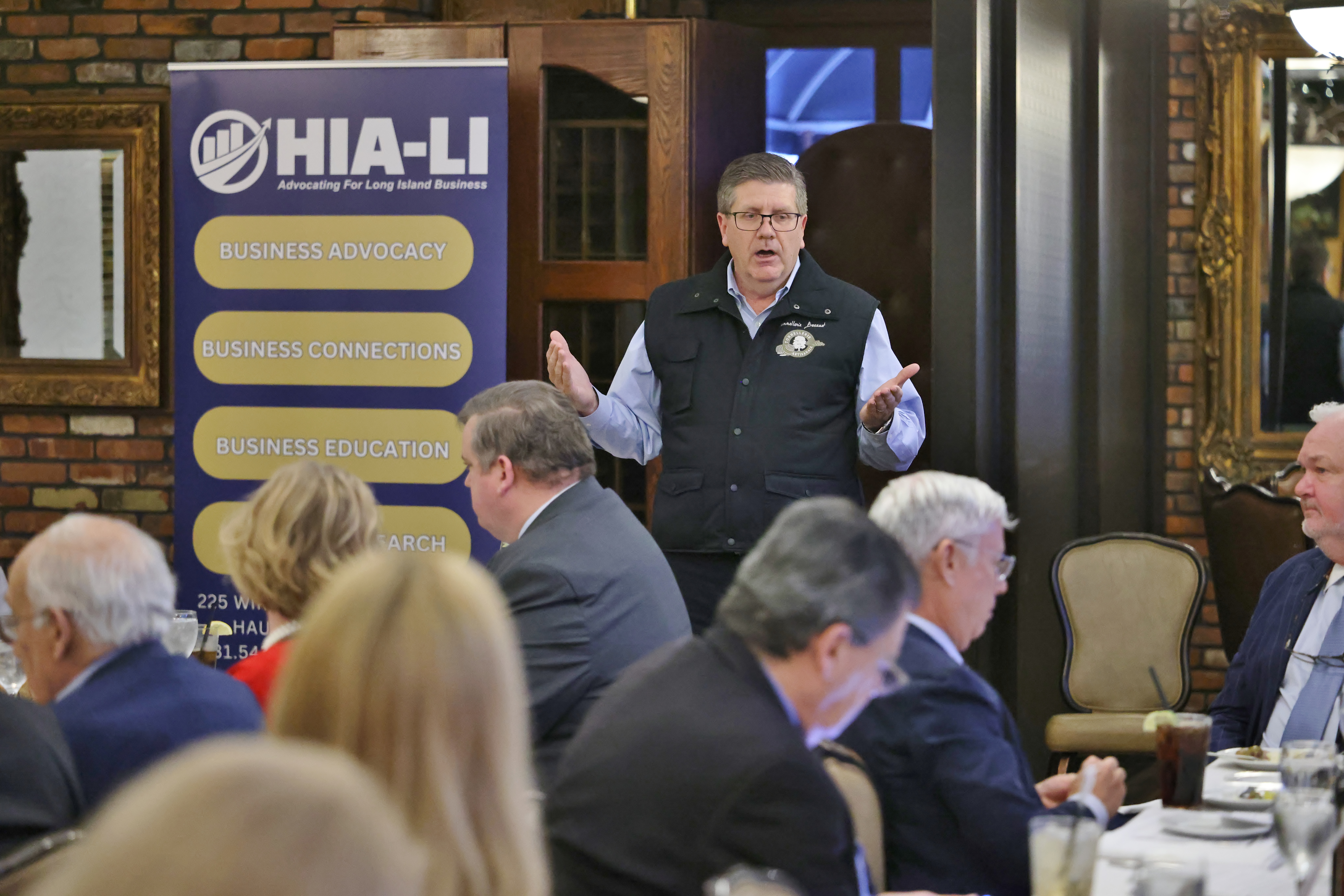
At HIA-LI’s recent Economic Development Symposium, we welcomed a room full of business leaders, public officials, and visionaries who share a common belief: that Long Island’s economic future can—and must—be shaped intentionally, inclusively, and strategically.

The forum underscored what we already know to be true: sustainable economic growth doesn’t happen by chance. It’s built on a foundation of smart investments, bold leadership, and the willingness to rethink the systems we’ve inherited.

Building Livable Communities Through Collaboration

One consistent theme that emerged was the critical importance of collaboration between government and the private sector. Angie Carpenter, Supervisor of the Town of Islip, made it clear that responsible economic development must go hand-in-hand with quality-of-life investments. Her town is not only reimagining downtown Central Islip through a $10 million Downtown Revitalization Initiative but also leveraging the economic power of MacArthur Airport to create jobs and attract investment. With five airlines and 18 non-stop destinations—including new service from JetBlue and Avelo—Islip is proving that modern infrastructure is essential to regional vitality.

Economic Development with a Human Face

At the Suffolk County IDA, Kelly Murphy is driving investment that is both data-informed and community-centered. Her team helped generate over $214 million in payroll last year, through projects that didn’t just create jobs—they created careers. The IDA’s focus on “Long Island First” encourages companies to hire locally and reinvest in the region, from expanding manufacturers at the Long Island Innovation Park at Hauppauge to family-owned businesses like Casanova Meats. These aren’t abstract numbers; they’re direct investments in families, futures, and neighborhoods.

That focus on workforce development is aligned with the region’s recent progress. According to data recently announced by Governor Kathy Hochul, Long Island added 91,000 non-farm jobs between 2020 and 2024—an impressive 7.1% increase. Healthcare led the way with more than 24,000 new positions, while construction rose 10%, creating over 8,000 jobs. Even more encouraging: unemployment dropped from 4.5% to 3.8%, a signal that targeted investments are paying off across the board.

Solving the Housing Crisis: A Prerequisite for Economic Growth

No conversation about Long Island’s future can avoid the issue of housing. Jimmy Coughlan, Executive Vice President at TRITEC Real Estate, laid out the stark reality: of counties in the U.S. with a population of at least 1.5 million, Suffolk County is the second largest by area and by population, but dead last nationwide in new housing starts. Nassau County, right next door, doesn’t fare much better. Both counties lag behind high-growth regions like Charlotte, Nashville, and Raleigh—places that have embraced new development to attract and retain talent.

The consequences here are clear: young professionals are being priced out, businesses can’t attract the workforce they need, and our region’s growth potential is being constrained. The housing market, like any market, is a function of supply and demand—and on Long Island, we’re simply not producing enough supply.

But Coughlan didn’t come with just problems—he brought solutions. Smart growth. Transit-oriented development. Streamlined approvals. Flexible affordability mandates that make projects financially viable. TRITEC’s work in Bay Shore and Ronkonkoma proves that when developers and local governments work together, vibrant communities follow.

A Model for Regional Growth: The Long Island Innovation Park

In the Town of Smithtown, Supervisor Ed Wehrheim has made the Long Island Innovation Park at Hauppauge a centerpiece of his economic development agenda. The park now supports over 55,000 jobs, contributes $13 billion in economic output, and houses leading companies in sectors like aerospace, biopharma, IT, and advanced manufacturing.

Wehrheim’s vision for a “live, work, play” district—with mixed-use zoning, modern infrastructure, and expanded sewer capacity—is already attracting the younger workforce Long Island needs to stay competitive. His town’s track record—AAA bond rating, zero fiscal stress, thriving downtowns—is a model for how proactive leadership fuels prosperity.

A Call to Action

At HIA-LI, we believe in the power of partnerships. What we heard at this year’s Economic Development Symposium wasn’t just a list of projects or statistics—it was a blueprint for how to move forward as a region. It starts with embracing innovation, investing in infrastructure, building housing for every generation, and supporting the businesses that power our economy.

Long Island’s future isn’t written yet. But with bold thinking and shared purpose, we’re well on our way to building it—together.

Infrastructure, Housing, and Sustainability: The Roadmap from HIA-LI’s Annual Meeting

On January 17, 2025, HIA-LI hosted its 47th Annual Meeting and Legislative Program, bringing together over 400 business leaders, elected officials, and dignitaries to discuss pressing issues and opportunities for Long Island’s economic growth. As I stood before this incredible audience, I couldn’t help but feel a deep sense of pride in how far we’ve come as a community and how determined we are to overcome the challenges ahead.

The event underscored the vital role HIA-LI plays in advocating for our members, connecting stakeholders, and driving meaningful action for the region. With leaders like Congressman Nick LaLota, Suffolk County Executive Ed Romaine, Suffolk County Presiding Officer Kevin McCaffrey, Islip Town Supervisor Angie Carpenter, and Huntington Town Supervisor Ed Smyth contributing to the dialogue, we demonstrated that collaboration between government and business is the foundation for Long Island’s prosperity.

The discussion was expertly guided by Joe Campolo, Managing Partner at Campolo, Middleton & McCormick, LLP, an HIA-LI board member, and Chair of our Long Island Economic Development Task Force. Joe’s skillful moderation ensured that key issues were explored in depth while keeping the conversation engaging and solution-focused.

Building a Business-Friendly Environment

The theme that resonated throughout the meeting was the critical need to create a more business-friendly Long Island. Congressman LaLota addressed the ongoing efforts to increase the State and Local Tax (SALT) deduction cap, emphasizing how this federal tax relief is essential for sustaining businesses and families in one of the most highly taxed regions in the nation.

At the local level, County Executive Romaine highlighted Suffolk County’s focus on infrastructure investments, including sewer expansion—a linchpin for economic development. Supervisors Carpenter and Smyth echoed this sentiment, emphasizing the importance of keeping businesses here and enabling growth through infrastructure support. Presiding Officer McCaffrey added his perspective on the importance of workforce development programs to ensure Long Island remains competitive. The unified message was clear: Long Island must continue to fight for its fair share of federal and state funding to maintain its position as an economic engine.

Infrastructure as the Cornerstone of Progress

One of the key takeaways from the meeting was the critical importance of infrastructure development, especially in areas like sewer systems, transportation, and clean water initiatives. As the second-largest industrial park in the nation, the Long Island Innovation Park at Hauppauge (LI-IPH) is a cornerstone of our regional economy, contributing over $13 billion annually. Yet, the lack of adequate sewer systems throughout the bi-county region remains a significant barrier to attracting new businesses and housing opportunities.

The urgency of addressing this was underscored by multiple leaders. Supervisor Smyth reminded us that “sewers are everything,” illustrating the environmental and economic consequences of outdated systems. Both Romaine and Carpenter stressed the need for careful, long-term planning to ensure that infrastructure projects like sewers, roadways, and renewable energy initiatives align with Long Island’s growth trajectory. These investments are not just critical for businesses but for the overall quality of life for residents.

Housing: A Challenge and an Opportunity

Housing emerged as another pivotal issue—one directly tied to workforce retention and economic vitality. The consensus was clear: Long Island needs more affordable housing to prevent the exodus of young professionals and families. In Islip, projects like TRITECH’s Shoregate in Bay Shore and the proposed housing at Pilgrim State exemplify how transit-oriented development can revitalize communities and create sustainable growth.

However, as Supervisor Carpenter pointed out, housing projects cannot succeed without the infrastructure to support them. Presiding Officer McCaffrey highlighted the need to balance housing development with the preservation of Long Island’s unique suburban character, ensuring that growth is sustainable and community focused. The call to action for state and federal partners was loud and clear—Long Island needs the resources to build not just homes but the roads, sewers, and public transit that make those homes viable.

Sustainability: A Forward-Thinking Priority

Environmental sustainability was another key focus. With Long Island’s unique position as a sole-source aquifer region, preserving water quality and managing waste are non-negotiable priorities. As landfill closures like Brookhaven’s loom, waste management has become a critical issue requiring regional solutions. Romaine, Carpenter, and Smyth emphasized the importance of recycling innovation and leveraging state resources to address these challenges.

HIA-LI is proud to support initiatives like the Suffolk County solar program and workforce development programs that integrate sustainability into our economic goals. These efforts align with our broader mission to ensure that Long Island’s growth is both responsible and forward-looking.

The Path Ahead: Action and Advocacy

As we move into 2025, our focus at HIA-LI is clear: continue building partnerships, amplifying the voice of Long Island businesses, and driving solutions for critical issues like infrastructure, housing, and sustainability. We are not just advocating for change—we are actively working with government and private sector leaders to implement it.

This year, we’ll host programs like the Workforce Development Summit and the Women’s Leadership Conference, fostering opportunities for innovation and collaboration. We’re also committed to expanding our footprint, with a 15 percent membership increase in 2024 already strengthening our collective voice.

To every business owner, elected official, and community leader who attended the meeting: thank you for being part of the conversation. Your engagement is what makes our work possible. Together, we can make 2025 a banner year for Long Island, one that sets the standard for economic resilience and community growth.

Let’s keep the momentum going. If you’re not already involved, I encourage you to join us. Let’s advocate louder, collaborate stronger, and ensure that Long Island’s best days are ahead.

The Pulse of Progress: Exploring the Transformative Impact of the LI-IPH on Long Island’s Economy

As the President and CEO of HIA-LI, I am proud that HIA-LI continues to serve as the steward and advocate for the Long Island Innovation Park at Hauppauge (LI-IPH).

One important recommendation that came out of the LI-IPH’s April 2019 Sustainability Study was that we should take a serious look at integrating workforce housing into the Park. It’s a concept in keeping with the “live-work-play” model that has worked so successfully in other Long Island communities such as Patchogue, Ronkonkoma, Farmingdale, and Bay Shore.

To that end, we teamed up with the Long Island Builders Institute (LIBI) and convened a March 28 meeting of residential developers to discuss opportunities in the Park. Joining me at the roundtable discussion was Michael Florio, LIBI’s CEO; Joe Campolo, Managing Partner at Campolo, Middleton & McCormick, LLP, an HIA-LI Board Member, and Chair of our Economic Development Task Force; Peter Hans, the Town of Smithtown Planning Director; and Cara Longworth, Vice President and Long Island Regional Director of Empire State Development.

Cara Longworth discussed the Long Island Investment Fund (LIIF), which focuses on large-scale, transformative projects that will have lasting impacts on the bi-county region. Eligibility for the fund was expanded last year to include infrastructure for transformative multi-family housing development projects to support regional industry growth.

She added that municipalities that achieve the State’s “Pro-Housing Communities” designation – because of their hard work to address the housing crisis – will receive priority in their applications for funding streams like LIIF.

Peter Hans spoke about zoning issues, specifically the town’s overlay district – approved in 2019 – which now permits residential development on certain parcels in the LI-IPH depending on size and location. Right now, Peter said there are 13 parcels eligible for mixed use/residential development.

The dialogue continued on April 16 when we welcomed a distinguished panel to discuss the immense opportunities at the LI-IPH. This event – titled “Why Do Business in the Largest Innovation Park in the Northeast” – was held at the Suffolk Y Jewish Community Center in Commack. It underscored our collective commitment to fostering economic growth and innovation at the LI-IPH.

The numbers are worth repeating: LI-IPH houses 1,350 companies who employ 55,000 workers and generate $13 billion in economic output. In short, one in 20 jobs on Long Island are dependent on the fiscal vitality of the LI-IPH. That’s impressive.

The morning began with inspiring opening remarks from Suffolk County Executive Ed Romaine; Town of Islip Supervisor Angie Carpenter; and Smithtown Councilman Tom Lohmann, the town board’s liaison to the LI-IPH. Their insights set the stage for a robust dialogue on the strategic advantages of doing business in the Park.

Moderated by Joe Campolo, the subsequent panel discussion featured key stakeholders including Kelly Murphy, Executive Director and CEO of the Suffolk County Industrial Development Agency (IDA); Mike Narula, CEO of Orbic, a firm new to LI-IPH that will be bringing a thousand new jobs from India; alongside Angie Carpenter and Tom Lohmann. Each panelist provided a unique perspective on the evolution and future of the LI-IPH.

Our panelists shared exciting developments within LI-IPH, including the sale of a $21 million vacant data center to Links Logistics, the transformation of a $5.3 million deal into a new headquarters for E+M Logistics, and a $44 million investment by Venture One Acquisition to create new industrial space. These investments not only demonstrate the economic vitality of LI-IPH but also highlight our adaptability and forward-thinking approach to growing our infrastructure and meeting the business needs of park tenants as well as the Long Island region.

Joe Campolo’s presentation focused on the transformation of LI-IPH from a traditional industrial park to a thriving innovation hub. He outlined the concept of an “Edge City,” which integrates business, entertainment, and living spaces, allowing for a dynamic community where individuals can live, work, and thrive without long commutes. This concept has turned LI-IPH into a model for modern economic development.

The Suffolk County IDA has been instrumental in supporting this transformation. Kelly Murphy noted that over the past six years, the IDA has facilitated significant investments that have led to job creation and retention, enhancing the economic fabric of Suffolk County.

Over the past three years alone, the Suffolk IDA has provided support to 21 projects in the LI-IPH, with a total private capital investment of more than $527 million, a total of nearly 5,000 jobs created or retained, with an annual payroll in excess of $350 million.

The Suffolk IDA’s efforts underscore the powerful impact of strategic governmental partnerships in regional economic development.

Council Lohmann spoke about a recent HIA-LI/Town of Smithtown partnership that saw the installation of over 400 sponsored flags throughout the LI-IPH, a visual representation of our pride and collective identity as a major economic engine. This branding effort – combined with new entryway signage thanks to the town – helps solidify the park’s presence in the community and beyond, reinforcing our role as a key player in Long Island’s economic landscape.

Conclusion: A Bright Future Ahead

As we look to the future, LI-IPH continues to be a beacon of innovation and economic prowess. Our ongoing initiatives, such as the development of workforce housing and infrastructure improvements, are poised to enhance our competitiveness and attractiveness to businesses and professionals alike. The discussions held during these two events are a testament to the collaborative spirit that drives our success.

We are grateful to all attendees, panelists, and partners who contributed to this enriching discussion. Together, we are setting the stage for continued prosperity and improvement at the Long Island Innovation Park at Hauppauge.

For more information about the Long Island Innovation Park at Hauppauge, go to www.li-iph.org. For information about HIA-LI and our initiatives, please visit www.hia-li.org. Let’s continue to innovate and grow together, building a thriving economic future for Long Island.