Building Long Island’s Talent Pipeline — Together

Last week, we took an extraordinary step forward for Long Island’s future.

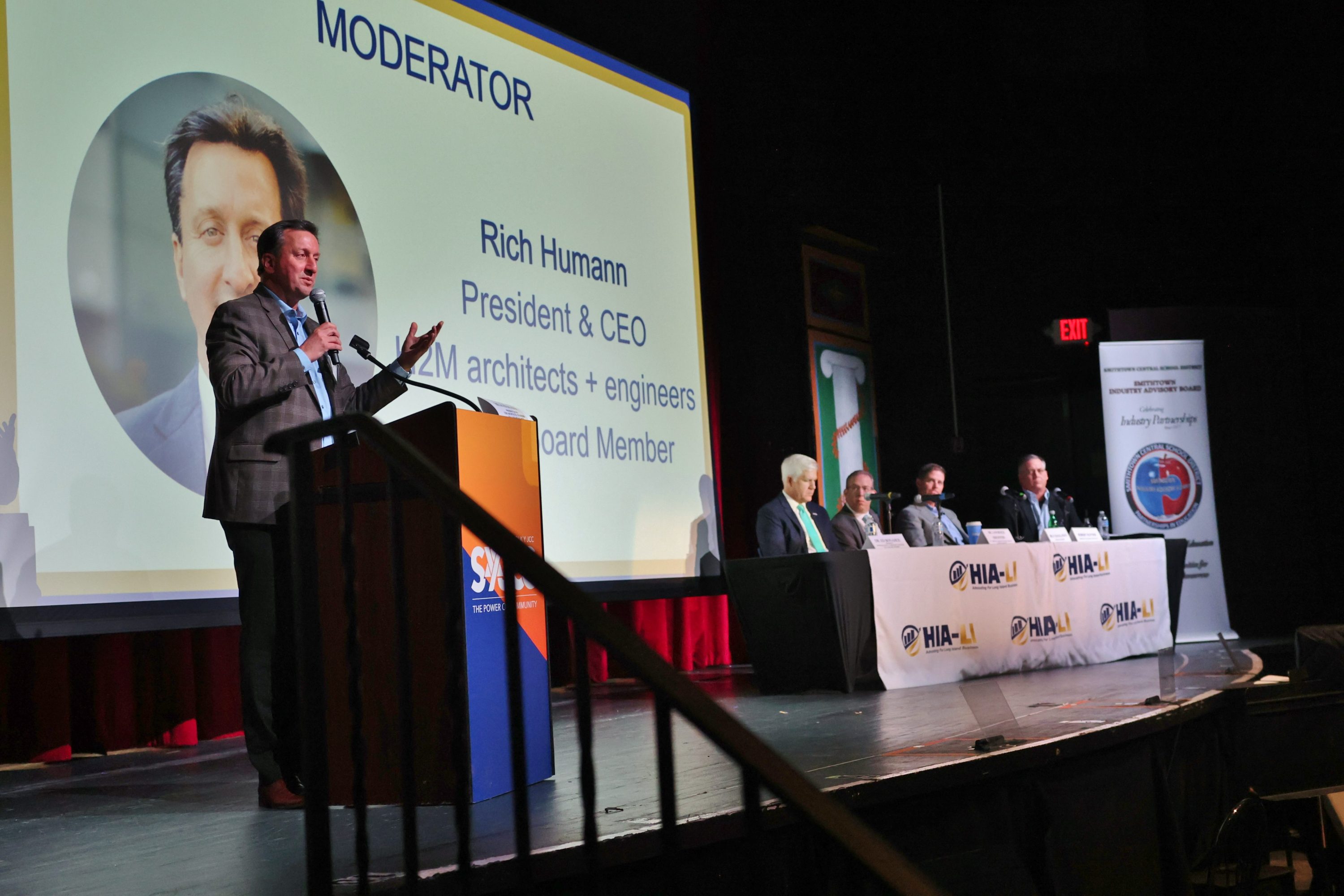
Our first-ever HIA-LI Workforce Summit — held in partnership with the Smithtown Central School District and the Smithtown Industry Advisory Board — brought together more than 300 educators, guidance counselors, and business leaders at the Suffolk Y Jewish Community Center in Commack. It was a packed house, and more importantly, it was a packed conversation.

From the moment attendees walked through the door, there was an unmistakable sense of optimism and purpose. Teachers stood alongside business executives. College presidents spoke with construction and manufacturing leaders. Guidance counselors shared ideas with healthcare professionals. Everyone came with a shared mission: to bridge the gap between education and employment so our young people can build rewarding careers right here on Long Island.

The Start of a New Dialogue

For years, we’ve talked about the challenges of workforce development — the shortage of skilled workers, the exodus of young talent, and the perception that “success” only comes with a four-year degree. The summit showed that this conversation is changing.

What we heard — and felt — was a powerful message of alignment. Business and education both understand that the world of work has evolved, and our approach to preparing students must evolve with it. A college degree remains one valuable path, but so are two-year programs, certificate credentials, apprenticeships, and technical careers that lead to meaningful, well-paid jobs with growth potential.

Several speakers underscored how important it is to remove the stigma that sometimes surrounds the trades and vocational programs. In reality, those routes can open doors to prosperity — often with less debt and more hands-on experience.

Collaboration in Action

What made this summit so inspiring was seeing collaboration happen in real time.

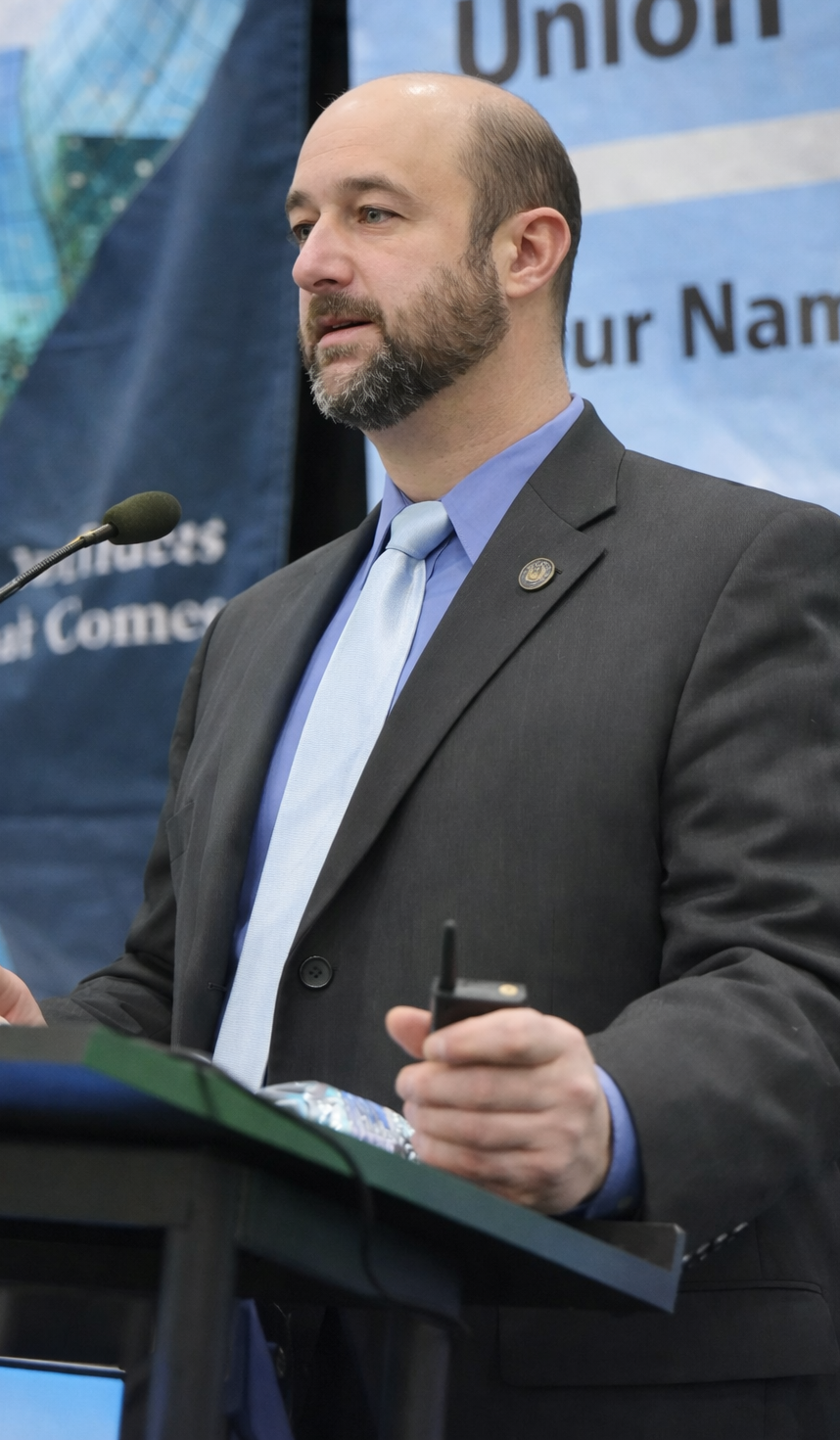
  • State Senator Mario Mattera opened with a passionate call to unite business, labor, and education to build the workforce of tomorrow.
  • Rich Humann of H2M architects + engineers and Dr. Ed Bonahue of Suffolk County Community College — both HIA-LI Board Members and Co-Chairs of our Workforce Development Task Force — shared how we can better align education with industry demand.
  • Our keynote speakers, Michael Woods and Janine Lalia from the CTE Technical Assistance Center of New York, reminded us that true career readiness begins in our classrooms — where teachers and counselors help students see all the pathways to success.
  • Industry leaders like Billy Haugland II, Robert Kufner, and Dr. Lawrence Eisenstein showed that construction, manufacturing, and healthcare all have incredible stories to tell — stories that can inspire young people to build their futures right here at home.
  • And Phil Como from the Smithtown Industry Advisory Board brought it all together, emphasizing how partnerships like these directly benefit students — connecting education to opportunity.

The Momentum Ahead

The summit reinforced something I’ve long believed: when we put educators and employers in the same room, great things happen. Conversations turn into partnerships. Ideas turn into programs. And most importantly, young people begin to see new possibilities for their future.

Our HIA-LI Workforce Development Task Force will continue driving this momentum forward. We’ll keep facilitating these dialogues, supporting school-business partnerships, and expanding awareness of the incredible career opportunities that exist across Long Island’s innovation ecosystem.

The feedback from the summit has been overwhelmingly positive — from educators grateful for the insight, to business leaders eager to stay involved. But this is only the beginning.

We now have a foundation, a shared understanding, and a growing network of partners ready to take action. The challenge — and the opportunity — is to keep that conversation going.

Looking Forward

Long Island’s future depends on how well we prepare our next generation to thrive — not just in classrooms, but in careers that matter. The summit proved that we have both the passion and the partnerships to make that happen.

Together, we’re building a stronger, smarter, more connected Long Island — one that keeps our talent here, strengthens our economy, and ensures every student sees a future filled with promise.


Click here to download our workforce development report, Innovating the Talent Pipeline: Strategies for Workforce Development in the Long Island Innovation Park at Hauppauge. This 54-page report, developed by the Workforce Development Institute in collaboration with HIA-LI and the Suffolk County Industrial Development Agency, outlines the critical need for stronger industry-academia partnerships to prepare students for careers that are in-demand.

Long Island’s Economic Landscape: Insights from HIA-LI’s 31st Annual Economic Summit

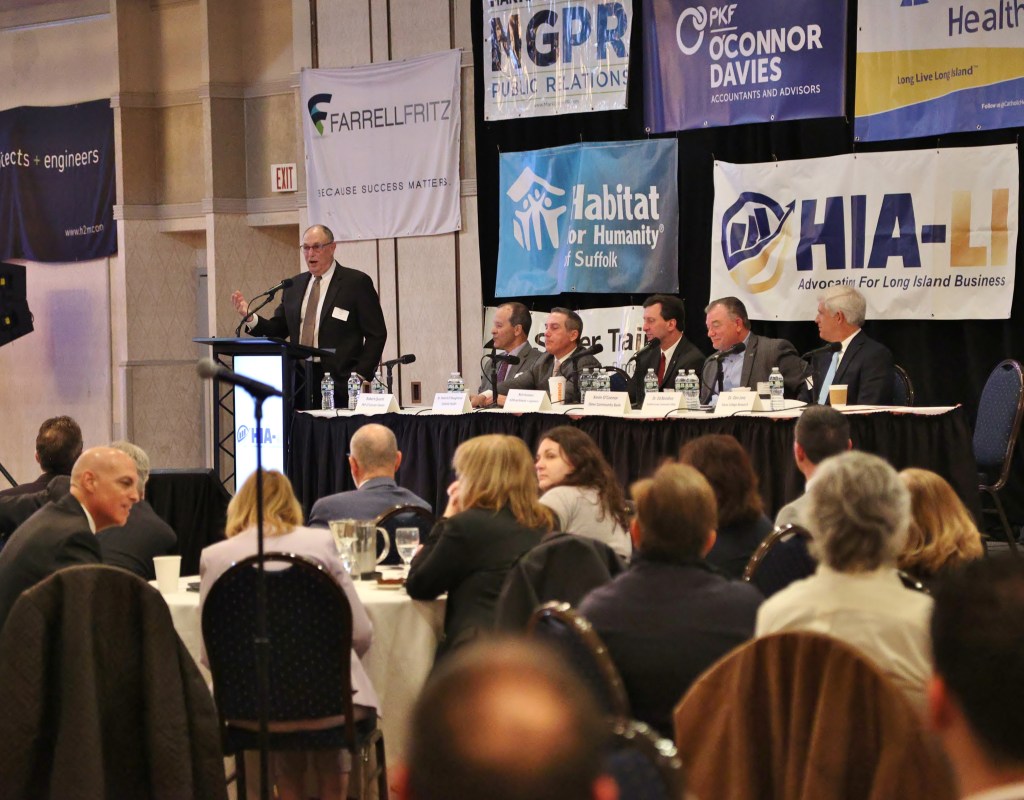
John Fitzgerald, Partner at Citrin Cooperman, reviewed the survey results and served as moderator of the panel.

Last week, over 200 business leaders gathered at HIA-LI’s 31st Annual Economic Summit to discuss the findings of our latest Economic Survey, conducted in collaboration with Citrin Cooperman and Adelphi University. This event is one of the most valuable touchpoints for our business community, providing data-driven insights that help shape strategic decisions for the year ahead.

Optimism and Challenge: Long Island’s Economic Climate

The 2025 HIA-LI Economic Survey revealed a complex economic picture—one of optimism, growth, and persistent challenges. Among the key takeaways:

  • 54 percent of business leaders believe Long Island’s economy is growing.
  • 70 percent of businesses met or exceeded their 2024 profitability goals.
  • 42 percent of businesses plan to expand their footprint on Long Island.
  • However, 71 percent of respondents cited retention of young professionals as a major concern.
  • High taxes and inflation remain top issues affecting profitability.

These findings reinforce what we see daily at HIA-LI: businesses are resilient and committed to Long Island, yet they face systemic hurdles that require strategic solutions and collaboration.

Infrastructure: A Game Changer for Economic Growth

One of the most exciting discussions of the summit centered on infrastructure investments, particularly the $150 million state investment in MacArthur Airport, announced last week by Governor Kathy Hochul. This initiative, championed by Islip Town Supervisor Angie Carpenter, will create a direct rail connection to the Long Island Rail Road, making regional travel and business operations more efficient.

Christine Flaherty, Senior Vice President of Real Estate Development and Facilities at Catholic Health, highlighted the critical role of healthcare infrastructure in supporting Long Island’s economic vitality. With Catholic Health’s continued investment in ambulatory care centers and telehealth services, the region is strengthening its healthcare ecosystem, which directly impacts business productivity and workforce retention.

Meanwhile, Rich Humann, President & CEO of H2M Architects + Engineers, emphasized how modernizing Long Island’s infrastructure through smart technology and digital transformation will be a catalyst for economic stability and business growth.

Workforce and Housing: The Retention Crisis

The top challenge facing Long Island businesses continues to be talent retention and workforce development. The survey found that 46 percent of business leaders report increasing difficulty in hiring quality candidates—nearly triple the percentage from two years ago.

The lack of affordable housing compounds this issue. John Finn, Director of Leasing and Acquisitions at Damianos Realty Group, stressed that housing affordability is at a crisis level, with local governments needing to rezone and expand housing options to keep young professionals on Long Island.

Meanwhile, Diane Manders, CEO of Habitat for Humanity of Long Island, highlighted that applications for affordable homeownership have skyrocketed by 600 percent in the past five years, signaling an urgent demand for solutions.

The Role of Finance: Navigating Inflation and Growth

Despite the positive business outlook, inflation and rising interest rates remain significant concerns. Brian Teplitz, Chief Credit Officer at Dime Bank, pointed out that while business lending remains competitive, borrowing costs are rising, and companies must adapt their financial strategies accordingly.

Yet, businesses are determined to grow. Many survey respondents indicated plans for capital improvements in 2025, with technology investments being a top priority. This reinforces the need for public-private collaboration to create policies that support business expansion while mitigating financial risks.

Bridging Business, Government, and Education

The panel discussion, moderated by John Fitzgerald, Partner at Citrin Cooperman, was dynamic and solutions-driven. It became clear that businesses, government leaders, and educational institutions must align efforts to address these challenges.

At HIA-LI, we continue to advocate for:

  • Workforce development initiatives that build talent pipelines.
  • Infrastructure expansion to enhance economic opportunities.
  • Policies that make Long Island a competitive place to live and work.

Looking Ahead: Solutions, Not Just Data

The 31st Annual Economic Summit was more than just a snapshot of Long Island’s economy—it was a call to action. We have the resources, talent, and expertise to tackle these challenges, but collaboration is key.

To every business leader, policymaker, and stakeholder who participated: thank you. Your engagement fuels the work we do. As we move forward, HIA-LI remains committed to driving solutions that ensure Long Island’s economic future is strong, sustainable, and forward-thinking.

Let’s continue the conversation. If you’re not yet involved, now is the time. Join us in shaping the future of Long Island.

To view the full Economic Survey, click here.

Charting the Future of Long Island’s Construction and A&E Industries

Over 200 leaders from Long Island’s construction, architecture, and engineering sectors gathered on Thursday, December 12, 2025 for a breakfast event that was as insightful as it was impactful. Hosted by HIA-LI in collaboration with the Long Island Builders Institute and the Long Island Contractors Association, the event spotlighted the findings of the Grassi 2024 Construction and Architecture & Engineering (A&E) Industry Survey Report. It was a morning of thoughtful discussion, led by highly respected voices in our community.

The program began with opening remarks from Marc Herbst, Executive Director of the Long Island Contractors Association, who set the tone by emphasizing the critical role these sectors play in the bi-county region’s economic vitality. Carl Oliveri, Partner and Construction Practice Leader at Grassi, skillfully moderated the panel, which included Robert Brewer, Partner and A&E Practice Leader at Grassi; Jimmy Coughlan, Executive Vice President and Partner at TRITEC; Rich Humann, President & CEO of H2M architects + engineers; and Devin Kulka, CEO of The Kulka Group. Each speaker brought unique perspectives on the survey’s findings, and together, they painted a comprehensive picture of where we stand — and where we’re headed.

Insights and Challenges from the Survey

The survey provided an honest assessment of the current landscape for construction and A&E firms, capturing feedback from 248 industry leaders. While optimism about revenue growth in 2024 is strong — 56% anticipate an increase — there’s no denying the headwinds our region faces.

The Challenges:

  1. Labor Shortages
    Labor shortages remain a top concern, with over half of respondents citing this as the most significant challenge. The scarcity of skilled workers isn’t just a business problem; it’s a community issue. It impacts the pace of development and the ability to meet growing housing and infrastructure needs.
  2. Inflation and Rising Costs
    Inflation, coupled with escalating material and overhead costs, continues to squeeze margins. Eighty-three percent of firms reported increased overhead costs, with many facing double-digit hikes. This reality forces companies to make tough choices and adapt to maintain profitability.
  3. Supply Chain Disruptions
    While supply chain issues have eased somewhat, they remain a persistent challenge. Many firms are turning to innovative solutions such as diversifying suppliers and locking in prices through agreements to mitigate volatility.

The Opportunities:

  1. Technological Investments
    Companies across the sector are embracing advancements like project management software, artificial intelligence, and building information modeling. These tools are enhancing efficiency and helping firms stay competitive in a rapidly evolving market.
  2. Cybersecurity Leadership
    Long Island’s A&E firms are leading the way in cybersecurity, with 96% implementing robust protocols, including dual-factor authentication. This commitment to protecting sensitive data is a model for other industries.
  3. Optimism in Residential Construction
    Despite challenges, there is cautious optimism about residential construction, particularly here in Nassau and Suffolk counties. This is a positive indicator of the region’s resilience and its ability to adapt to market demands.

What This Means for Long Island

The findings of this survey are a mirror reflecting both the promise and the pressures of doing business in our region. As we look to 2025, it’s clear that collaboration will be key to addressing these challenges. Workforce development must take center stage. HIA-LI is committed to working with local schools, trade groups, organized labor, and government agencies to cultivate a pipeline of skilled workers who can sustain this vital industry.

At the same time, our businesses must continue to innovate. Investments in technology and strategic partnerships will not only help firms weather economic uncertainties but also position Long Island as a hub for cutting-edge construction and engineering practices.

Finally, we must celebrate our strengths. The construction and A&E industries are pillars of our economy, contributing to the development of homes, offices, schools, and infrastructure that enhance our quality of life. By supporting these sectors, we are investing in the future of our entire community.

A Call to Action

To the leaders in attendance last week: Thank you for your insights, your dedication, and your vision. Let’s continue to work together to strengthen Long Island’s position as a leader in innovation and growth. And to those who couldn’t attend, I encourage you to engage with the findings of this report. The challenges are real, but so are the opportunities.

Together, we can rise to meet them.

Navigating the Future: Insights from the 30th Annual Long Island Economic Summit

Pictured: A view from the dais at the February 15, 2024 30th Annual HIA-LI Long Island Economic Summit.

The 30th Annual Long Island Economic Summit, held on February 15, 2024, began with a clear message: Long Island “is a good place to do business.”

This year’s summit, drawing on the findings of the 2024 Long Island Economic Survey conducted by Adelphi University and Citrin Cooperman, brought to light the resilience and adaptability of our local business community. Business leaders across both counties – who were surveyed between November 1, 2023, and January 15, 2024 – made it quite evident that despite some hurdles, there’s a strong sense of optimism about doing business here. The event served not only as a platform for analysis and discussion but also as a beacon of positive expectations for the region’s economic landscape.

I’d like to summarize the findings and share some of the analysis from the summit’s distinguished panelists.

Survey Highlights

  • Taxes, retention of young talent, and inflation are a major concern for most businesses.
  • Long Island businesses seem hesitant to explore the benefits of AI compared to the rest of the country.
  • Supply chain issues, though not as extreme as years past, continue to linger.
  • Compensation, human resource issues, and workforce development remain a high concern.
  • Confidence in government’s role continues to deteriorate, however Long Island continues to be perceived as a good place to do business.

The Role of AI

Panel moderator John Fitzgerald, Managing Partner at Citrin Cooperman, noted the mixed feelings surrounding AI, pointing out that “Long Island businesses seem hesitant to fully explore the benefits of AI compared to the rest of the country.” This underscores a crucial area for potential growth and innovation.

To help meet that need, HIA-LI will be partnering with the LIA in an April 3 Long Island Artificial Intelligence Conference. The goal of the conference is to bring businesses, entrepreneurs, academia, not-for-profit organizations, and government officials together to discuss how our region can play a leading role in the development and implementation of AI technologies.

For more information, go to www.LI-AI.eventbrite.com.

Government Support

Dr. Lawrence Eisenstein, VP and Chief Public and Community Health Officer at Catholic Health, stressed the importance of government support, especially when it comes to healthcare reimbursements. “We need more help in terms of increased Medicaid and Medicare revenue,” he said. “Nobody would go into one of your businesses and say I want services, but I’m only going to pay you 60 percent.”

Food Insecurity

Paule Pachter, President and CEO of Long Island Cares, and an HIA-LI board member, emphasized the critical challenge of food insecurity on Long Island, stating, “A family of four who’s earning $60,000 or $70,000 a year are finding themselves going to food pantries or going to food banks to ask for some assistance. They don’t need everything. But they need some things in order to stretch their budget.”

Economic Outlook

Jeffrey Barber, Executive Vice President of Dime Community Bank, provided an insightful perspective on the economic outlook, highlighting the financial landscape’s strengths and potential growth areas. He noted, “There’s a tremendous amount of liquidity in the market. Many companies sat on those funds during COVID and didn’t know where things were headed.” He added some good news, “They’re now at a point where they’re comfortable spending and creating jobs.”

Talent Retention

Rich Humann, President and CEO of H2M architects + engineers, and an HIA-LI board member, discussed the ongoing challenge of retaining young professionals, underscoring the importance of creating connections, opportunities, and a compelling work environment to encourage talent to stay on Long Island. “Our responsibility as business owners is to provide the kind of environment and opportunity that would keep people with companies like ours.”

Higher Education

MaryAnne Hyland, Dean of the School of Business at Adelphi University, added to the discussion on talent retention by emphasizing the need for higher education institutions to adapt and innovate in preparing the workforce. “We need to make sure that we are providing students with programs that provide cutting-edge knowledge and skills that focus on the demands of the workforce of today and tomorrow,” she stated, highlighting the critical role of education in workforce development.

Moving Forward: A Collaborative Vision for Growth

The 2024 Economic Survey, coupled with the insights from the Economic Summit, paints a picture of a region at the threshold of significant growth, buoyed by optimism, yet mindful of the hurdles that lie ahead. The collective wisdom of the panelists, alongside the statistical data, underscores the need for collaborative efforts in innovation, government support, and talent retention strategies.

As we look to the future, the path for Long Island is clear: leveraging the insights and optimism shared at the summit to foster an environment where businesses and communities can thrive. With a commitment to addressing the highlighted challenges head-on, Long Island is poised to navigate its economic journey with resilience and vision.

You can read the full 2024 Long Island Economic Survey here.

Innovating the Talent Pipeline: A New Dawn for Long Island’s Workforce Development

Rich Humann, President & CEO at H2M architects + engineers, and an HIA-LI board member, moderated the panel.

The much-anticipated report, “Innovating the Talent Pipeline: Strategies for Workforce Development in the Long Island Innovation Park at Hauppauge,” was unveiled at HIA-LI’s “Workforce Development Conference and Scholarship Awards” event on October 13, 2023, at Farmingdale State College. This report is a testament to our commitment, as outlined in my June 5, 2023 blog post, to address the skills gap on Long Island.

The Long Island Innovation Park at Hauppauge (LI-IPH), the Northeast’s largest industrial park, is a beacon of regional economic strength, with over 1,300 companies and employing more than 55,000 workers. However, the challenge of a skilled workforce shortage looms large. This report, a collaborative effort between HIA-LI, the Suffolk County Industrial Development Agency (IDA), and the Workforce Development Institute (WDI), provides a roadmap to ensure the long-term resilience and competitiveness of the Long Island business sector.

James Lima Planning + Development, a renowned a New York City-based planning, real estate, and economic advisory firm, undertook the strategic analysis. Their comprehensive study, based on surveys from 34 Long Island employers, sheds light on the skills and talent needs of businesses, with a special focus on the LI-IPH.

The report’s findings are both insightful and actionable. It emphasizes the importance of:

  1. Access and Awareness: An island-wide campaign to promote resources such as adult English classes, career support, and job fairs.
  2. Strengthening Industry-Academia Partnerships: Encouraging project-based learning, AI tools, and best practices in the manufacturing sector.
  3. Promoting Intra- and Cross-Sector Collaborations: Highlighting best practices, foreign language support, and software training.
  4. Fostering a Learning and Advancement Culture: Championing mentorship initiatives and branded learning programs.
  5. Building Affordable and Attractive Communities: Advocating for workforce housing and transit-oriented development.

I’d like to extend my gratitude to the panelists and contributors who made this event and report possible. Their insights and expertise have been invaluable.

And of course, a special thanks to our partners in this effort: Kelly Murphy, Acting Executive Director of the Suffolk County IDA, and Robyn Fellrath, Long Island Regional Director at the Workforce Development Institute. We couldn’t have done this without their steadfast support.

Another highlight of the morning was the Scholarship Awards ceremony. This initiative is more than just financial assistance; it’s a commitment to the future of Long Island. By providing scholarships to high school graduates who choose to pursue their college studies here on Long Island, we’re not only investing in their education but also fostering a sense of community and continuity. It’s a clear message: we believe in the potential of our young minds and the promise they hold for our region’s future.

It’s also a testament to our dedication to keeping local talent local. By incentivizing our youth to study and subsequently work in the Nassau-Suffolk region, we’re ensuring a steady stream of skilled professionals who are familiar with the unique challenges and opportunities here on Long Island. These young individuals, equipped with local knowledge and a world-class education, will be the driving force behind Long Island’s continued economic growth and innovation.

In conclusion, as the President and CEO of HIA-LI, I am proud of this monumental step towards bridging the skills gap on Long Island. The recommendations in this report are not just words on paper; they are a call to action. Together, we can ensure a vibrant, resilient, and future-ready regional economy.

Steering the Future: HIA-LI’s New Workforce Development Task Force

As President and CEO of HIA-LI, one of Long Island’s foremost business advocacy organizations, I’m excited to share that we are launching a new Workforce Development Task Force. This initiative underscores our ongoing commitment to supporting businesses and strengthening the economic framework of the Long Island Innovation Park at Hauppauge (LI-IPH).

The LI-IPH is a significant player in our region’s economy, serving as the largest business park in the Northeast. With around 1,400 companies that employ approximately 55,000 workers, it forms a critical part of Long Island’s economic pulse. However, like many regions across the country, Long Island faces a significant challenge: a shortage of skilled workers. This issue is not just immediate; it also has implications for our region’s future growth and resilience.

To address this challenge, we’ve assembled a task force with two specific goals: align resources to meet business needs and spearhead efforts to recruit and develop talent for in-demand careers. Our task force is led by two respected individuals, Rich Humann, President and CEO of H2M Architects & Engineers, and Dr. Edward Bonahue, President of Suffolk County Community College. They will leverage their expertise to foster meaningful collaborations between businesses, educational institutions, and workforce development organizations.

We draw inspiration from successful ventures like Suffolk County Community College’s Solar Installer Certificate Program, a perfect example of mutually beneficial academia-business partnerships. By facilitating similar collaborations, we aim to ensure students are equipped with hands-on experience and businesses have access to a well-trained talent pool.

In the evolving post-Covid landscape, it’s crucial to forecast the skills businesses will need. To this end, the task force will commission an extensive “LI-IPH In-Demand Skills Assessment” in partnership with the Suffolk County Industrial Development Agency (Suffolk IDA) and executed by James Lima Planning, a renowned New York City-based consulting firm. This project is made possible by a grant from the Workforce Development Institute, with additional funding from HIA-LI and the Suffolk IDA. The results will guide academia in reshaping curricula to align better with the future needs of the region’s economy.

Our task force’s initiative resonates with a larger statewide initiative – a $350-million initiative announced last year by Governor Kathy Hochul – to improve workers’ skills to meet job demands. This wider program forms a crucial element of a strategic approach to workforce development in the region.

Given the rapid pace of technological advancements, anticipating the shape of future work is a priority. The task force is committed to helping local businesses understand and prepare for these changes. By creating synergies between businesses, academia, and governmental organizations, we aim to foster a more resilient economy, attuned to both immediate and future needs of Long Island’s workforce.

Smaller businesses often find predicting future skill requirements a daunting task. Thus, we’re tailoring our efforts to help these firms, providing assistance to navigate and prepare for future demands. We are aiming to equip these businesses with customized programs that meet their ever-evolving workforce needs.

In conclusion, the Workforce Development Task Force reflects our dedication to continually fostering the growth and development of Long Island’s workforce. We view this initiative as a strategic response to current challenges, ensuring a more vibrant, resilient, and future-ready regional economy.

Stay tuned for information about our fall Workforce Development Conference where the results of the “LI-IPH In-Demand Skills Assessment” will be presented and discussed.

Despite challenges, many L.I. employers expect to boost hiring in 2023

Moderator Michael Sabatini, a Partner with Citrin Cooperman, third from left, poses with panelists, from left: Renee Daniel Flager, Executive Director of Girls Inc. of Long Island; former HIA-LI Chair Rich Humann, President and CEO of H2M architects + engineers; MaryAnne Hyland, Dean of the Robert B. Willumstad School of Business at Adelphi University; Kevin O’Connor, CEO of Dime Community Bank; and Dr. Patrick O’Shaughnessy, President and CEO of Catholic Health Services.

While local business leaders grapple with such challenges as inflation, supply chain issues, and employee recruitment and retention, many still plan to increase the size of their workforces this year.

That’s a key finding of “The Long Island Economic Survey 2023,” a new survey of more than 200 Long Island executives. It was commissioned by HIA-LI and conducted by Adelphi University and the Citrin Cooperman accounting firm.

Survey results were discussed by a panel of leading regional executives on February 15 before more than 250 attendees at HIA-LI’s 29th Annual Business Summit held at the Hamlet Golf & Country Club in Commack. We were pleased to have Michael Sabatini, a Partner with Citrin Cooperman, moderate the panel.

Executives were asked to identify up to three of “the most important issues facing Long Island today.” Inflation and taxes were each cited by 22 percent of respondents. One-third identified workforce-related challenges as a top issue.

Yet despite their concerns over hiring and retention, virtually half of respondents (49 percent) expect to increase their employee rolls in 2023. Thirty-one percent of all respondents expects to augment their Long Island-based workforce, four percent will do more hiring outside of Long Island, and 14 percent plan to expand their workforce both on and outside Long Island. Forty-three percent anticipate no increase in staff size. Eight percent were unsure.

Some four out of ten were optimistic about their projected revenue and net profits next year, while half expected level growth. Ten percent expect a decline in revenues this year.

Similarly, more than a third (38 percent) of participants expected to expand their Long Island-based businesses in 2023.  

How concerned were local executives about the effects of inflation on their business? Most (62 percent) were “very concerned.” Thirty-one percent were “somewhat concerned,” and seven percent were “slightly concerned.”      

Sixty-five percent of respondents said they were affected by disruptions to the global supply chain. Most respondents expect supply chain issues to persist for another six months to two years.

Who took part in the survey?

A large majority of respondents represented businesses generating less than $100 million in revenue. More than three-quarters had been in operation 20 years or more. While respondents came from many industries, those with the largest representation were professional services (21 percent) and manufacturing, distribution and retail (17 percent). Most respondents (52 percent) were based in Suffolk County. Ten percent were situated in Nassau County, and 32 percent were based in both counties.

We were grateful for the participation of our panelists at the 29th Annual Business Summit: Kevin O’Connor, CEO of Dime Community Bank; Renee Daniel Flager, Executive Director of Girls Inc. of Long Island; former HIA-LI Chair Rich Humann, President and CEO of H2M architects + engineers; MaryAnne Hyland, Dean of the Robert B. Willumstad School of Business at Adelphi University; and Dr. Patrick O’Shaughnessy, President and CEO of Catholic Health Services.   

Newly elected Rep. Nick LaLota was also present to greet attendees.

How closely does your point of view match up with those reflected in our survey?

I urge you to see for yourself.

“The Long Island Economic Survey 2023” can be found here.

Despite Challenges, the Long Island and National Economies Are Set to Grow

It was wonderful to be back in person at the HIA-LI Economic Summit. On March 25, business leaders, colleagues, and friends joined us at the Radisson in Hauppauge for our 28th Annual Summit, where a panel of experts offered their economic predictions for Long Island and the country.

Dr. Don Levy, Director at Sienna College Research Institute, summarized the results of the PKF O’Connor Davies 2022 Economic Survey. Among the 270 CEOs who participated, 59 percent said that the economy on Long Island was better than it was a year ago, and 61 percent expected improvement during 2022. Within their industries, 50 percent described conditions as more favorable than they were last year, and 56 percent anticipated an upswing in 2022. Normalized against historic data, these four results indicate a confidence rating of 6.8 out of 10, up from 6.5 a year ago.

Challenges include the continuing impact of COVID (cited by 55 percent of CEOs), inflation (53 percent), and rising supplier costs (43 percent). Worker supply is another: “Only one out of five say that they can find the people they need to step in and make a fruitful contribution right away,” remarked Levy.

Bob Quarte, a Partner at PKF O’Connor Davies who is also HIA-LI Board Treasurer, moderated the panel discussion. Noting the challenges that have arisen since the completion of the survey in early January — the war in Ukraine, a stock market correction, rising interest rates, and spiraling gas prices — he asked the panelists to describe their confidence in the economy and in their business sectors.

“As businesses get busier, healthcare gets busier,” stated Dr. Patrick O’Shaughnessy, President and CEO of Catholic Health Services. “I don’t just mean sick care. I mean well care, and that includes important screenings, keeping you healthy, getting ahead of you having a problem that causes more of an impact. I believe we’re moving forward in the right direction. That doesn’t mean we’re not going to have blips along the way, but I’m optimistic.”

Rich Humann, President and CEO of H2M Architects + Engineers and HIA-LI Board Chair, said that despite the national energy strategy that “continues to tip on a scale,” he is also optimistic. “As we recover, the commitment to infrastructure, the commitment to dollars, is coming from the federal government. Although there’s clearly an inflationary effect of that, nothing moves us in a strong economic direction more than a really robust investment in infrastructure.”

The national economy will do well in the long term, predicted Kevin O’Connor, CEO of Dime Community Bank and HIA-LI Board Secretary, but it will experience blips in the short term. “The Fed’s ability to navigate a soft landing does not have a lot of historical success. We may feel some pain that might be necessary to end some of the inflationary pressures.”

Dr. Edward Bonahue, President of Suffolk County Community College and an HIA-LI Board Member, declared that he’s “remarkably optimistic” despite the difficulties created by the pandemic. “We know that our ability to engage students, to provide hands-on workforce training that replicates the conditions that students are going to find when they’re on the job, is going to be supported by the continuing economic recovery, and the continuing recovery from COVID.”

“Things go in cycles,” added Quarte, summing up the panelists’ perspectives. “We might be in a difficult cycle right now, but we’ve proved we’ve always pulled through it.”

Download a copy of the survey here.

Despite Slip, AVZ Survey Says Long Island Economy Is Still Strong

AVZ Economic Summit
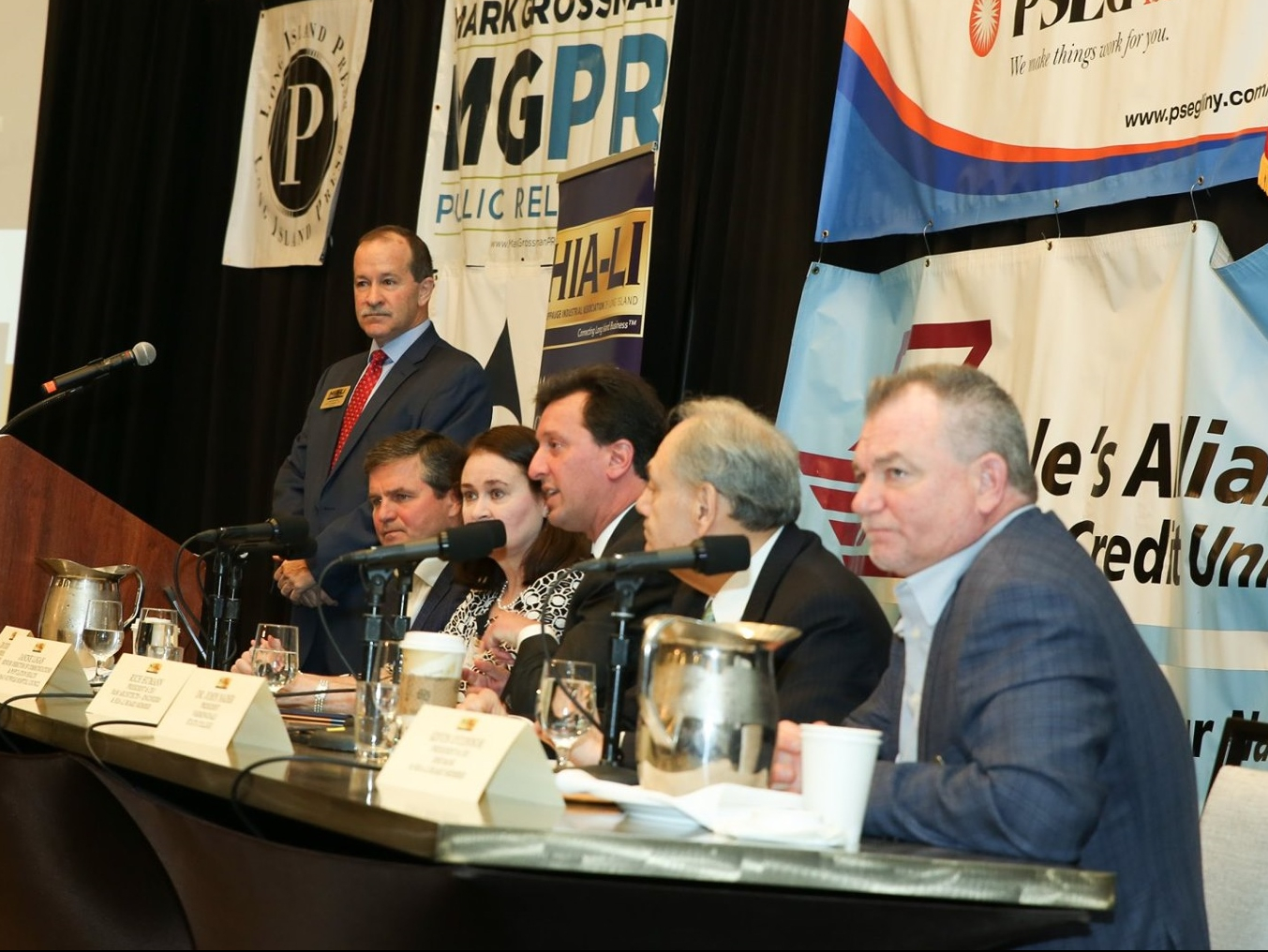
Moderator Robert Quarte, Managing Partner, AVZ & Company, P.C., and panelists, from left: Jim Coughlan, Principal, TRITEC Real Estate Co., Inc.; Janine Logan, Sr. Director, Communications & Population Health, Nassau-Suffolk Hospital Council; Rich Humann, President and CEO, H2M Architects + Engineers; Dr. John Nader, President, Farmingdale State College; and, Kevin O’Connor, President and CEO, BNB Bank.

Long Island business executives feel optimistic about the region’s economic future, as we explored at HIA-LI’s 26th Annual Economic Summit on February 12 at the Hyatt Regency in Hauppauge. HIA-LI sees this event as critical to helping our members interpret what’s going on here on Long Island.

Based on the annual survey conducted by AVZ & Company, one of Long Island’s largest accounting firms, confidence in the regional economy – which reached a survey record high of 7.2 in 2018 – stood at a healthy 6.8 by the end of 2019. Yet forty-six percent of respondents added employees last year, and 43 percent had “no problem” finding skilled workers.

With AVZ managing partner Bob Quarte keeping the discussion lively and interesting in his role as moderator, a five-member panel sustained the attention of over 250 guests as they delved into issues shaping our region’s economic future.

Jim Coughlan, principal of TRITEC Real Estate, praised IDAs for their powerful contributions to the success of large business development projects. But if State lawmakers begin requiring IDA-supported projects to pay “prevailing wages,” he cautioned, IDAs would lose much of their ability to promote growth.

Rich Humann, president and CEO of H2M Architects + Engineers, praised HIA-LI’s work in building bridges between the Long Island Innovation Park at Hauppauge (LI-IPH) and regional universities.

Looking big picture, Kevin O’Connor, president and CEO of BNB Bank, said there’s been an evolution in deal structures over the past fifteen years that should lessen the incidence of “crash and burn” economic cycles.

Janine Logan, Senior Director for Communications and Population Health with the Nassau-Suffolk Hospital Council, seemed unsurprised that the AVZ survey had ranked healthcare as the regional industry with the greatest growth potential.

Why? Well, nearly one-fifth of our population is age 65 or older, she said, and the top, predisposing factor for chronic disease is age.

Dr. John Nader, president of Farmingdale State College, told attendees that many people burdened with college debt had never received diplomas. Instead of two- or four-year degrees, he said that many jobs now call only for “micro-credentials” and certifications. That’s something for us to keep in mind as we develop a proposed LI-IPH workforce development center.

This year’s Economic Summit was stimulating and upbeat and once again served as a very important discussion on the pulse and future trends on Long Island.

Our Task Force Has Begun Building the Park’s New Future

We’ve got the vision – and we’ve got the strategy.

And now, we’ve got a blue-ribbon Task Force in place to implement the strategy.

Our goal? The HIA-LI is spearheading a bold expansion of the Long Island Innovation Park at Hauppauge (LI-IPH), formerly known as the Hauppauge Industrial Park.

While our 55,000-employee workforce already delivers $13 billion in annual output, we’ve now identified powerful opportunities for new growth.

With support from the Suffolk County IDA and the Regional Plan Association, HIA-LI commissioned a full-blown “Opportunity Analysis” by James Lima of James Lima Planning + Development, a nationally respected economic development consulting firm.

It found that the Park stood as Long Island’s top source of new, incoming wealth – thanks to our unsurpassed ratio of “tradable” businesses. These are companies whose exports and services attract new dollars into the region.

Tradable industries constitute only 23 percent of the regional economy, well below the 36 percent national average.

But our Park’s ratio is super-high: 58 percent of our workforce represents jobs in tradable industries.

The 160-page Lima assessment pinpointed five expansion strategies: facilitate business growth, attract and retain key knowledge workers, strengthen workforce development, promote innovation, and bolster connections among businesses, government, and institutions.

Happily, our new LI-IPH Task Force has already begun implementing these strategies.

In addition to myself and Joe Campolo, HIA-LI board chairman and managing partner of Campolo, Middleton & McCormick, LLP, its members include:

I applaud our Task Force members for their commitment to the LI-IPH – and to our region’s future.

Let’s enthusiastically support their efforts to usher in a new era of economic vibrancy for Long Island.