From Infrastructure to Innovation: How Long Island’s Towns Are Building the Future

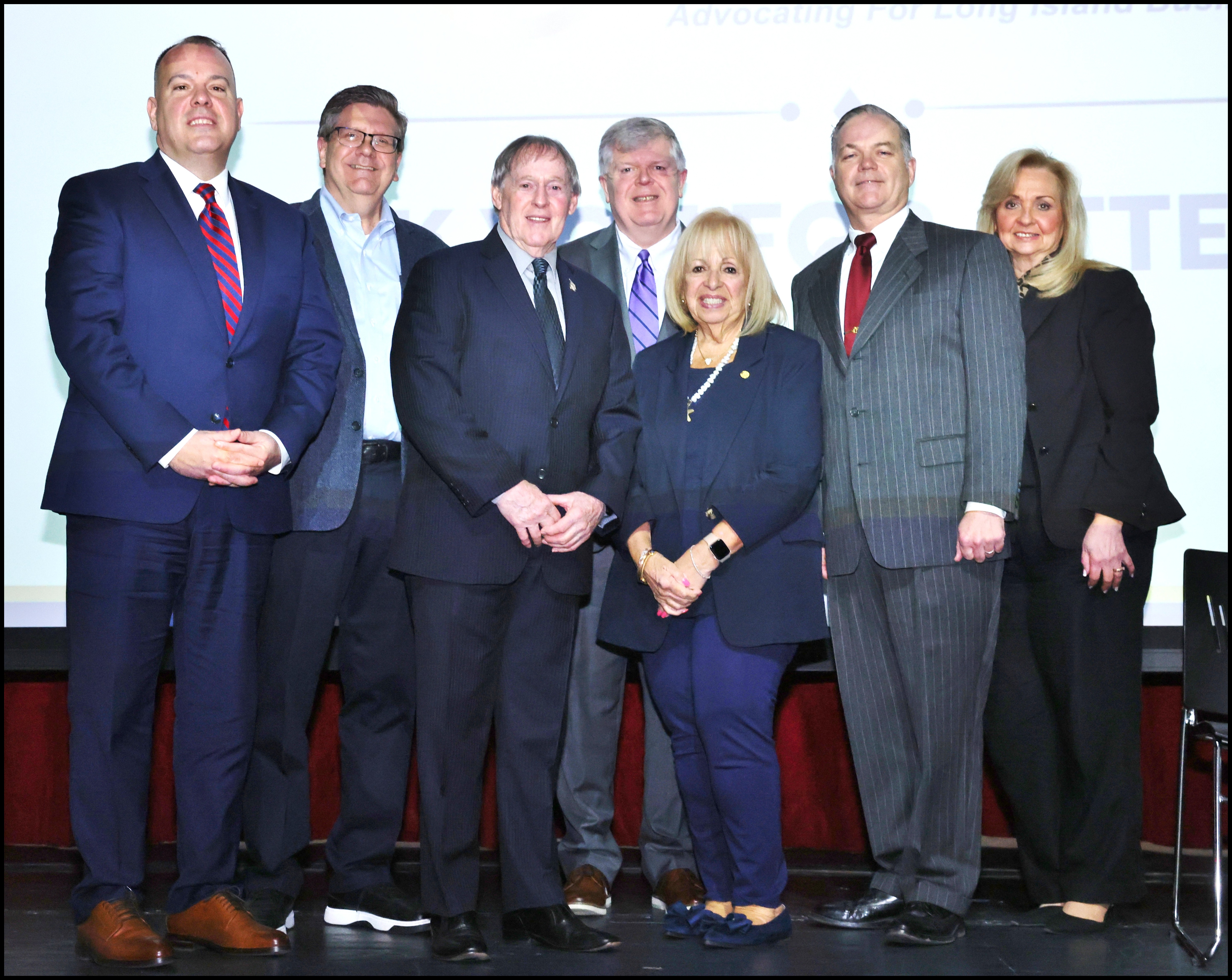
There’s a tendency to talk about economic development in broad, regional terms: state investments, county initiatives, big-picture strategy. But what became clear at HIA-LI’s recent Economic Development Advancements: Towns Shaping Long Island’s Future program is this: the most consequential decisions shaping Long Island’s future are happening at the town level.

That’s where zoning is determined. That’s where redevelopment is approved or denied. And increasingly, that’s where the vision for what Long Island becomes over the next decade is being defined.

A Shared Direction: From Sprawl to Smart Growth

Across the panel, one theme emerged consistently: Long Island is moving away from traditional suburban sprawl and toward more intentional, mixed-use, walkable communities.

In the Town of Huntington, Supervisor Ed Smyth described a community that is already largely built out, leaving redevelopment, not expansion, as the path forward. The proposed Melville Town Center reflects a shift toward creating walkable downtown environments, blending residential, commercial, and lifestyle elements in ways that better reflect how people want to live today.

That same philosophy is taking shape across the region.

In the Town of Islip, Supervisor Angie Carpenter pointed to major redevelopment efforts in Bay Shore and Central Islip, where transit-oriented development and mixed-use projects are transforming underutilized sites into vibrant, economically productive communities. These projects are not just about housing. They are about creating places where people can live, work, and contribute to the local economy.

And in the Town of Babylon, Supervisor Rich Schaffer highlighted how sustained public investment in infrastructure, including roads, drainage, sewer systems, and public safety, has helped unlock significant private-sector development, from Wyandanch to Deer Park and beyond.

Infrastructure Still Comes First

If there was one point of universal agreement, it was this: none of this happens without infrastructure.

Supervisor Ed Wehrheim of the Town of Smithtown underscored how investments in sewer systems, streetscapes, and transportation access are directly tied to revitalization success. Once that foundation is in place, private investment follows, bringing new housing, new businesses, and renewed energy to long-standing business districts.

That same message was echoed throughout the discussion. Whether it’s sewer expansion in Huntington Station, infrastructure upgrades in Smithtown, or large-scale capital investments in Babylon, the path to economic growth begins below ground before it ever rises above it.

Setting the Tone: Leadership and Accountability

Moderating the discussion, Joe Campolo, Managing Partner of Campolo, Middleton & McCormick LLP; Founder of Strata Alliance; Chair of HIA-LI’s Long Island Economic Development Task Force; and HIA-LI Board Member. Joe emphasized a point that resonated throughout the program: economic development requires not just vision, but action, and it often takes political courage.

He noted that town supervisors are uniquely positioned to move projects forward or stop them, making their leadership central to Long Island’s future. At the same time, he stressed that public-private partnerships cannot exist in name only. The business community must actively support responsible development by engaging in the process, showing up at hearings, and advocating for projects that strengthen the regional economy.

That dynamic, government leadership paired with private-sector engagement, was a consistent thread throughout the conversation and a critical factor in whether projects ultimately succeed.

Balancing Growth, Affordability, and Community

Another key theme was balance.

There is a clear need for new housing on Long Island, but what that housing looks like matters. Several supervisors emphasized that developments cannot be exclusively rental-based. Communities are looking for a mix that includes opportunities for homeownership, allowing residents to build equity and remain rooted on Long Island long-term.

At the same time, affordability pressures continue to mount. While housing costs are often the focus, Brookhaven Town Supervisor Dan Panico pointed to another looming issue that receives far less attention: waste management. The long-term sustainability and cost of managing Long Island’s solid waste system could have significant implications for taxpayers, businesses, and local governments alike.

These are not abstract challenges. They are real, immediate pressures that require coordination across all levels of government.

Partnership Matters at Every Level

The discussion also reinforced the importance of collaboration, particularly with New York State.

Cara Longworth, Long Island Regional Director for Empire State Development, highlighted the impact of the state’s Downtown Revitalization Initiative, which has brought critical funding into communities across Long Island. These investments are helping towns reimagine their downtowns and accelerate projects that might otherwise take years longer to realize.

At the local level, success also depends on partnerships with developers, school districts, and the business community. In Huntington, for example, support from the Half Hollow Hills School District has helped advance the conversation around the Melville Town Center project, particularly as enrollment trends shift and communities adapt to changing demographics.

The Role of Place and Partnership

Hosting this conversation at the Suffolk Y Jewish Community Center was a reminder of how important community institutions are in bringing people together around these issues. We are grateful to Rick Lewis and his team for opening their doors and providing a space for this important dialogue.

Because ultimately, these conversations matter.

They matter not just for the elected officials making decisions, but for the business community, residents, and future generations who will live with the outcomes.

Looking Ahead

If there is one takeaway from this program, it is that Long Island is not standing still.

Across every town represented, there is movement, projects advancing, infrastructure being built, policies being debated, and visions taking shape. The details may differ from one community to another, but the direction is clear: smarter growth, stronger downtowns, and a renewed focus on making Long Island a place where people can build careers, raise families, and stay for the long term.

The challenge, and the opportunity, will be ensuring that these efforts continue to move forward in a way that is thoughtful, balanced, and sustainable.

Because the future of Long Island isn’t being decided in the abstract.

It’s being built, project by project, downtown by downtown, and town by town.
Growth, Grit, and the Policy Path Forward

If this year’s HIA-LI Economic Summit made one thing clear, it is this: Long Island’s business community is not waiting for permission to grow.

Before some 250 business leaders gathered to “Survey the Pulse of Long Island,” the energy in the room was unmistakable. There was discipline. There was realism. And above all, there was readiness.

The data from our 2026 Business Climate Survey, conducted in partnership with Citrin Cooperman and Adelphi University, tells that story clearly. Fifty-eight percent of respondents plan to expand in 2026. More than two-thirds anticipate growth over the next five years. Nearly half are planning capital improvements this year alone.

Those are not defensive numbers. They are forward-looking numbers.

They reflect confidence in Long Island’s economic foundation and belief in what comes next. When challenged, this region does not retreat. It recalibrates and moves forward.

I remain deeply grateful to our survey partners. Citrin Cooperman’s analytical leadership and Adelphi University’s academic collaboration ensure that our conversations are grounded in measurable reality. We are not speculating about the pulse of Long Island. We are measuring it.

CAUTIOUS DOES NOT MEAN WEAK

While 45 percent of respondents forecast revenue growth in 2026, the tone of the morning was less about exuberance and more about intentional positioning. Under the thoughtful moderation of John Fitzgerald, Partner at Citrin Cooperman, the discussion underscored a critical distinction: prudence is not pessimism.

What I heard was strategy.

Balance sheets are strong. Liquidity remains healthy. Investment in artificial intelligence is accelerating. Companies are strengthening operations and planning for sustainable expansion. That is not hesitation. That is resilience with purpose.

PUBLIC INVESTMENT MUST UNLOCK PRIVATE MOMENTUM

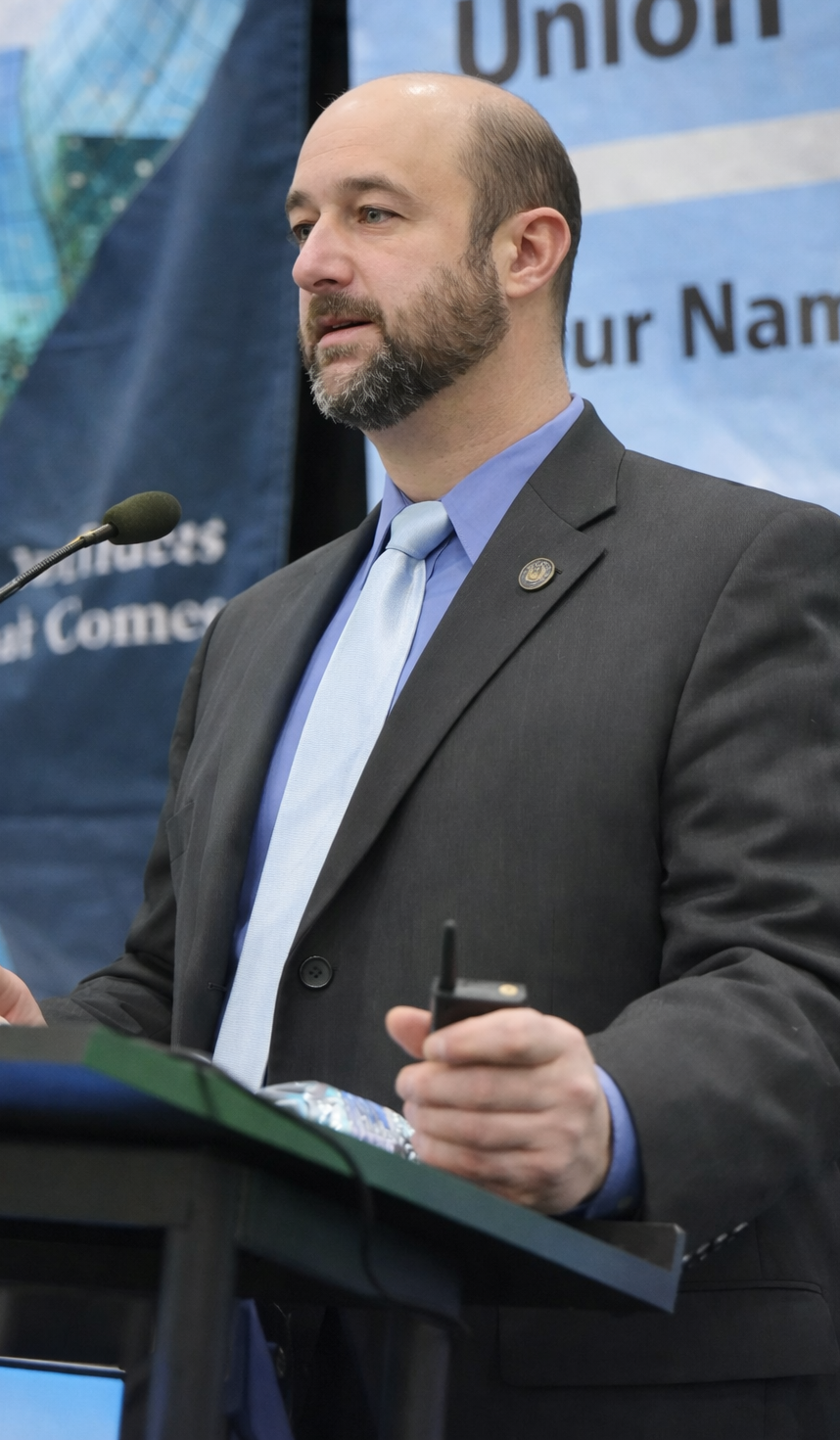
Governor Kathy Hochul’s Long Island Assistant Secretary for Intergovernmental Affairs, Rob Calarco, outlined the governor’s priorities, including middle-class tax relief, child care expansion, insurance reform and significant economic development commitments.

Most notable for our region was the emphasis on sustained investment in water infrastructure, including sewer and clean water projects designed to unlock housing development.

Infrastructure policy does not always capture headlines, but it determines whether growth is possible. Without sewer capacity and clean water systems, housing approvals stall. Without housing, workforce retention suffers. Without workforce stability, business expansion slows.

Water infrastructure is not abstract policy. It is the lever that enables economic mobility and regional competitiveness.

The encouraging signal is this: public investment is aligning around affordability and growth. The responsibility now is execution.

HOUSING IS THE MULTIPLIER

If one issue connected nearly every industry represented on the panel, it was housing.

The message was consistent across sectors. Without attainable housing, attracting young professionals becomes more difficult. Retaining families becomes harder. Scaling employers becomes constrained.

James Coughlan, Executive Vice President and Partner of TRITEC Real Estate, reinforced this point clearly. Housing production is not simply a development conversation. It is a competitiveness strategy.

Our survey confirms that business leaders understand this reality. Forty percent identified housing affordability as the most important area for government investment to facilitate growth.

Housing is not a siloed policy conversation. It is an economic multiplier. When supply expands and approvals move predictably, the ripple effects touch healthcare staffing, education, small business growth and long-term investment.

WORKFORCE STRATEGY MUST BE INTENTIONAL

Housing alone will not solve our workforce challenges. Talent pipelines must be built deliberately and sustained over time.

Throughout the discussion, the need for earlier engagement between industry and education surfaced repeatedly. Rich Humann, President and CEO of H2M Architects + Engineers and HIA-LI Board Member, emphasized that waiting until college to expose students to career pathways is too late. If we want engineers, designers, project managers and skilled trades professionals to remain on Long Island, those pathways must begin in K–12 classrooms.

That philosophy aligns directly with the work of HIA-LI’s Workforce Development Task Force, co-chaired by Humann and Suffolk County Community College President Dr. Edward Bonahue. Identifying labor shortages is not enough. Structured, visible and accessible pipelines must follow.

In healthcare, the urgency is even more pronounced. Christopher Nelson, President of St. Catherine of Siena Hospital, described rising demand for services colliding with workforce shortages and reimbursement pressures. We are training talented clinicians here. Policy and affordability must make it possible for them to build their careers here as well.

Higher education is navigating its own structural shifts. Dr. Christopher Storm, Interim President of Adelphi University, pointed to demographic headwinds and federal aid changes reshaping enrollment patterns. At the same time, institutions like Adelphi remain foundational to Long Island’s economic vitality. They produce first-generation graduates, train nurses and teachers, and prepare students for a workforce increasingly shaped by artificial intelligence.

From the financial perspective, the fundamentals remain strong. Kevin Santacroce, Chief Banking Officer of ConnectOne Bank and HIA-LI Board Member, reinforced that Long Island businesses are disciplined, well-capitalized and positioned for expansion. Entrepreneurial energy is intact. What business leaders need is predictability in the policy environment.

And any workforce strategy must remain grounded in household realities. Rick Lewis, Chief Executive Officer of the Suffolk Y JCC, reminded us that rising food pantry usage and cautious donor behavior reflect ongoing financial pressure on families. Economic expansion must translate into community stability.

Workforce strategy, in other words, is the connective tissue between housing, education, healthcare and business growth.

INNOVATION WITH RESPONSIBILITY

Nearly 60 percent of survey respondents believe artificial intelligence will positively impact their operations this year, and more than half have already invested in AI tools.

The discussion reflected maturity rather than hype. Leaders are embracing efficiency gains while recognizing that cybersecurity vigilance and governance must accompany innovation. Technology can amplify productivity, but it cannot replace thoughtful leadership or sound policy frameworks.

WHAT THIS MOMENT REQUIRES

After listening carefully to every perspective in the room, my conclusion is clear.

Long Island is aligned.

Businesses are prepared to expand. Infrastructure investment is underway. Educational institutions are adapting. Financial institutions are stable. The entrepreneurial spirit remains intact.

We know the pressure points. Housing approvals must move faster. Workforce pipelines must strengthen. Regulatory frameworks must facilitate development rather than delay it. Infrastructure investment must translate into tangible progress.

Long Island has always thrived when public and private leadership move in the same direction. That alignment was palpable at this year’s Summit.

The pulse of Long Island is strong. The foundation is in place. With focused policy action and continued collaboration, we have the opportunity to convert readiness into sustained, confident growth.

Because strong policy begins with strong data, I encourage you to explore the full findings in our 2026 Business Climate Survey.

To read the full Business Climate Survey, click here.